Trump Bestows Congressional Gold on 1980 “Miracle on Ice” Team, Cementing Legacy Beyond the Rink
In a ceremony steeped in nostalgia and national pride, President Donald Trump signed into law a bill awarding the Congressional Gold Medal to the members of the 1980 U.S. Olympic men’s hockey team. The event, held at the White House, formally recognized the group of amateur and collegiate athletes whose stunning victory over the Soviet Union at the Lake Placid Games became an enduring symbol of American resilience. This long-awaited honor, arriving four decades after the puck dropped, transcends sports, framing the “Miracle on Ice” not just as a historic upset, but as a permanent fixture in the nation’s political and cultural mythology.
A Medal Forged in the Cold War: Contextualizing the Miracle
To understand the weight of a Congressional Gold Medal, one must first grasp the gravity of the moment it commemorates. The United States in February 1980 was a nation in crisis: gripped by stagflation, humiliated by the Iran hostage crisis, and locked in a seemingly endless geopolitical struggle with the Soviet Union. Into this atmosphere of doubt stepped a team of unknown kids, coached by the relentless Herb Brooks, to face a Soviet “Red Machine” that was considered the greatest hockey team ever assembled.
The 4-3 semifinal victory was not merely a sports story. It was a geopolitical allegory played out on a sheet of ice. The win, followed by a gold medal-clinching victory over Finland, provided a jolt of unifying, unadulterated patriotism. The team’s underdog triumph became a metaphor for America’s own potential to overcome adversity. Awarding the Congressional Gold Medal, the nation’s highest civilian honor, codifies this interpretation. It officially anoints the team’s achievement as an act of national service, their sticks and skates as tools of ideological defiance.
The Political Puck: Analyzing the Timing and Ceremony
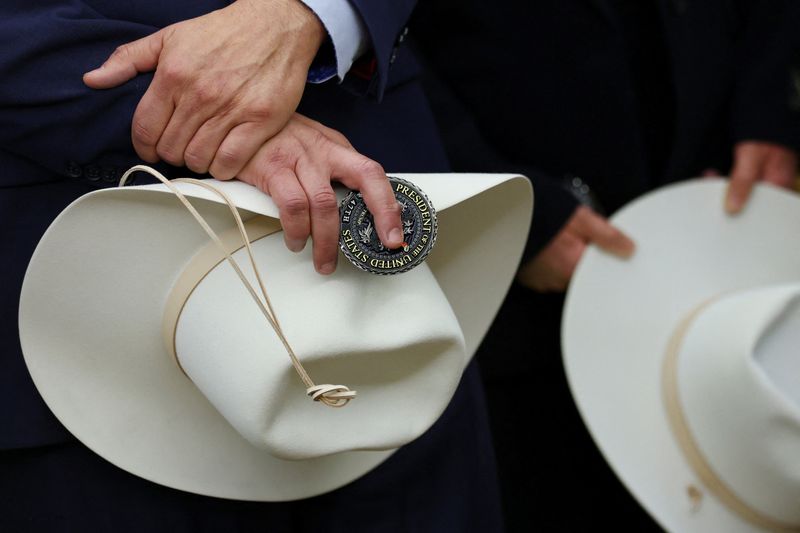
The signing ceremony was more than a bureaucratic act; it was a political event rich with symbolism. President Trump, standing alongside surviving team members like captain Mike Eruzione and goaltender Jim Craig, framed the Miracle as a quintessential American story of beating the odds—a narrative that aligns closely with his own political brand.
Expert analysis suggests this event serves multiple purposes. Firstly, it fulfills a longstanding, bipartisan desire to honor the team, a goal that had been pursued in Congress for years. Secondly, it taps into a deep well of patriotic sentiment that transcends partisan divides, offering a moment of perceived unity. However, the visual of a sitting president bestowing the nation’s highest civilian honor for a sports achievement from 1980 is inherently political. It connects the current administration to a moment of unambiguous national pride and Cold War victory, themes that resonate with a significant portion of the electorate.
Key elements highlighted during the ceremony included:
- The team’s amateur status and Herb Brooks’s grueling training methods.
- The direct link drawn between the team’s unity and national unity.
- The repeated emphasis on defeating a “very tough opponent,” with clear historical parallels.
- The celebration of a moment when America “stood tall,” as President Trump stated.
Legacy on Ice and in Bronze: What This Honor Means for History
The awarding of the Congressional Gold Medal permanently alters the legacy of the 1980 team. It moves them from the sports page and the highlight reel into the annals of formal American history. Their bronze medals from Lake Placid are now accompanied by gold medals from Congress, a distinction shared with figures like the Wright Brothers, Rosa Parks, and the Tuskegee Airmen.
This act also serves to freeze the “Miracle” in a specific amber. The story will forever be taught not just as a great game, but as an official, Congressionally-sanctioned national inspiration. It elevates the players from athletes to national symbols. For the families of the late Herb Brooks and the other deceased team members, it is a poignant, final recognition of their loved ones’ role in shaping the nation’s spirit during a pivotal decade.
Future Forecast: Politics, Sports, and National Myth-Making
This event sets a compelling precedent and raises questions about the future intersection of sports, politics, and national honor. We can predict several potential ramifications:
- Increased political invocation of sports legends: Other iconic teams or athletes from politically resonant moments may see similar pushes for recognition, especially as anniversaries approach.
- Debate over criteria for the Congressional Gold Medal: While the 1980 team’s case is uniquely powerful due to its Cold War context, this may spark conversation about where the line is drawn between extraordinary athletic achievement and civilian contribution to national history.
- Continued cultural resonance: The formal national honor ensures the “Miracle” story will be retold for generations with even greater authority, immune to the fading that often affects sports memories. It guarantees the team a permanent place in museums, history books, and political speeches.
The move may also inspire future generations of athletes, though with a complex lesson. It highlights that under the right circumstances, sports achievement can be interpreted as an act of patriotism with the highest possible accolades. However, it also underscores that such recognition is often inextricably tied to the political and historical context in which the victory occurs.
Final Buzzer: A Moment Frozen in Time, Now Cast in Gold
The image of President Trump signing the bill, surrounded by the aging heroes of Lake Placid, is the final chapter of the “Miracle on Ice” story. Forty years later, the journey from the icy arena in upstate New York to the White House is complete. By awarding the Congressional Gold Medal, the United States has made an official declaration: the victory was more than a game. It was a national event that showcased American grit, unity, and the triumph of belief over seemingly insurmountable odds.
The legacy of the 1980 U.S. hockey team is now permanently dual: they are both Olympic gold medalists and holders of the Congressional Gold Medal. Their story, forever intertwined with the Cold War, has been formally enshrined in the nation’s heritage. In the end, this honor is less about revisiting a sports highlight and more about reaffirming the power of a single, perfect moment to define a nation’s spirit—a moment now, finally, cast in gold.
Source: Based on news from Yahoo Sports.