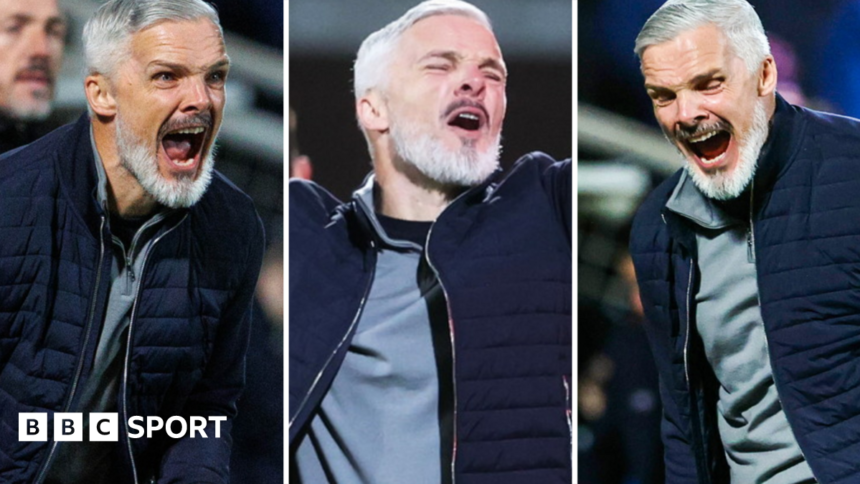
One Win in Ten: Crisis or Correction for Dundee United?
The sound of the final whistle at the SMiSA Stadium last Saturday was a familiar one for the travelling Arabs. Another defeat, this time 2-1 to St Mirren, etched a concerning statistic deeper into the narrative of Dundee United’s season: one win in ten games. A promising new dawn has been clouded by a run of form that has seen the Terrors plummet down the Scottish Premiership table, winless in six. After the euphoria of a fourth-placed finish last term, a stark question now hangs over Tannadice: is this a temporary slump or the sign of something more systemic?
Manager Jim Goodwin’s post-match admission that his side are “going through a really difficult period” felt like an understatement. The swagger and cohesion that defined their return to the top flight have evaporated, replaced by fragility and a palpable lack of confidence. With the table tightening and the spectre of a relegation battle no longer an abstract concept, the concern among the fanbase is real and growing. But before panic sets in, a deeper analysis of the causes, context, and potential cures is required.
Deconstructing the Downturn: From Promise to Peril
To understand the present, we must acknowledge the summer of significant change. Last season’s successful squad underwent a substantial overhaul, with key figures like Aziz Behich, Dylan Levitt, and Ian Harkes departing. The new-look squad, while assembling promising talent, was always a project. Early-season promise, including a thrilling draw with Hearts, papered over the inevitable integration period. The cracks, however, have now become chasms.
The issues are multifaceted. Defensively, a once-resilient unit has become prone to costly individual errors and disorganisation. The midfield, a source of creativity and control last year, has struggled to consistently dictate play or protect the back line. In attack, a reliance on the mercurial Tony Watt for goals has proven problematic, especially when service is inconsistent. The team looks caught between identities—unsure whether to stick or twist, to press or sit deep. This tactical uncertainty is a hallmark of a group still learning each other’s names and a manager still searching for his most effective formula.
Compounding these on-field issues is the brutal reality of the Premiership. Last season’s success raised expectations, but also made United a target. Opponents now study and scheme for them with greater diligence. The element of surprise is gone.
Reasons for Concern: The Cold, Hard Facts
Ignoring the worrying metrics would be journalistic malpractice. The statistics paint a bleak picture that validates fan anxiety:
- One win in ten Premiership games is a form line synonymous with the relegation zone.
- A winless run stretching to six games creates a psychological burden that can be hard to break.
- The defensive record has deteriorated sharply, with United keeping just one clean sheet in this dismal ten-game stretch.
- Dropped points from winning positions have become a painful trend, highlighting a lack of game management and mental fortitude.
Furthermore, the nature of some performances has been alarming. There have been spells where United have been out-fought and out-thought, a charge that will sting a manager like Jim Goodwin, whose reputation is built on steely, organised sides. The upcoming fixture list offers little immediate respite, with clashes against in-form sides looming. The threat of being dragged into a prolonged dogfight at the bottom is no longer hypothetical.
Glimmers of Hope and Historical Context
Yet, in the depths of a slump, perspective is crucial. This is not a squad devoid of quality. The January signing of Celtic loanee Liam Scales has bolstered the defence, while the creative potential of Glenn Middleton and the industry of Craig Sibbald remain assets. The return of key players from injury could provide a vital boost.
It’s also worth noting that last season’s impressive fourth-placed finish was, in part, a product of a spectacular post-winter break surge. United have been here before, in a sense, facing adversity. The core leadership within the dressing room, including captain Ryan Edwards, now faces its biggest test. The January transfer window, while now closed, allowed for targeted reinforcements, and Goodwin’s experience in navigating Premiership battles should not be discounted.
Every team in the division outside the Old Firm endures a rocky patch. The difference between a “difficult period” and a full-blown crisis is often defined by the response. A single, gritty victory can act as a circuit breaker, transforming mood and momentum. The foundation, though shaky, is not yet shattered.
The Verdict: Concern, Yes. Panic, Not Yet.
So, how worried should Dundee United fans be? The answer is a measured one. They should be rightfully concerned. The form is unacceptable for a team with top-six aspirations, and the underlying issues need urgent addressing. The margin for error in the Premiership is vanishingly small, and confidence is a fragile commodity.
However, outright panic would be premature. This is a squad in transition, experiencing the growing pains of a rebuild. The manager is pragmatic and aware of the problems. The upcoming fixtures are a crucible, but also an opportunity. The prediction from this vantage point is that United will navigate their way out of this immediate danger, but their season’s ambitions must be recalibrated. A push for the top six now seems a distant dream; the immediate goal must be to secure safety with clarity and then rebuild momentum.
The coming weeks will be defining for Jim Goodwin’s project. He must simplify the message, solidify the defence, and find a reliable source of goals. The fans, whose support remains vital, demand visible fight and a clear plan. The story of Dundee United’s season is at a crossroads. One win in ten is a stark warning sign, but it is not necessarily the final chapter. The response, starting now, will write the next one.
Source: Based on news from BBC Sport.