Tony Jefferson’s Emotional Ejection: An Apology for the Gesture, But Not the Hit
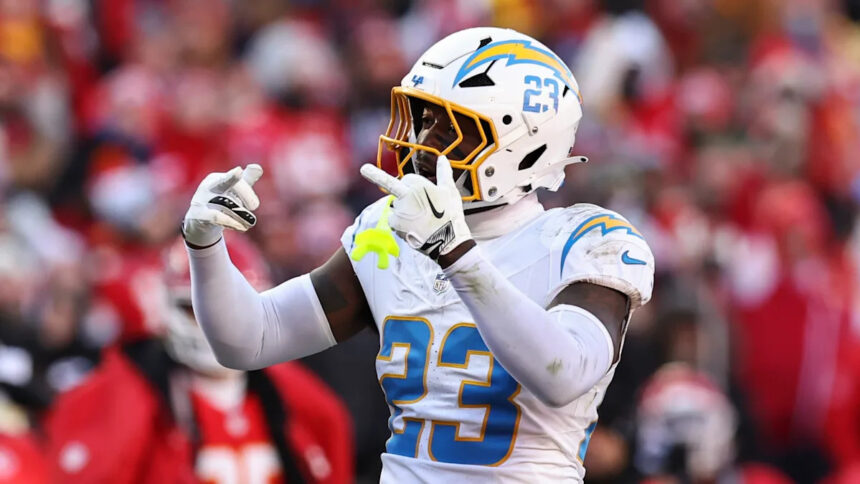
The thin line between competitive fire and costly indiscretion was on full display in the closing moments of the Chargers-Chiefs clash at Arrowhead Stadium. In a sequence that will dominate the league’s disciplinary tape this week, Los Angeles Chargers safety Tony Jefferson was ejected for a hit on Chiefs wide receiver Tyquan Thornton, then punctuated his exit with a pair of middle-finger salutes to the roaring Kansas City crowd. The incident sparked immediate controversy, leading to a post-game apology for the gesture but a steadfast defense of the play itself—a dichotomy that cuts to the heart of modern NFL enforcement and player emotion.
The Incident: A Split-Second Decision and Its Aftermath
With the game’s outcome largely decided, Tony Jefferson, a veteran known for his hard-nosed style, delivered a hit on a sliding Tyquan Thornton. The official on the scene immediately flagged Jefferson for unnecessary roughness. The play was reviewed, and the decision came down from the NFL’s New York office: ejection for Tony Jefferson.
As he made the long walk to the locker room, the Arrowhead Stadium crowd, renowned for its deafening intensity, showered him with boos. In a moment of pure, unfiltered frustration, Jefferson responded by flipping off the crowd, a “double-bird” that was captured by broadcast cameras and instantly went viral. The emotional reaction, while understandable from a competitor’s standpoint, is a certain violation of the league’s conduct policy and will likely result in a significant fine.
The Apology and the Justification: A Tale of Two Reactions
To his credit, Jefferson addressed the obscene gesture head-on in the post-game locker room. “I was caught up in the moment,” Jefferson stated. “I’m classier than that.” This direct apology from Tony Jefferson was a necessary first step in managing the public relations fallout, acknowledging that the response to the fans crossed a line of professional decorum.
However, notably absent from his comments was any regret for the hit on Thornton. This aligns perfectly with the support he received from his head coach, Jim Harbaugh, who is building a culture of physicality in Los Angeles. Harbaugh succinctly labeled the controversial play a “football play,” a clear message of solidarity with his player and a subtle critique of the league’s decision to eject.
This creates a fascinating conflict:
- The League’s Perspective: The NFL is in a perpetual battle to protect players, particularly defenseless receivers and quarterbacks. A hit on a sliding player, regardless of intent, is a prime target for strict enforcement. The ejection, ordered from New York, signals a continued priority on player safety over subjective judgment calls on intent.
- The Player & Coach’s Perspective: For Jefferson and Harbaugh, football is played at full speed. Jefferson, aiming to make a play, was likely caught in an impossible position as Thornton slid. To them, the punishment feels disproportionate to the action—a football incident punished as a disciplinary one.
Expert Analysis: The Fine Line of Enforcement and Emotion
From a football operations standpoint, this incident is a textbook case study. The NFL’s office in New York taking over the ejection process is now standard protocol for major penalties, designed to create consistency. Yet, consistency remains elusive. What one officiating crew or league executive sees as “egregious,” a coach and player see as “unavoidable.” This disconnect fuels player frustration.
The psychological element cannot be ignored. An ejection is a very public shaming. It declares a player’s actions so beyond the pale that he is no longer permitted to participate. For a veteran like Jefferson, that sting is profound. Coupled with the visceral reaction of 70,000 opposing fans, the emotional cocktail can overwhelm professional restraint. The gesture wasn’t premeditated; it was a raw, human reaction to a perceived injustice in a high-stakes, emotionally charged environment. This doesn’t excuse it, but it explains the volatile combination that led to the obscene gestures.
Furthermore, Harbaugh’s defense is strategic. By publicly backing Jefferson, he reinforces a “us against the world” mentality in the Chargers’ locker room. He signals to his entire defense that he values their aggressive style, even as he undoubtedly counsels them on the rules’ technicalities in private. This balance between coaching aggression and coaching compliance is one of the toughest tightropes to walk in today’s NFL.
Predictions and Repercussions: What Comes Next for Tony Jefferson?
The fallout from this event will be both financial and reputational. We can confidently predict several consequences:
- A Substantial Fine: The league will almost certainly fine Jefferson for the double middle-finger gesture. Fines for unsportsmanlike conduct that includes obscene gestures to fans are typically hefty, likely landing in the five-figure range. The fine for the hit itself may be bundled in or issued separately.
- No Suspension Expected: Given the context of the hit being deemed a “football play” by some and the fact Thornton was not seriously injured, a suspension seems unlikely. The league tends to reserve suspensions for repeat offenders or hits with clearer malicious intent.
- A Lingering Target: Officiating crews will now have Jefferson’s number 33 circled. He will be under increased scrutiny for his hitting technique for the remainder of the season, whether that’s fair or not. He must adjust his game to avoid putting himself and his team at risk.
- Internal Leadership Moment: As a respected veteran, Jefferson’s apology will likely settle the matter internally. However, he must now exemplify the “class” he referenced, using the incident as a teaching moment for younger players on how to channel frustration.
Conclusion: More Than Just a Double-Bird
Tony Jefferson’s fiery exit from Arrowhead Stadium was more than a viral moment of poor sportsmanship. It was a flashpoint illuminating the ongoing tension in professional football. It highlighted the clash between the NFL’s necessary but often inconsistently applied safety protocols and the ingrained, aggressive instincts of its players. It showcased how raw emotion can trump professionalism in a heartbeat. And it demonstrated how a coach navigates supporting his players while operating within the league’s strict confines.
Jefferson was right to apologize for the gesture; it was beneath him and the professional standards of the game. But his and Harbaugh’s refusal to apologize for the hit itself speaks volumes about the culture they are building and their perception of the game’s fundamental nature. The fine for Tony Jefferson will be processed, the headlines will fade, but the core conflict exposed by this incident—between safety and spirit, between enforcement and emotion—will continue to be played out on NFL fields every Sunday.
Source: Based on news from Yahoo Sports.