Khawaja’s Gritty Resistance Broken by Jacks’ Ashes Breakthrough
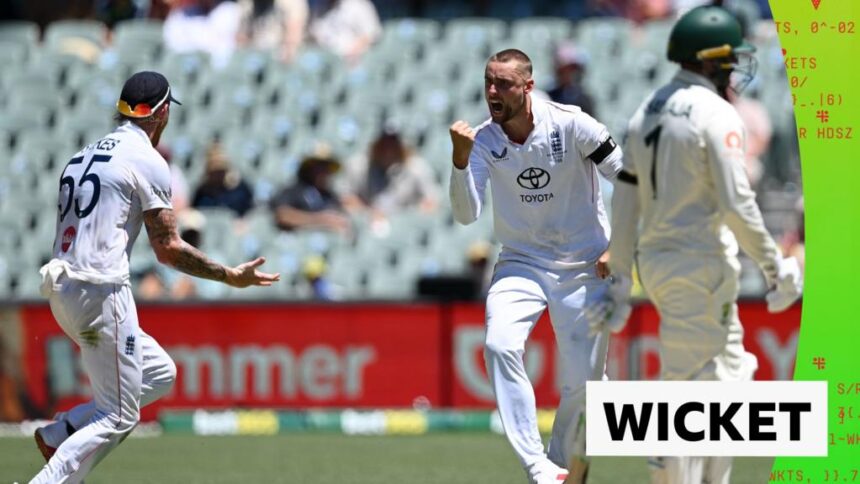
The narrative of an Ashes series is often written in centuries. At a sun-drenched Adelaide Oval, on the pivotal first day of the third Test, Usman Khawaja was scripting another chapter of his remarkable late-career renaissance, inching towards a ton that would have further cemented Australia’s advantage. But in a moment of twist, the story was snatched from his grasp by an English spinner claiming a piece of personal history. Will Jacks, in just his second Test, secured his maiden Ashes wicket, removing the obdurate Khawaja for 82 and swinging momentum back towards England in a crucial final session.
The Calm Before the Storm: Khawaja’s Masterful Accumulation
For much of the day, Usman Khawaja was the immovable object. On a benign Adelaide pitch offering little to the seamers, his innings was a study in concentration and selective aggression. After the early loss of David Warner, Khawaja formed the backbone of the Australian innings alongside Marnus Labuschagne and, later, Steve Smith. He navigated the initial swing, patiently left anything wide of his corridor, and punished the rare loose delivery with elegant authority.
His partnership with Smith looked particularly ominous for England. The pair, two of modern cricket’s greatest accumulators, seemed set to bat the tourists out of the contest, guiding Australia to a position of relative comfort at 185-4. Khawaja, moving into the 80s, had his eye on a tenth Test century and a second of this series. The English shoulders were beginning to slump, the search for a breakthrough growing increasingly desperate.
The Turning Point: Jacks’ Moment of Ashes Glory
Enter Will Jacks. The Surrey off-spinner, a surprise inclusion in the side for his perceived batting prowess more than his bowling, was handed the ball as Ben Stokes sought to change the rhythm. Jacks’ initial overs were tidy but appeared non-threatening. Then, the plan unfolded.
In a classic piece of Test match bowling, Jacks floated one up wider outside Khawaja’s off-stump, inviting the drive. Perhaps sensing a rare scoring opportunity against the spinner, or fatigued after a long vigil, Khawaja took the bait. He leaned into the cover drive but failed to keep the ball down. The connection was crisp, but the trajectory was flat and straight to the man placed in the deep for that exact shot: Josh Tongue.
The catch was simple, the roar from the English contingent deafening. Jacks’ celebration was one of unbridled joy and relief—a first Ashes wicket for the young all-rounder, and it was a massive one.
- Batter: Usman Khawaja (82)
- Bowler: Will Jacks
- Fielder: Josh Tongue
- Score: Australia 185-5
- Significance: Jacks’ maiden Ashes wicket, breaking a dangerous partnership.
This was more than just a wicket; it was a strategic victory. England had set a trap, and one of Australia’s most experienced heads fell directly into it.
Expert Analysis: Tactical Nuance and Psychological Impact
This dismissal will be pored over by analysts. From an English perspective, it was a triumph of patience and tactical clarity. Ben Stokes’ captaincy, often unorthodox, showed a traditional shrewdness here. Placing Tongue—a bowler himself with safe hands—at a precise deep cover position was a signal of intent. They were willing to concede the single to attack the wicket.
For Khawaja, it will be a dismissal that stings. Having done the hard work on a good batting track, missing out on a century in an Ashes Test is a bitter pill. His departure opened an end, and England pounced. The wicket catalyzed a collapse of sorts, shifting the complexion of the day from Australia consolidating to England attacking.
For Will Jacks, the psychological boost is immeasurable. To contribute with the ball in such a high-stakes environment validates his selection and provides Stokes with a much-needed additional bowling option. His confidence will soar, making him a more potent threat as the match progresses.
What It Means for the Test and the Series
At 185-5, the day was beautifully poised. Australia, with Alex Carey and the tail to come, still have the potential to post a par score of 300+, which would be competitive. However, the momentum is now with England. The new ball is due shortly, and England’s seamers, led by a relentless Stuart Broad, will fancy their chances against the lower order under lights.
Key questions for Day Two:
- Can Australia’s lower order rally and push towards 350?
- Will England’s batsmen finally fire and build a substantial first-innings lead?
- Has the Khawaja-Jacks moment given England a psychological edge they can carry forward?
This Test is a potential series decider. England’s fightback in the final session, capped by Jacks’ wicket, ensures they are not just participants but fierce competitors in this contest. It has set up a fascinating second day where every run and every wicket will be magnified under the Adelaide lights.
Conclusion: A Single Delivery Reshapes the Narrative
Ashes history is built on such pivots. Usman Khawaja’s determined 82 was an innings of high quality, but it will be remembered for how it ended. Will Jacks, with a well-flighted delivery and a perfectly executed plan, transformed his own career narrative and potentially that of this Test match. His first Ashes wicket was not just a statistic; it was a statement that England, down but not out in this series, still possess the tactical wit and fighting spirit to claw their way back. The Adelaide Oval, a theatre of so many Ashes dramas, had witnessed another: a century denied, a maiden wicket earned, and a match thrown wide open. The battle for the Urn continues, and its latest twist was delivered by an off-spinner with a moment he will never forget.
Source: Based on news from BBC Sport.