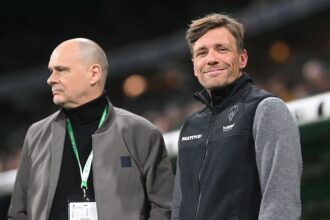
Glasner’s Fury: A Manager Abandoned and a Club at a Crossroads
The veneer of a unified football club can shatter in an instant. For Crystal Palace manager Oliver Glasner, that moment came not in the heat of a match, but in a cold, pre-game revelation. The Austrian, brought in to instill a bold new era at Selhurst Park, has publicly erupted with fury after learning that captain and defensive linchpin Marc Guéhi was to be sold—a decision communicated to him just 24 hours before a crucial match. This isn’t just a transfer story; it’s a story of broken trust, conflicting visions, and a manager who feels, in his own words, “abandoned completely.”
A Betrayal on the Eve of Battle
The timeline is as damning as the sentiment. Crystal Palace were preparing to face Sunderland in a pre-season friendly, a final tune-up before the Premier League grind. For Glasner, these matches are vital for implementing his demanding, high-press system. Central to that system was Marc Guéhi, the club captain, homegrown talent, and undisputed leader of the backline. Then, the bombshell dropped. The hierarchy informed Glasner that Guéhi’s sale was imminent, a financial decision that overrode all sporting considerations.
Glasner’s anger was palpable and immediate. “To be told the day before a match that your captain is being sold… it feels like you are abandoned completely,” he stated, his words laced with a frustration rarely seen so early in a tenure. This wasn’t a planned transition or a collaborative strategy. It was a decree from above, one that left the manager feeling like a bystander in his own football project. The message was clear: the balance sheet, in this instance, outweighed the tactical whiteboard.
More Than a Player: The Guéhi Void
To understand the depth of Glasner’s rage, one must appreciate what Marc Guéhi represented. He was not merely a skilled defender; he was the embodiment of stability and the bridge between the club’s identity and its future.
- Defensive Cornerstone: A composed, left-footed centre-back comfortable in possession—a prerequisite for Glasner’s build-up play.
- Club Captain: The armband carried weight. He was a leader by example, respected in the dressing room and a voice on the pitch.
- Academy Success Story: A symbol of the club’s productive youth system, his potential sale for pure profit is a painful reminder of football’s economic realities.
Losing such a multifaceted figure days before the season starts is a catastrophic blow to any manager’s plans. It creates a void in leadership, disrupts defensive cohesion, and forces a frantic, reactive search for a replacement in a inflated market. For Glasner, a coach known for his meticulous preparation, this chaos is the antithesis of his philosophy.
The Inevitable Clash: Sporting Vision vs. Business Model
This incident has ripped open the perennial tension at clubs like Crystal Palace: the clash between sporting ambition and sustainable business. Chairman Steve Parish has masterfully navigated the club to a decade of Premier League stability, often through savvy player trading. The sales of Aaron Wan-Bissaka and Tyrick Mitchell followed a similar model—develop, excel, sell for significant profit.
However, Glasner’s appointment signaled a potential shift. He was not a firefighter but a project manager, tasked with elevating Palace’s style and league position. The Guéhi sale, executed in this manner, suggests the old model remains firmly in place. It raises a critical question: Can Glasner truly build anything if his foundational pieces are sold without his consent? The manager’s anger stems from a feeling of powerlessness, a sense that the project he was hired to lead is being undermined before it even begins.
This disconnect is dangerous. A manager who feels unsupported and undermined is a manager whose authority in the dressing room erodes. Players will note how the club treats their leader. The trust between the dugout and the boardroom is now fractured, a crack that can quickly become a chasm if results start poorly.
Predictions: Fallout and a Season on the Knife-Edge
The repercussions of this rift will define Crystal Palace’s season. The immediate future looks fraught with challenge.
A Rocky Start is Likely: The defensive unit will be unsettled. Glasner must now integrate a new, likely expensive, centre-back at breakneck speed, disrupting his pre-season work. Early fixtures could see a disorganized and vulnerable backline.
The January Window Looms Large: If stars like Michael Olise or Eberechi Eze start the season brightly, will the club resist major offers? Glasner will be fearing another “Guéhi moment.” His ability to retain key assets will be the true test of the board’s commitment to his vision.
Glasner’s Long-Term Stance: The Austrian is a proud and principled coach. He walked away from Wolfsburg in part due to transfer policy disagreements. He will not tolerate being repeatedly sidelined. If this is a pattern and not an isolated incident, his tenure could be shorter and more turbulent than anyone anticipated.
The only path to reconciliation is a clear, unified statement of intent from the board. That means reinvesting the Guéhi money swiftly and effectively, on players Glasner wants. It means backing the manager in the market with both funds and faith. Without that, the season threatens to unravel into a battle on two fronts: on the pitch against opponents, and off it, against a growing sense of internal disillusionment.
Conclusion: A Stark Warning to Modern Football
Oliver Glasner’s very public anger is a flare shot into the sky of modern football. It illuminates the fragile relationship between a manager’s sporting dream and a club’s financial imperative. Feeling “abandoned completely” is the ultimate indictment from a head coach. This episode at Crystal Palace is a microcosm of a wider disease: the erosion of managerial control and the short-termism that often sacrifices team cohesion at the altar of profit.
For Palace, the damage is done. The trust is broken. The coming weeks will reveal whether this was a painful but singular business decision or the first sign of a fundamental misalignment that could cost them a talented manager and a promising new direction. The Premier League season is a marathon, but for Glasner and Palace, they have already stumbled at the very start, tripped by their own hierarchy. The road back to unity is now the hardest challenge they face.
Source: Based on news from Sky Sports.