


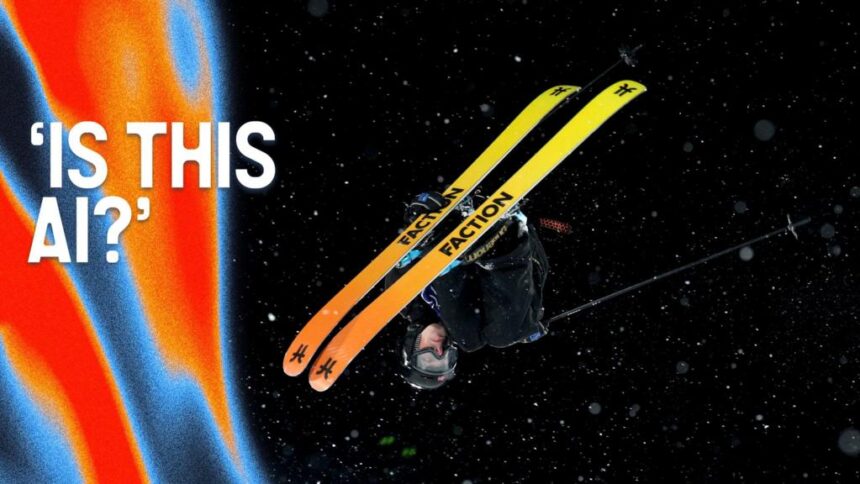
Absolutely Stunning! Norway’s Tormod Frostad Claims Gold in ‘Best Big Air Final of All-Time’
The air was thin, the tension was thick, and history hung in the balance over the big air jump. In a sequence of three final runs so audacious, so technically perfect, and so dripping with style that commentators and veterans alike scrambled for superlatives, Norway’s Tormod Frostad etched his name into freestyle skiing folklore. What unfolded was not just a medal contest; it was a paradigm-shifting display that is already being hailed as the best big air final of all-time.
A Finale Forged in Fire: The Last Three Runs Decide Everything
The stage was set for a dramatic conclusion. After a series of blistering qualifying rounds and a final packed with world-class talent, the podium came down to the last three attempts of the entire competition. The order was set: Austria’s creative genius Matej Svancer, the USA’s powerhouse Mac Forehand, and the relatively unheralded Norwegian, Tormod Frostad. Each man had one final jump to climb the rankings, to seize glory, or to watch it slip away. The atmosphere was electric, a potent mix of Olympic pressure and the pure, unadulterated joy of witnessing sport at its absolute zenith.
Svancer, known for his mind-bending grabs and unconventional rotations, dropped in first. Forehand, a model of amplitude and clean execution, was next. But it was Frostad, waiting in the gate last, who held the destiny of the gold medal in his hands. He didn’t just meet the moment; he redefined it.
Deconstructing the Decisive Moments: A Masterclass in Progression
To understand the magnitude of this final, one must dissect the leaps that made it legendary. This was not about a single trick, but a relentless escalation of difficulty, execution, and sheer nerve.
- Matej Svancer’s Signature Flair: The Austrian, already a viral sensation for his trick innovation, put down a run that was pure art. He combined a switch double cork 1800 with a bio grab—a move that seems to defy human anatomy. His score kept him firmly in medal contention, a testament to skiing’s evolving creative frontier.
- Mac Forehand’s Amplitude and Precision: The American responded with the raw power of his skiing. Forehand launched himself into the stratosphere, achieving breathtaking height on a left-side double cork 1980, landing with the stability of a metronome. It was a textbook example of big, clean, and powerful skiing that momentarily put him in the gold medal position.
- Tormod Frostad’s Perfect Storm: With gold on the line, Frostad composed a run that was the complete package. He matched Forehand’s monstrous amplitude but added a layer of technical difficulty and stylistic polish that left judges in awe. His final jump, a right-side double cork 2160 with a pristine mute grab, was the exclamation point. The rotation was complete, the grab was held deep into the landing, and the touchdown was butter-smooth. The score flashed: he had done it.
The spectacular men’s freestyle skiing big air final was decided by the finest of margins, but the consensus was clear: Frostad had delivered a flawless performance under maximum duress.
Expert Analysis: Why This Final Rewrote the History Books
From a technical standpoint, this final represented the next evolutionary leap in the sport. We have moved past the era of simply “landing the big trick.” The Norway’s Frostad wins narrative is about the mastery of every component under the ultimate pressure.
Amplitude as a Foundation: All three medalists soared to heights previously thought to be the domain of a select few. This extra airtime isn’t just for show; it allows for more controlled rotations, cleaner grabs, and safer landings. Forehand and Frostad, in particular, used the entire sky as their canvas.
The Triple Cork Threshold: While a triple rotation wasn’t needed to win here, its shadow loomed large. The fact that Frostad won with a double cork 2160—a trick of immense difficulty itself—speaks volumes about the judging criteria. Execution, style, and landing stability are now paramount. The sport is maturing from a difficulty arms race into a more holistic athletic display.
Clutch Gene: The psychological aspect cannot be overstated. To have your final attempt be your best attempt, with the world watching and gold on the line, is the mark of a champion. Frostad displayed a mental fortitude that matched his physical prowess, a combination that is often the true separator at the Olympic level.
The New Vanguard: Predictions for the Next Olympic Cycle
This final has not only crowned a champion but has also laid down a clear marker for the future. The road to the next Winter Games will be built on the foundation we saw today.
We can expect the field to rapidly assimilate the technical lessons from this contest. The 2160 will become standard currency for medal hopes, and athletes will be forced to innovate with grabs and switch variations to stand out. Svancer’s influence will grow, inspiring a new wave of skiers to prioritize unique style alongside rotational prowess.
Furthermore, the battle between the established powers and new nations will intensify. Norway’s deep skiing culture has produced another star, but the USA’s pipeline remains robust, and creative independents like Svancer show that the sport’s ceiling is constantly being raised by individuals. Look for athletes from Canada, Switzerland, and perhaps even new nations to study this final frame-by-frame, using it as the blueprint for their own Olympic dreams.
A Legacy Cemented in the Clouds
When the snow settled and the cheers finally subsided, what remained was the indelible memory of a sporting contest that delivered beyond its wildest hype. Tormod Frostad did not just win a gold medal; he earned it in a duel that pushed every competitor to their absolute limit. Matej Svancer and Mac Forehand did not lose; they were part of a shared triumph that elevated their sport to new heights.
This was more than a competition; it was a celebration of human potential, creativity, and courage. The phrase “best big air final of all-time” will be associated with this day, this jump, and this Norwegian champion for generations to come. It was, in a word, stunning. Absolutely stunning.
Source: Based on news from BBC Sport.


