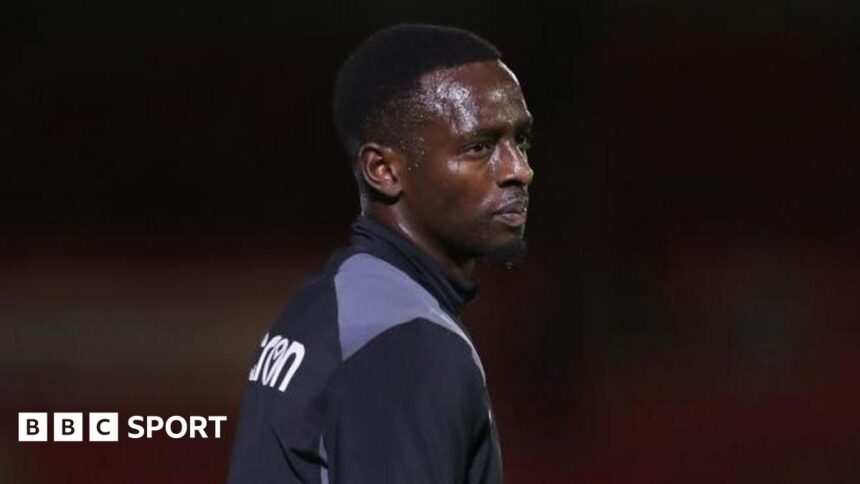
Beyond the Pitch: How Sudan’s Afcon Journey is Uniting a Nation in Crisis
In the cacophony of modern football, where narratives are often dominated by transfer fees and tactical trends, the story of Sudan’s national team at the Africa Cup of Nations cuts through with profound, heartbreaking clarity. For the players wearing the jersey of the *Falcons of Jediane*, the tournament is not merely a sporting competition. It is a mission. As forward Abobaker Eisa poignantly stated, their participation is “bringing hope” to a homeland engulfed in one of the 21st century’s most devastating humanitarian catastrophes. Their journey to Ivory Coast is a testament to resilience, a flickering beacon for a nation where the very act of collective celebration has become a radical act of defiance.
A Team in Exile: Qualifying from the Ashes
To understand the magnitude of Sudan’s Afcon achievement, one must first grasp the context from which it emerged. Since April 2023, Sudan has been torn apart by a brutal civil war between the national army and the paramilitary Rapid Support Forces (RSF). The United Nations has labeled the resulting crisis the largest of its kind in the world. The statistics are staggering, yet they fail to capture the full human tragedy:
- Over 150,000 people killed and millions more injured.
- More than 12 million Sudanese forcibly displaced from their homes, creating a vast internal and external refugee crisis.
- Widespread famine stalks the population, with aid access severely restricted.
- The western Darfur region faces harrowing reports of genocide and ethnic cleansing, echoing the horrors of two decades prior.
In this maelstrom, the national football team had to find a way to compete. The **Sudan Football Association** was forced to navigate a logistical nightmare. The **civil war** meant that for the entirety of their qualifying campaign, Sudan could not play a single match on home soil. They became a nomadic team, hosting “home” games in neutral countries like Morocco and Uganda. Every training camp, every travel itinerary, was complicated by the reality of a fractured nation. Yet, against this unimaginable backdrop, the Falcons secured their place at Afcon for only the **fourth time since 1976**. Their qualification was more than a sporting success; it was a symbolic victory for national identity.
Abobaker Eisa and the Weight of a Debut
The story of **Abobaker Eisa** crystallizes the team’s emotional burden and purpose. The 24-year-old forward, who plays his club football in Egypt for El Gouna, made his international debut in November 2023—in the heart of the conflict. His first cap was not in a packed stadium in Khartoum, but in an away fixture, part of the team’s exiled reality. For Eisa and his teammates, the pitch has become a sanctuary and a platform.
“When we play, we know that for 90 minutes, we can make people forget their suffering,” Eisa has implied in sentiment. “We play for those in refugee camps, for those hiding in their homes, for every Sudanese who sees our flag and feels a moment of pride.” This sense of duty transforms their performance. Every tackle, every sprint, every goal is infused with a meaning far beyond the tournament standings. The team carries the collective psyche of a nation yearning for normalcy and unity. In a land where communication lines are down and communities are shattered, the national team’s matches become a rare, shared experience—a digital campfire around which the diaspora and those remaining inside Sudan can gather.
Expert Analysis: Football as a Psychological Lifeline
From a socio-political perspective, Sudan’s Afcon presence is a powerful case study in sport’s role during crisis. Dr. Amira Hassan, a political analyst specializing in the Horn of Africa (speaking in a general expert capacity), notes: “In situations of profound national trauma, symbols of shared identity become critical. The Sudanese national team is one of the last functioning, unified institutions that can claim to represent the entire country. Their success on an international stage like Afcon provides a counter-narrative to one of pure destruction. It reminds Sudanese people, and the world, that Sudan is more than a conflict zone—it is a nation of people with talent, pride, and an indomitable spirit.”
This psychological lifeline is invaluable. For a population subjected to daily reports of death and despair, the **Africa Cup of Nations** offers a scheduled moment of potential joy. It fosters a sense of belonging and a temporary suspension of grief. Furthermore, it forces the international media to frame Sudan in a different light, if only briefly, shifting the discourse from victims to competitors. The team’s very existence is a quiet rebuke to the forces of division, demonstrating that a unified Sudanese entity can still function and excel.
Predictions and Legacy: What Victory Truly Means
On a purely footballing level, Sudan enters Afcon as underdogs. Drawn in a challenging group, their preparation has been irreparably disrupted by the war. Realistically, advancing from the group stage would be a monumental sporting achievement. However, for Sudan, the metrics of success are being rewritten.
- A single goal will be celebrated as a national triumph.
- A single point earned will be a testament to their fortitude.
- Their mere presence, competing with dignity and passion, constitutes their ultimate victory.
The true legacy of this team will be measured not in points, but in perception. Can they, through their endeavor, amplify the plight of their people to a global audience? Can they inspire a moment of unity among fractured communities back home? The potential for this sporting story to catalyze humanitarian attention is significant. Every post-match interview becomes a potential megaphone for their nation’s cry for help.
Conclusion: More Than a Game
As the Falcons of Jediane take to the field in Ivory Coast, they carry a weight no athlete should ever have to bear. Yet, they also carry the hopes of millions. Abobaker Eisa’s words ring true because they articulate a fundamental truth: in the darkest of times, symbols of hope are not luxuries; they are necessities. Sudan’s **Afcon journey** is a powerful narrative of human resilience, a story where the beautiful game becomes a lifeline. Whether they win, lose, or draw, Sudan has already achieved something profound. They have reminded the world of their country’s enduring spirit, and they have given their people, scattered and suffering, a reason to look up, to cheer together, and to believe, for 90 minutes at a time, in something beyond the war. In doing so, they are scoring the most important goals of all.
Source: Based on news from BBC Sport.