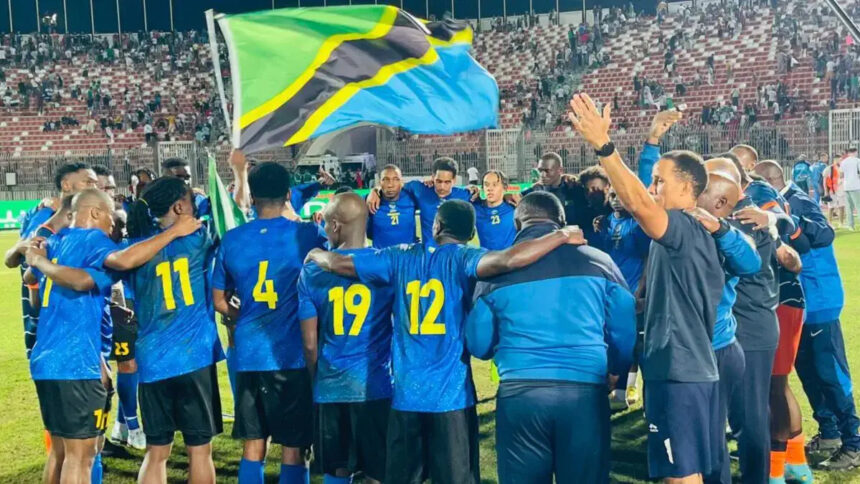
Tanzania at AFCON: A Chronicle of Rarity, Resilience, and Renewed Hope
In the grand, pulsating theater of the Africa Cup of Nations, where giants clash and legends are forged, some narratives are woven from quieter, more persistent threads. The story of Tanzania’s Taifa Stars is not one of perennial contention or storied rivalries, but a compelling saga of absence, fleeting appearances, and an unyielding hope that burns brighter with each hard-earned return. As they prepare for AFCON 2025 in Morocco, Tanzania stands not just as a qualified team, but as a symbol of a footballing nation’s enduring quest for a permanent place at Africa’s top table.
The Long Wait: A Forty-Year Wilderness
Tanzania’s AFCON history is fundamentally defined by scarcity. Their maiden voyage onto the continental stage came at the 1980 Africa Cup of Nations in Nigeria. It was a brief, sobering introduction. Drawn in a group with the hosts and eventual champions, as well as Ivory Coast and Egypt, the Taifa Stars lost all three matches. While a debut to forget on paper, it represented a pinnacle of achievement that would prove heartbreakingly difficult to replicate for generations.
What followed was a near-forty-year hiatus from the tournament, a period that encapsulates the profound structural and sporting challenges the nation faced. As African football evolved and neighboring nations like Zambia and Ghana lifted the trophy, Tanzania became spectators. This prolonged absence wasn’t merely a statistical footnote; it shaped the very identity of Tanzanian football. AFCON qualification transformed from an annual target into a mythical, almost unreachable dream, a generational hurdle that defined careers and haunted administrations.
The reasons were multifaceted:
- Infrastructure & Development: Lagging behind in youth systems, coaching education, and professional league structures.
- Competitive Consistency: Struggling to string together the required results in a qualifying format that often pits minnows against established powers.
- Psychological Barrier: The weight of the long drought itself becoming a self-fulfilling prophecy.
Each failed campaign deepened the sense of isolation, making the eventual return all the more seismic.
The Modern Era: Sporadic Appearances and Group Stage Hurdles
Tanzania’s return to the AFCON in 2019, after a 39-year wait, was a national event of unparalleled joy. Coached by Nigerian legend Sunday Oliseh and later Emmanuel Amunike, the qualification was a monumental breakthrough. However, the tournament in Egypt reinforced the steep climb from qualifier to competitor. Again, they faced a brutal group with Senegal, Algeria, and Kenya, exiting without a win.
This pattern—celebrated qualification followed by a group stage exit—has characterized their modern entries. Their participation in the 2021 edition (played in 2022) was short-lived, with another challenging draw. Yet, to view these campaigns solely through the lens of results is to miss their significance. Each appearance:
- Raises the profile of Tanzanian football domestically and internationally.
- Provides invaluable tournament experience for a squad largely unaccustomed to such high-pressure stages.
- Fuels investment and interest in the domestic game, inspiring a new generation.
The Taifa Stars have learned that in the AFCON crucible, the gap between participation and progression is decided by fine margins—a moment of individual quality, a tactical masterstroke, or a slice of luck that has so far eluded them.
AFCON 2025 in Morocco: A Canvas for a New Story
Qualification for the 2025 Africa Cup of Nations in Morocco is not just another entry in the ledger. It arrives at a potentially transformative moment. Under the guidance of a tactically astute coach and with a growing cadre of players gaining experience abroad, there is a tangible sense that Tanzania is building towards something more substantial.
The core challenge remains: transitioning from a team that qualifies to a team that competes. This requires a shift in mentality from being happy participants to determined disruptors. Key factors for a breakthrough in Morocco include:
- Defensive Solidity: Forging a unit difficult to break down, a prerequisite for any underdog seeking to snatch points.
- Clinical Attack: Identifying and maximizing scarce goalscoring opportunities, often through set-pieces or individual brilliance.
- Strategic Pragmatism: Adopting game-by-game tactics that play to their strengths and exploit specific opponent weaknesses.
The draw will, as always, be crucial. But the true test will be internal—can the Taifa Stars harness the hope of a nation and convert it into the on-field resilience needed to secure that historic first knockout-round berth?
Predictions and The Path Forward
Realistically, Tanzania enters AFCON 2025 as an underdog. However, they are an underdog with a growing pedigree and a profound motivation. A successful campaign would be measured not in trophy lifts, but in shattered glass ceilings.
Realistic Goal: The primary, nation-defining objective must be to advance from the group stage. A single victory and a couple of draws could be enough in a balanced group. This is the next logical step in their evolution.
Key to Success: The integration of their diaspora talent with the heart of the domestic league will be vital. Leadership from experienced heads like Mbwana Samatta, combined with the energy of emerging stars, could create a potent mix. Furthermore, the federation must use this qualification as a springboard for sustained development, ensuring AFCON appearances become the expectation, not the exception.
The prediction here is one of cautious optimism. Tanzania may not stun the continent and win it all, but they are more capable than ever of causing an upset, playing spoiler, and finally—after decades of waiting—writing a new chapter that extends beyond the group stage. The momentum from consecutive qualifications is a foundation they have never had before.
Conclusion: More Than Just Participants
The journey of the Taifa Stars at the Africa Cup of Nations is a powerful reflection of football’s broader role in national identity. It is a story of patience, of a love for the game that persists through long winters of absence, and of the unbridled joy that a simple qualification can bring to millions. Tanzania’s AFCON record edition by edition is a sparse document, but each line carries the weight of history and hope.
As they march into Morocco for AFCON 2025, they carry the dreams of all those who waited from 1980 to 2019, and of a new generation that believes the wait for a true breakthrough is finally over. Their history has been shaped by rarity and perseverance. Their future will be defined by what they do with this hard-earned chance. The Taifa Stars are no longer just happy to be there; they are there to change their story, and in doing so, inspire a nation once again.
Source: Based on news from Yahoo Sports.