FA Accused of “Disgusting” Betrayal: Nobby Stiles’ Son Slams Rejection of Football Brain Injury Link
The son of legendary Manchester United and England World Cup winner Nobby Stiles has unleashed a blistering attack on the Football Association, declaring he is “disgusted” after the governing body reportedly rejected any legal responsibility for the link between heading a football and catastrophic brain injuries. The explosive claim threatens to reignite one of the most contentious debates in modern sport, pitting grieving families against the institution that oversees the beautiful game.
John Stiles, founder of the campaign group Football Families for Justice, has been fighting for years to secure financial support and official acknowledgment for the families of players who died from dementia and other neurodegenerative diseases. Now, a leaked 41-page High Court defence document—allegedly filed by the FA—has poured fuel on the fire. According to Stiles’ legal team, the document argues that the FA should not owe a “general duty of care” to footballers, a position that has been branded as a “betrayal” of the sport’s heroes.
“I am absolutely disgusted,” John Stiles told reporters. “My father gave his life to football. He won the World Cup for England. And now the FA is trying to wash their hands of any responsibility. It is shameful.”
The Leaked Defence That Shook Football Families
The controversy centres on a legal defence reportedly submitted by the FA in the High Court as part of a group action brought by former players and their families. While the FA has refused to confirm or deny the specific contents of the leaked document, John Stiles’ legal representatives claim it contains a series of deeply troubling assertions.
Among the most inflammatory is the suggestion that the FA should not be held liable for brain injuries sustained by players during their careers. The defence is said to argue that the risks of heading the ball were either not known, or not sufficiently understood, at the time players like Nobby Stiles were active. Critics see this as a cynical legal manoeuvre designed to avoid multi-million-pound compensation payouts.
- Key claim in the leaked defence: The FA argues it did not owe a “general duty of care” to professional footballers regarding head trauma.
- Campaigners’ response: “This is a deliberate attempt to sidestep responsibility for decades of inaction.”
- FA’s official statement: The link between heading and long-term brain health “remains the subject of ongoing scientific and medical research.”
The FA’s cautious public stance—emphasising that research is still incomplete—has infuriated families who point to a growing body of evidence linking repetitive head impacts to chronic traumatic encephalopathy (CTE) and dementia. Former England striker Jeff Astle died in 2002 from a brain condition attributed to heading heavy leather footballs. Nobby Stiles, a tenacious midfielder who played for Manchester United from 1960 to 1971, suffered from advanced dementia before his death in 2020 at the age of 78.
Expert Analysis: A Legal and Ethical Minefield
Dr. Michael Grey, a professor of neuroscience at the University of East Anglia and a leading voice on sports-related brain injury, described the FA’s reported defence as “legally predictable but morally bankrupt.”
“From a legal perspective, the FA is doing what any large organisation would do: protect its assets and avoid setting a precedent,” Grey explained. “But from a medical and ethical standpoint, the evidence that repetitive sub-concussive impacts—like heading a ball—are harmful is now overwhelming. We have seen it in American football, in rugby, and now in football. The FA cannot claim ignorance forever.”
Grey pointed to a landmark 2017 study from the University of Glasgow, which found that former professional footballers were 3.5 times more likely to die from neurodegenerative disease than the general population. The study, which analysed the deaths of over 7,600 former Scottish players, concluded that the increased risk was likely linked to heading the ball.
“The science is not in its infancy anymore,” Grey added. “It is in its adolescence. The FA’s claim that research is still ongoing is a delaying tactic. They have known about the risks for years, yet they have failed to implement meaningful protective measures or establish a compensation fund.”
The legal battle now hinges on whether the courts will accept that the FA had a duty to warn players and implement safety protocols as early as the 1960s and 1970s. If the families succeed, it could open the floodgates for hundreds of claims, potentially costing the FA and other football bodies hundreds of millions of pounds.
Predictions: What Happens Next in the Brain Injury Crisis?
This is not a story that will fade away quietly. Here are the key developments to watch in the coming months:
1. The High Court will force a public hearing. The leaked defence is likely to be scrutinised in open court. Judges will have to decide whether the FA’s argument—that it owed no duty of care—is legally tenable. Legal experts predict that the FA will eventually be forced to settle, much like the NFL did in the United States, which agreed to a $1 billion concussion settlement in 2015.
2. Grassroots football will face new restrictions. Even as the legal battle rages, the FA has already taken small steps. In 2022, it introduced guidelines limiting heading in youth football for under-12s. Expect these restrictions to be extended to older age groups, and for professional clubs to face pressure to limit heading in training.
3. The FA’s reputation will take a severe hit. The son of a World Cup hero publicly condemning the governing body is a public relations disaster. Football Families for Justice is already planning a series of high-profile protests and media campaigns. The FA will struggle to maintain its image as a caring, responsible institution while fighting bereaved families in court.
4. A government inquiry may be inevitable. With cross-party support growing, MPs are likely to demand a parliamentary investigation into football’s handling of brain injuries. The Department for Culture, Media and Sport has already held preliminary discussions. A full inquiry would expose internal FA documents and communications, potentially revealing what the organisation knew and when.
Strong Conclusion: A Legacy of Neglect?
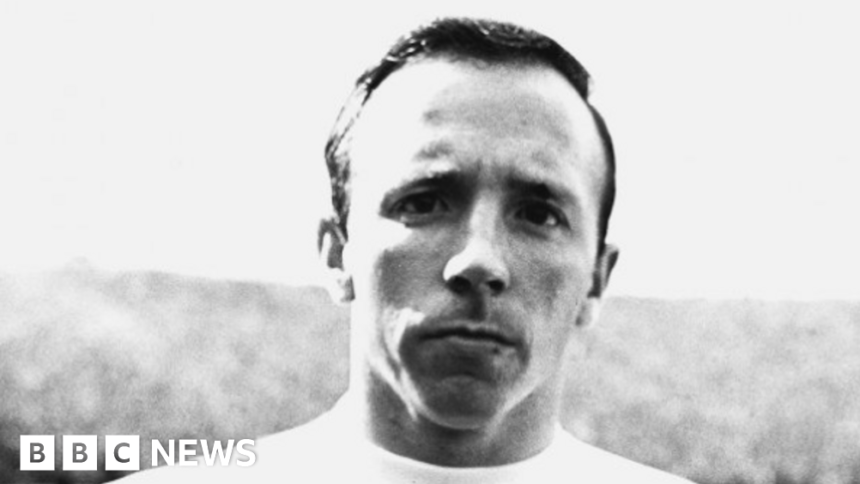
Nobby Stiles was a giant of English football—a World Cup winner, a European Cup champion with Manchester United, and a player whose toothless grin and relentless energy made him a fan favourite. He was also a man who spent his final years unable to recognise his own family, ravaged by a disease that many now believe was exacerbated by his footballing career.
John Stiles is not asking for pity. He is asking for justice. And the leaked FA defence suggests that the governing body is prepared to fight that demand with every legal tool available. “My father’s legacy should be about 1966, not about a court case,” John said. “But the FA has left us no choice.”
The football world is now watching. Will the FA step up and do the right thing—acknowledge the link, support the families, and fund research? Or will it continue to hide behind the shield of “ongoing research” while players from the past and present suffer in silence?
One thing is certain: the anger is not going away. And with every leaked document, every court hearing, and every heartbreaking story from a grieving family, the pressure on the FA will only intensify. The beautiful game is facing its ugliest test.
Source: Based on news from BBC Sport.