Arsenal’s Pragmatic Passage: Does Style Matter When the Prize is a Champions League Semi-Final?
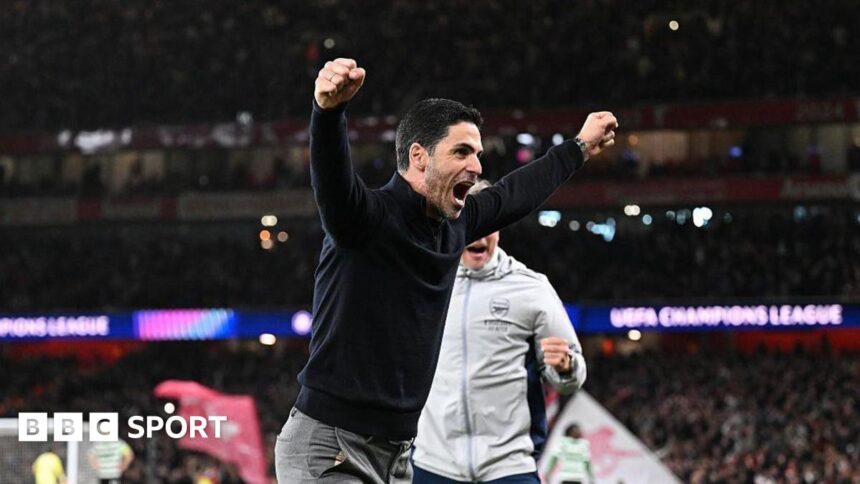
The final whistle at the Emirates Stadium did not trigger a cascade of unbridled joy. Instead, a collective, palpable exhale of relief washed over North London. Arsenal are through to the UEFA Champions League semi-finals for a second consecutive season, a historic first for the club, yet the manner of their progression felt more like a cautious shuffle than a triumphant march. After a cagey, goalless draw with Sporting CP sealed a 1-0 aggregate victory, manager Mikel Arteta’s post-match dissection was telling. He had demanded “fire” from his players. What he got was a calculated, at times sluggish, professional job. This dichotomy poses the quintessential elite football question: in the white-hot crucible of knockout football, does aesthetic style matter, or is the cold, hard result the only true currency?
The Anatomy of a Controlled Limp
Context is critical. Arsenal arrived at this fixture leading 2-1 from a taxing first leg in Lisbon, a match where they lost Gabriel Martinelli and, more devastatingly, Bukayo Saka to injury. The absentee list for the return leg read like a team sheet of its own: Saka, Martinelli, Martin Ødegaard (illness), and the granite presence of William Saliba. This was not Arsenal’s glittering first-choice attack. This was a patched-up side facing a disciplined, energetic Sporting team with nothing to lose.
The performance reflected those constraints. Arsenal controlled possession but lacked their usual incisive, vertical thrust. The creative burden fell heavily on the shoulders of Leandro Trossard and the industrious Kai Havertz, whose first-leg goal ultimately proved the tie’s decisive moment. The midfield, anchored by the excellent Declan Rice, prioritized security over spectacle. It was a masterclass in pragmatic game management, a skill often overlooked in assessments of top teams. They limited Sporting to half-chances, with David Raya a spectator for large periods, and navigated the 90 minutes with a minimal sense of panic. They did what was necessary, not what was exhilarating.
Arteta’s call for “fire” was less a critique of the result and more a reflection of his relentless, perfectionist standards. He saw a performance that could have been sharper, more aggressive in pressing, and more clinical in the final third. He knows that a similar level of functional efficiency against the likes of Bayern Munich or Real Madrid in the next round may not suffice.
The Arteta Conundrum: Philosophy vs. Pragmatism
Mikel Arteta has built his Arsenal project on an unwavering non-negotiable identity. His team is defined by intense pressing, territorial dominance, and proactive, attacking football. It is a style that has returned them to the Premier League summit and the Champions League elite. However, the path to the very top of European football is littered with moments that demand a temporary shelving of dogma.
This tie presented one of those moments. The key question is whether this performance represents a worrying dip in form and intensity or a sign of mature evolution. Expert analysis suggests the latter is more likely. Consider:
- Squad Management: With a titanic Premier League clash against Aston Villa on the horizon and key players missing, a chaotic, end-to-end battle was the last thing Arsenal needed.
- Psychological Fortitude: Winning ugly builds a different kind of muscle memory. It proves to a squad they can win on days when their A-game is unavailable.
- Historical Precedent: Countless European champions have had to grind out unsightly results on their way to lifting the trophy. The 90-minute performance is often less important than the aggregate outcome.
Arteta’s public desire for “fire” keeps the standards high, but privately, he must acknowledge the strategic intelligence his team showed. The true test of his philosophy will be whether Arsenal can flip the switch back to their fluid, dominant selves when the personnel returns.
The Road Ahead: Predictions for the Semi-Final Crucible
Arsenal now await a heavyweight opponent in the semi-finals. The historic consecutive semi-final berth is an achievement, but it will feel hollow if they do not progress further. The performance against Sporting offers both warnings and a blueprint.
First, the warnings: A similarly slow start against world-class opposition will be punished. Relying on a single marginal goal over 180 minutes is a perilous strategy at this level. The lack of cutting edge without Saka and Martinelli is a concern, underscoring the need for squad depth and alternative tactical plans.
However, the blueprint is valuable. The defensive solidity, led by Gabriel Magalhães and Ben White, was impeccable. Declan Rice’s ability to control the tempo and shield the back four is worth its weight in gold in these ties. The experience of navigating a tense, knife-edge quarter-final is invaluable for a relatively young squad. Predictions for the semi-finals hinge on two key factors:
- Player Availability: A fully-fit Saka, Ødegaard, and Saliba transform this team’s ceiling. Their return would allow Arteta to revert to his high-octane ideal.
- Strategic Flexibility: Arsenal have now shown they can win a chess match. This adds a new layer to their preparation, forcing future opponents to plan for both the blitzkrieg and the patient, controlling version of the Gunners.
Expect Arsenal to be a more potent, aggressive force in the semi-finals. The “fire” Arteta craved will likely be fuelled by the occasion, returning stars, and the clear lesson that while pragmatism can get you through a round, brilliance is often required to win it.
Conclusion: The Result as the Ultimate Style
In the end, the debate between style and substance in knockout football is a false dichotomy for the victors. History books record results, not xG timelines or aesthetic ratings. Arsenal’s sluggish performance against Sporting will be a forgotten footnote if they can now seize their moment in the final four.
Mikel Arteta’s high standards are what make him and his team great. His demand for “fire” is the engine that drives them forward. But the 0-0 draw that sealed their passage was a different kind of victory—a victory of resilience, of tactical discipline, and of mature game management. It demonstrated that this Arsenal side is not just a thrilling project; it is becoming a hardened, streetwise competitor.
Does style matter? For the purist and the philosopher-coach like Arteta, unquestionably. It is the foundation of everything. But in the specific, pressurized context of a Champions League quarter-final second leg, missing key stars, the only style that truly matters is the winning style. Arsenal limped, but they limped forward. And in the rarefied air of the semi-finals, that is all that counts. The fire can, and must, be reignited next time.
Source: Based on news from BBC Sport.