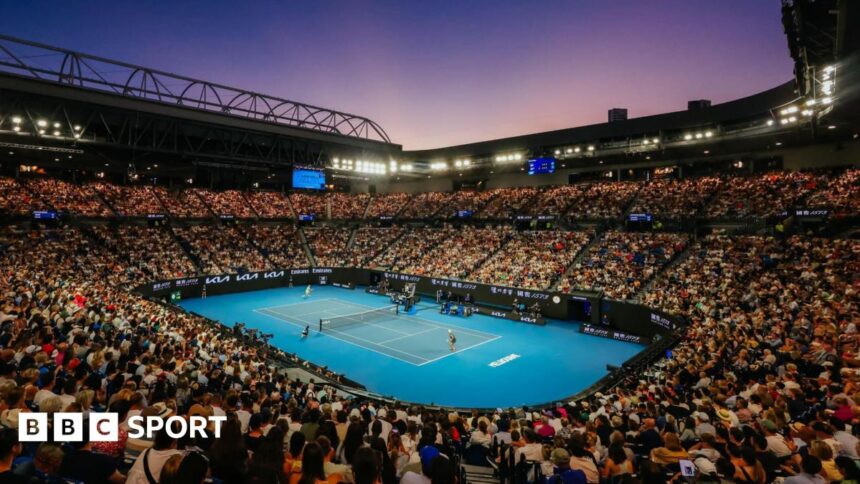
Australian Open 2026: Record Prize Money Fails to Silence Player Discontent
The Australian Open, the sun-drenched, high-energy kickoff to the tennis calendar, has long prided itself on being the “Happy Slam.” Yet, as the 2026 tournament prepares to launch on January 18th under the Melbourne Park sun, a familiar, less cheerful narrative is bubbling beneath the surface. Tournament organizers have proudly announced a record-shattering prize purse of A$111.5 million (£55m), the largest in the event’s history. However, in a stark reminder of the ongoing tension in professional tennis, this monumental figure is being met not with universal acclaim, but with a palpable sense of disappointment from the players. The central conflict is no longer just about the raw number, but about its proportion. The stars of the sport are increasingly vocal that even this record pot represents an insufficient slice of the Grand Slam’s colossal revenue pie.
A Lucrative Yet Divisive Bounty
On paper, the numbers are undeniably impressive. The total prize money for the 2026 Australian Open represents a significant 16% increase from the 2025 event. This commitment to upward momentum is felt across the board. The singles champions will pocket a cool $4.15 million (£2.05m), a 19% increase on what Madison Keys and Jannik Sinner earned last year. Crucially, every single player who competes in the singles or doubles draw is guaranteed a minimum pay rise of 10%, a vital boost for lower-ranked professionals struggling with the sport’s steep travel and coaching costs.
This progressive distribution is a direct response to long-standing calls for a fairer trickle-down of wealth. “We are proud to again be setting a new benchmark for player compensation at the start of the season,” said Australian Open Tournament Director Craig Tiley. The message from Tennis Australia is clear: we are listening, and we are investing in the players.
The Revenue Share Debate: The Heart of the Disappointment
So why the discontent? The issue lies in the fundamental economics of modern Grand Slam tennis. While the record prize pot grows, so too does the tournament’s overall revenue from broadcasting rights, sponsorship deals (with iconic partners like Rolex and Kia), hospitality, and merchandise. Players, led by influential bodies like the Professional Tennis Players Association (PTPA), argue their share of this ever-expanding revenue is not keeping pace.
“It’s a step, but when you look at the total commercial success of the Australian Open, it feels like we’re still catching up,” one top-20 player, speaking on condition of anonymity, told us. “The percentage hasn’t shifted meaningfully. We are the product. Without us, there is no broadcast deal, no sold-out Rod Laver Arena, no sponsor activation.”
This sentiment highlights a critical shift in player mentality. The conversation has evolved from simply demanding “more money” to demanding a more equitable revenue share model. Grand Slams are billion-dollar enterprises, and players are increasingly positioning themselves as partners deserving of a defined stake, not just employees receiving a year-end bonus.
- Historical Context: A decade ago, player compensation at Slams was often cited as being below 15% of total revenue. While that figure has crept up, it remains a fraction of the revenue-share models seen in major North American team sports like the NBA or NFL, where players receive roughly 50%.
- The “Trickle-Down” Question: While increases for early-round losers are essential, stars argue that the dramatic rise in champion’s purse doesn’t address the systemic issue. The superstars drive the ratings, but they want the entire player ecosystem to benefit proportionally from the sport’s health.
Expert Analysis: A Financial Tug-of-War
Sports economists see this as an inevitable clash in a sport without a unified league structure. “Grand Slams operate as independent, massively profitable entities,” explains Dr. Sarah Chen, a sports finance analyst. “They have enormous fixed costs—venue upgrades, security, year-round staffing—but their profit margins are the envy of the sporting world. The players now have more organized voices and access to financial data. They can see the gap between revenue growth and prize money growth, and they are armed with that information at the negotiation table.”
The Australian Open, as the first major of the year, often sets the tone for these discussions. Its innovations—from the player-friendly January timeslot to the introduction of a 10-point final set tiebreak—are often adopted elsewhere. Consequently, its financial decisions are scrutinized under a global microscope. By offering a record prize pot but still facing criticism, Tennis Australia finds itself in a no-win situation, highlighting the deep-seated nature of the revenue dispute.
Furthermore, the 16% increase must be contextualized against inflation and the rising commercial value of the event. A new Asian broadcast deal, for instance, likely generated tens of millions. Does the prize money increase reflect that new income stream? Players contend it does not.
Predictions for 2026 and Beyond
The disappointment expressed ahead of the 2026 tournament is unlikely to manifest as overt disruption on court. The allure of a Grand Slam title and the substantial checks on offer will ensure world-class competition. However, behind the scenes, the pressure will intensify.
We predict the following developments:
- Increased Collective Bargaining: The PTPA and other player groups will use this moment to galvanize support, presenting unified counter-proposals for the 2027 prize money cycle based on a transparent percentage of revenue.
- Focus on the “Journeyman” Player: While champion payouts make headlines, the most significant negotiations may center on further boosting first-round prize money and per diems, strengthening the tour’s middle class and broadening the player coalition.
- Other Slams in the Spotlight: All eyes will now turn to Roland-Garros, Wimbledon, and the US Open. Will they merely match Australia’s percentage increase, or will one break ranks with a more player-friendly model to earn goodwill?
- Long-Term Threat: The simmering discontent fuels ongoing discussions about alternative player-led events or a more radical restructuring of the tour. While a breakaway Grand Slam remains improbable, the conversation itself gives players leverage.
Conclusion: A Grand Slam at a Crossroads
The 2026 Australian Open will undoubtedly deliver its trademark electric atmosphere, dramatic five-setters, and a coronation of new or defending champions. The record prize money is a tangible, positive step that will materially benefit every athlete who walks through the gates. Yet, the prevailing sense of disappointment among the players is a symptom of a much larger ailment within tennis’s governance.
The sport is grappling with a fundamental question: in an era of unprecedented commercial success, what is a fair distribution of wealth for the individuals who put their bodies and careers on the line to create it? The Australian Open’s £55 million bounty is a landmark figure, but it may also be remembered as the moment the “Happy Slam” became the transparent battleground where players drew a definitive line in the clay, demanding not just a bigger piece of the pie, but a guaranteed share of the recipe itself. How the other Grand Slams respond will shape the financial and political landscape of tennis for the next generation.
Source: Based on news from BBC Sport.