Badosa Fires Back: The Physical and Psychological Toll Behind a Tennis Retirement
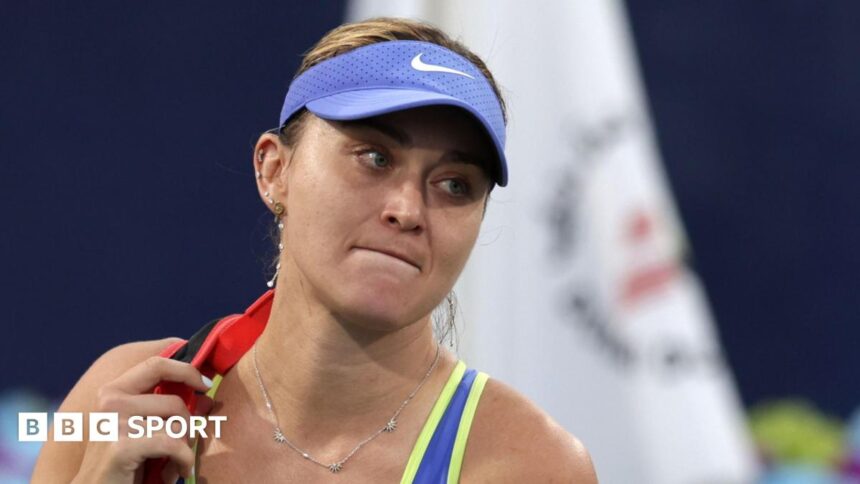
The line between resilience and recklessness in professional sports is perilously thin, a reality world-class athletes navigate with every serve and sprint. For Paula Badosa, the former world number two now battling back from a debilitating spinal stress fracture, this line was publicly crossed this week in Dubai. After retiring from her second-round match against Elina Svitolina due to a right thigh injury, a social media critic labeled the Spaniard’s action as “disrespectful to the game,” accusing her of a pattern of withdrawals. Badosa’s fiery, emotional response has ignited a crucial conversation that extends far beyond a single match, delving into the brutal physical demands of the tour, the invisible mental battles, and the often-overlooked courage it takes to make a call that protects a career.
The Dubai Flashpoint: Injury Interrupts a Promising Start
The scene was set for a compelling clash at the Dubai Tennis Championships. Paula Badosa, showing flashes of her top-5 form, had navigated a tough first-round victory over Katerina Siniakova. Facing the experienced Elina Svitolina, Badosa burst from the gates, securing an early 4-1 lead. However, the momentum shifted dramatically. Svitolina reeled off five consecutive games to steal the first set 6-4. Early in the second set, Badosa called for a medical timeout for treatment on her right thigh. Unable to continue, she made the decision to retire.
It was this decision that prompted a social media user to post: “You cannot retire/withdraw from every tournament. It’s disrespectful to the game, to the fans, and to your opponent.” The comment referenced a challenging 2023 season for Badosa, where she was forced to retire from four matches while grappling with the spinal injury that saw her ranking plummet outside the top 70. For Badosa, the accusation was not just criticism; it was a profound misunderstanding of her struggle.
“Disrespectful to the Game”: Badosa’s Emotional Rebuttal
Paula Badosa did not let the claim stand. In a heartfelt and pointed response, she laid bare the reality of her situation. She emphasized that retiring from a match is the last resort for any competitor, a decision filled with frustration and disappointment, not indifference.
Key points from Badosa’s rebuttal and the context behind it:
- The Spinal Stress Fracture: Badosa’s primary battle for over a year has been a L4 stress fracture in her back, an injury that is notoriously difficult to manage and requires meticulous load management.
- Risk of Aggravation: Playing through a secondary issue, like a thigh injury, can alter a player’s movement and biomechanics, dramatically increasing the risk of re-aggravating the primary, career-threatening back injury.
- Mental Toll: Badosa spoke to the psychological weight of constant injury comebacks, stating that the “disrespect” claim hurt more because of the daily sacrifice and pain she endures just to step on court.
- Protecting the Long-Term Career: Her decision was framed not as a surrender, but as a strategic necessity to ensure she can compete for years to come, rather than risk a catastrophic setback.
“You have no idea how many things I have to do, treatments, hours of work, limitations, pain, frustration to be able to compete almost every week,” Badosa wrote. Her response was a stark reminder that what fans see for two hours on court is a fraction of an athlete’s reality.
Expert Analysis: The Modern Game’s Physical Minefield
To label an athlete’s injury withdrawal as “disrespectful” is to fundamentally misjudge the nature of elite tennis in 2024. The sport has never been more physically demanding. The combination of a year-round schedule, powerful equipment, and athleticism that prioritizes explosive power has created a brutal calendar where bodies are pushed to the absolute limit.
“The data is clear,” says a veteran sports physiotherapist who works with WTA players. “The force loaded through the lower back and lower limbs during a professional match is immense. When a player like Badosa has a foundational injury—a spinal stress fracture—every other muscular tweak becomes a potential crisis. Playing through a thigh strain could force compensatory movements that send stress directly back to the healing vertebra. It’s not a headache to run off; it’s a complex biomechanical calculation.”
Furthermore, the invisible struggle of returning from long-term injury is a psychological marathon. The fear of re-injury can inhibit movement. The pressure to win back points and ranking adds mental strain. Each retirement, while a setback, is a data point for the player and their team, informing the slow, often non-linear path back to peak performance. Viewing these decisions through a lens of “toughness” versus “weakness” is an outdated and dangerous paradigm.
Predictions and the Road Ahead for Badosa
Where does Paula Badosa go from here? The path is undoubtedly challenging, but her fire remains evident. This incident has arguably galvanized public support for her fight, highlighting her vulnerability and her determination.
Short-term outlook: Managing the thigh issue will be priority one. Her schedule will likely remain carefully curated, favoring surfaces and tournaments that minimize stress on her back. The goal for the clay and grass seasons will be consistent match play without flare-ups, not necessarily deep runs at majors immediately.
Long-term prognosis: Badosa’s weaponry—a powerful, aggressive baseline game built on heavy groundstrokes—is still intact. If her body can cooperate, she possesses a top-10 game. The key will be patience and adaptation. This may involve further tweaks to her training, schedule, and even technique to build a more resilient physical framework. Her ranking, currently hovering around 80, will be a secondary concern to health for the foreseeable future.
Prediction: Expect Badosa to have a season of peaks and valleys. She will likely score several high-profile wins when healthy, but may also suffer unexpected losses or further withdrawals as her body adjusts. Success in 2024 should be measured in months of uninterrupted play, not just titles. By 2025, with a sustained period of health, a return to the top 30 is a very realistic goal.
Conclusion: Respect Redefined in the Arena of Adversity
The accusation of disrespect leveled at Paula Badosa reflects a wider, often toxic, narrative in sports culture that conflates pain with honor and sensible caution with cowardice. Badosa’s powerful clapback serves as a necessary corrective. True respect for the game is not blindly grinding one’s body into the ground for a single match point. It is showing up, day after painful day, for the grueling rehabilitation. It is having the self-awareness and professional integrity to know when to fight on court and when to fight another day.
Her journey is a stark embodiment of the modern athlete’s dilemma: how to pursue greatness in a sport that systematically breaks down the very instrument of that pursuit—the human body. Paula Badosa’s retirement in Dubai was not an act of disrespect; it was a difficult, professional decision made in the context of a prolonged and brutal war of attrition. The respect she commands comes not from ignoring her limits, but from the profound courage she shows in confronting them, publicly and unflinchingly, as she fights to reclaim her place in the sport she clearly loves.
Source: Based on news from BBC Sport.