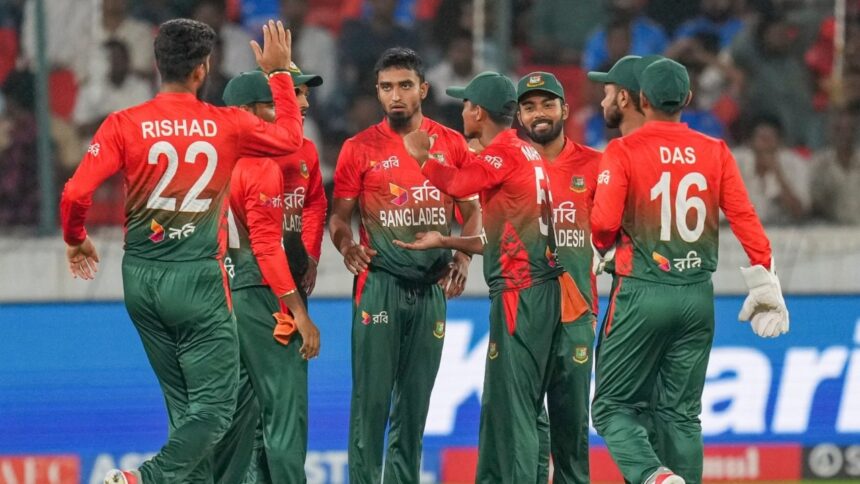
Bangladesh’s T20 World Cup Absence: A Regrettable Void, But No BCB Sanctions
The landscape of international cricket is often defined by its high-octane clashes and global celebrations. Yet, sometimes, the most telling stories are written in the empty spaces—the fixtures not played, the teams not present. The International Cricket Council (ICC) has formally addressed one such void, labeling Bangladesh’s absence from the recently concluded ICC Men’s T20 World Cup 2026 as “regrettable.” In a significant development, however, the global governing body confirmed it will impose no financial, sporting, or administrative penalties on the Bangladesh Cricket Board (BCB). This decision, emerging from a tripartite dialogue, underscores a complex moment for cricket in South Asia, balancing principle with pragmatism.
The Anatomy of a Withdrawal: Security, Stance, and Consequences
Bangladesh’s path to missing a premier ICC event was neither sudden nor taken lightly. The crux of the matter lay in the Bangladesh government’s firm security concerns regarding travel to India, the tournament’s host nation. Despite the ICC’s assurances, the BCB, ultimately bound by its government’s directive, made the painful decision to withdraw. This left the ICC with a logistical and competitive challenge, swiftly filled by Scotland’s entry into the tournament.
Back home, the BCB faced the immediate task of managing the fallout. With their national stars deprived of the World Cup stage, the board launched the Odommo T20 Cup, a domestic league designed to maintain player engagement and fan interest. While a proactive move, it was a stark substitute for the global spectacle. The ICC’s characterization of the situation as “regrettable” is a diplomatic but accurate reflection: a full-member nation’s absence diminishes the tournament’s completeness and denies fans a competitive team capable of upsets on its day.
ICC’s Conciliatory Stance: Why No Sanctions Were Imposed
The ICC’s announcement of no sanctions against the BCB is a pivotal element of this saga. This outcome is directly attributed to what the ICC described as an “open, constructive and congenial dialogue” involving itself, the BCB, and the Pakistan Cricket Board (PCB). This tripartite discussion, covering broader cricketing matters in South Asia, appears to have fostered a climate of understanding.
Expert analysis suggests several reasons for this leniency:
- Force Majeure and Government Directive: The ICC likely recognized that the BCB’s hand was forced by a sovereign government decision on security, a domain where sports boards have limited autonomy.
- Preservation of Long-Term Relations: Imposing heavy sanctions on a full member could have created lasting fractures within the Asian cricket bloc, destabilizing future tournaments and cooperation.
- Focus on Future Collaboration: By opting against punishment, the ICC aims to keep the BCB as a willing partner in growing the game, rather than a resentful entity.
- Precedent of Diplomacy: The move signals that the ICC prefers dialogue and resolution over punitive measures in complex geopolitical situations involving member boards.
This approach, while controversial to some who value strict contractual adherence, reveals the ICC’s role as a political entity as much as a sporting one, navigating the sensitive intersections of sport, security, and state.
The Ripple Effect: Pakistan, India, and Regional Dynamics
While the Bangladesh chapter finds a resolution, the announcement notably highlights an unresolved thread: the status of the high-voltage Pakistan vs India match scheduled for February 15 in Colombo. Intriguingly, the BCB has inserted itself into this narrative. BCB President Aminul Islam Bulbul expressed gratitude to Pakistan for its solidarity following Bangladesh’s withdrawal and has now requested Pakistan to participate in the India fixture.
This BCB intervention is a fascinating diplomatic maneuver. It serves multiple purposes: it repays Pakistan’s perceived support, advocates for the sanctity of the tournament schedule, and positions Bangladesh as a concerned stakeholder in regional cricket stability. The ICC’s silence on a final decision regarding this match indicates the lingering complexities. Will geopolitical tensions override the sporting calendar, or will cricket find a way? The unresolved question adds another layer of uncertainty to an already turbulent period for Asian cricket.
Looking Ahead: Predictions for Bangladesh Cricket and ICC Governance
The immediate future for Bangladesh cricket is a path of rehabilitation. The absence from a World Cup represents a significant setback for player development, commercial revenue, and fan morale. Predictions for the BCB’s next steps include:
- Aggressive Bilateral Scheduling: Expect the BCB to actively seek high-profile series to compensate for lost competitive exposure.
- Domestic League Investment: The Odommo T20 Cup may evolve into a more permanent, high-value feature to shore up domestic talent.
- Strengthened ICC Lobbying: Bangladesh will likely seek greater assurance and involvement in future tournament planning, especially regarding host nation logistics and security protocols.
For the ICC, this episode sets a clear precedent. It has demonstrated a preference for dialogue over discipline in exceptional circumstances. Future predictions suggest:
- Revised Hosting Agreements: Contracts may include more detailed clauses addressing government travel advisories and withdrawal protocols.
- Enhanced Contingency Planning: The swift inclusion of Scotland will become a blueprint, but plans for commercial and broadcast ramifications will need fortifying.
- Greater Geopolitical Risk Assessment: The ICC’s event scheduling committee will likely weigh bilateral political tensions more heavily when awarding tournaments or structuring groups.
Conclusion: A Regrettable Gap, a Pragmatic Peace
Bangladesh’s absence from the T20 World Cup leaves a stain on the tournament’s history—a “regrettable” gap where passionate fans and talented players should have been. The ICC’s decision to forgo sanctions on the BCB is not an absolution of the void, but an acknowledgment of the intricate realities modern cricket must navigate. It is a pragmatic peace, forged in dialogue, aimed at preserving the fragile unity of the international game. The unresolved Pakistan-India fixture serves as a stark reminder that the challenges are far from over. As cricket moves forward, the hope must be that the spirit of the “constructive and congenial” dialogue prevails, ensuring that the field of play remains a space for sport, not just a reflection of the world’s divisions. The true sanction for Bangladesh is not a fine, but the memory of a World Cup they watched from home.
Source: Based on news from India Today Sport.