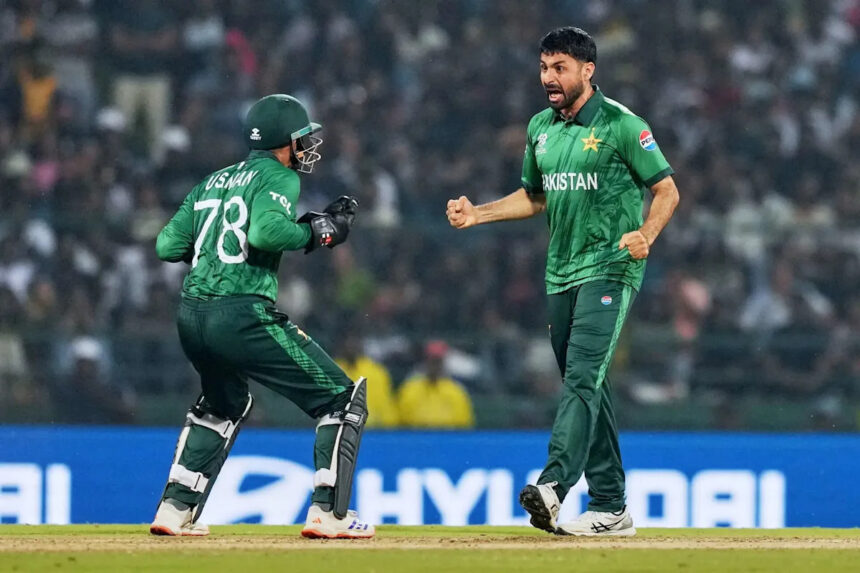
BCCI Breaks Silence on Sunrisers’ Abrar Ahmed Signing: “Not in Our Domain”
The Board of Control for Cricket in India (BCCI) has officially distanced itself from the firestorm surrounding the Sunrisers franchise’s signing of Pakistan spinner Abrar Ahmed for The Hundred, stating it has “no authority” to intervene. The clarification from BCCI vice-president Rajeev Shukla comes after days of intense social media backlash in India targeting the franchise and its owner, Kavya Maran. The controversy has ignited a complex debate over the intersection of geopolitics, franchise autonomy, and the globalized business of cricket.
The Spark: A High-Value Bid in a Volatile Climate
During The Hundred’s draft on Thursday, the Leeds-based Sunrisers, owned by India’s Sun TV Network, secured the services of Pakistani mystery spinner Abrar Ahmed for a hefty £190,000. At the auction table, owner Kavya Maran and head coach Daniel Vettori were seen finalizing the bid, beating out strong competition. Abrar, currently ranked world No. 3 in T20Is, was a significant cricketing acquisition.
However, the move triggered an immediate and fierce reaction on Indian social media. Critics cited the prevailing political tensions between India and Pakistan, with many fans expressing disappointment and anger. The backlash was so severe that the official X account of Sunrisers Leeds was reportedly suspended amid the influx of critical comments. The franchise itself has maintained radio silence, offering no official statement to address the uproar.
BCCI’s Firm Stance: Drawing the Boundary Line
As pressure mounted, all eyes turned to the BCCI for a reaction. On Friday, vice-president Rajeev Shukla delivered a clear and unambiguous response. He stated that the board has no jurisdiction over the matter, as The Hundred is an overseas league.
“This is not at all concerned with the IPL. It’s an overseas league. This is not in our domain. We cannot do anything. They have to take a call,” Shukla told the ANI news agency.
This statement is crucial for several reasons. It underscores the BCCI’s official policy of non-interference in privately-owned franchises’ operations in foreign leagues. It also formally separates the IPL ecosystem from the business decisions its Indian owners make elsewhere in the world.
- Key BCCI Point: The Hundred is an “overseas league” outside its purview.
- Autonomy Affirmed: The decision rests solely with the Sunrisers franchise management.
- IPL Distinction: Shukla explicitly delinked this from the Indian Premier League.
Sunrisers’ Cricketing Logic and a Silenced Speculation
While the political fallout dominated headlines, the Sunrisers’ cricketing rationale for the signing was straightforward. Head coach Daniel Vettori explained that after missing out on their primary target, England’s Adil Rashid, the team turned to Abrar Ahmed as a top-tier alternative. He also noted that with Abrar secured, they dropped plans for another spinner, Pakistan’s Usman Tariq.
This sporting decision also quietly dismantled a significant piece of speculation that had lingered in cricket circles. Following a major expansion of Indian investment in The Hundred in late 2025, a theory suggested that franchises with Indian ownership might avoid Pakistani players to preempt domestic backlash. The Sunrisers’ decisive move to acquire one of Pakistan’s brightest stars has effectively dispelled that rumor, reaffirming that on-field strategy can, and in this case did, override geopolitical optics for the franchise management.
Expert Analysis: Navigating the New Normal of Global Cricket
This incident is not an isolated one. It follows a pattern where IPL-linked entities face scrutiny for their international dealings. The backlash against IPL-linked franchises operating abroad highlights a growing tension in the modern game.
“We are in a new era of cricket commerce,” says a veteran sports business analyst. “Indian capital is now a dominant force in leagues worldwide, from the CPL to the SA20 and The Hundred. This brings immense financial strength but also subjects these franchises to the intense, often polarized, scrutiny of the Indian fanbase. Owners are constantly navigating a tightrope between global business imperatives and domestic sentiment.”
The BCCI’s hands-off approach is strategically sound. By not intervening, it avoids setting a precedent where it must police its citizens’ investments globally. However, it also places the onus entirely on franchise owners like the Sun TV Network to manage public relations and potential commercial fallout from such decisions.
Predictions and the Road Ahead
The immediate future hinges on the Sunrisers franchise’s next move. Will they break their silence with a statement, or let the controversy subside as the tournament begins? The performance of Abrar Ahmed will be under a microscope; success on the field could quiet some critics, while failure may amplify them.
Looking broader, this episode sets key precedents:
- Franchise Autonomy: Indian-owned teams in foreign leagues will likely feel empowered to make purely cricketing decisions, citing the BCCI’s stance.
- Fan Polarization: Social media backlash may become a predictable cost of doing business for these franchises when signing Pakistani players.
- Commercial Calculus: Owners will now have a clear case study to weigh sporting merit against potential brand impact in the Indian market.
The strong reactions in India reflect deep-seated sentiments, but they also clash with the increasingly borderless nature of franchise cricket. The league’s success and viewership in India may ultimately be the most significant factor influencing future decisions.
Conclusion: A Defining Moment for Cricket’s Ecosystem
The BCCI’s statement has drawn a definitive administrative line, but the cultural and commercial lines remain blurred. The Sunrisers-Abrar Ahmed saga is more than a transfer controversy; it is a defining moment that exposes the complex layers of modern cricket. It highlights the clash between globalized sports business and nationalistic fervor, between franchise independence and fan expectation.
While the BCCI has declared the matter “not in our domain,” the domain of public opinion and market forces remains fiercely active. The episode proves that in today’s cricket, a signing in Leeds can reverberate from Lahore to Chennai, and that the most powerful board in the world sometimes has no play to make—leaving the game’s toughest catches to be taken by franchise owners in the arena of global public opinion.
Source: Based on news from Yahoo Sports.