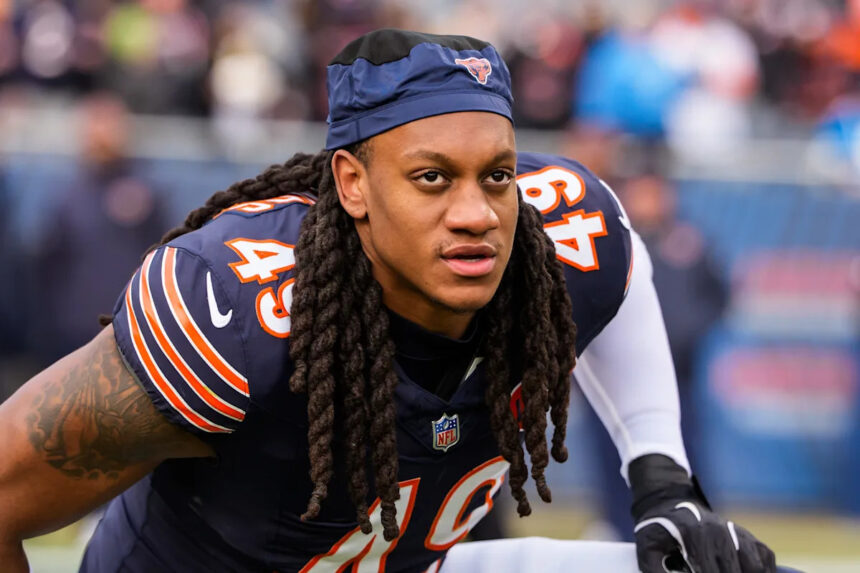
Bears Release Pro Bowl LB Tremaine Edmunds in Major Cap Space Maneuver
In a move that signals a definitive pivot, the Chicago Bears have parted ways with a cornerstone of their defense. According to a report from ESPN’s Adam Schefter, the Bears have agreed to release Pro Bowl linebacker Tremaine Edmunds, a decision that reverberates through Halas Hall and across the NFL landscape. This transaction, coming on the same day the team traded star wide receiver D.J. Moore to the Buffalo Bills, marks a dramatic and calculated reshaping of the roster, clearing a staggering $31.5 million in salary cap space in a single afternoon. The release of Edmunds, a player just three seasons into a lucrative free-agent deal, is not merely a transaction—it is a statement of intent from General Manager Ryan Poles and a franchise staring at a future it is desperate to control.
A Stunning Roster Reset: The Financial Calculus
The decision to release Tremaine Edmunds is rooted in cold, hard financial logic. When the Bears signed Edmunds to a four-year, $72 million contract in the 2023 offseason, they envisioned him as the long-term, sideline-to-sideline anchor of their defense. However, the structure of NFL contracts and the relentless march of the salary cap calendar often force difficult choices.
Edmunds was entering the final year of that deal in 2026, with a non-guaranteed salary and a looming cap hit of $17.4 million. For a team with massive future investments on the horizon—most notably a potential record-breaking extension for quarterback Caleb Williams and the need to build a competitive roster around him—that number became untenable for a player at his position. By designating him a post-June 1 release, the Bears will realize cap savings of $15 million, a crucial financial injection.
This move, paired with the D.J. Moore trade, is a masterclass in cap management. The combined $31.5 million in new space isn’t just for 2026; it provides immediate flexibility. It allows Chicago to:
- Extend core young talent like cornerback Kyler Gordon or offensive tackle Braxton Jones.
- Absorb potential contract restructures for other veterans.
- Carry over significant space to future years, ensuring they can pay their emerging stars.
- Remain aggressive in future free agency cycles to address new needs.
The message is clear: the financial commitment is being strategically reallocated from the previous regime’s vision to the new core being built today.
On-Field Impact: Assessing the Edmunds Era in Chicago
Evaluating Tremaine Edmunds’ three seasons in Chicago requires a nuanced lens. Statistically, his 2025 campaign was impressive: he led the team with 112 tackles and tied a career-high with four interceptions, all while missing four games with a groin injury. He provided length, athleticism, and coverage ability that few linebackers in the league could match. His partnership with T.J. Edwards formed one of the more productive linebacker duos in the NFC.
Yet, the fit within Head Coach Matt Eberflus’ defensive scheme was sometimes questioned. Eberflus’ “H.I.T.S.” principle demands relentless, instinctive play from its Mike linebacker. While Edmunds was a productive tackler, there were moments where his deliberate, read-and-react style contrasted with the all-out, attack-first mentality the coach prefers. His undeniable physical gifts sometimes seemed compartmentalized rather than unleashed.
His release leaves a substantial void in the middle of the defense. The Bears now have a critical question to answer: Who calls the defensive signals and patrols the middle of the field? Jack Sanborn is a capable and instinctive player, but is he a full-time, three-down answer? This move all but guarantees linebacker becomes a premier draft target or a destination for some of the newly freed cap space in free agency next offseason.
The Buffalo Connection and a Shifting NFL Landscape
The symmetry of Thursday’s moves is striking. The Bears released a former Bills first-round pick (Edmunds, 16th overall in 2018) and traded a star receiver to that very same team. Edmunds’ career arc—Pro Bowl selections in his second and third seasons in Buffalo, a big payday in Chicago, and now an unexpected release—highlights the transient nature of NFL success, even for highly drafted talent.
For the Buffalo Bills, acquiring D.J. Moore signals a “win-now” urgency with their current championship window. For the Bears, releasing Edmunds signals a “win-later” commitment to financial health and roster-building flexibility. These parallel moves are a perfect case study in how franchises in different competitive phases operate. One is leveraging assets for an immediate push; the other is accumulating resources for a sustained build.
Edmunds now enters a free agent market that will be keenly interested in a 27-year-old former Pro Bowler with a proven track record of durability and production. Teams in need of linebacker help—perhaps a contender looking for the final piece on defense—will see a motivated player with plenty of prime years remaining.
What’s Next for the Bears and for Edmunds?
The immediate fallout in Chicago is a defense in transition. The secondary, led by Jaylon Johnson, is the established strength. The defensive line is young and promising. The linebacker room, however, is now officially a major work in progress. Expect the Bears to use a mid-round draft pick on a linebacker with the athletic profile and instinctive play they covet. They could also pursue a lower-cost veteran in free agency to provide stability and mentorship.
For Tremaine Edmunds, his future remains bright. His resume—over 100 tackles in every season of his eight-year career—is exceptional. He is a prototype modern linebacker who can match up with tight ends and running backs in coverage. Potential landing spots could include:
- Dallas Cowboys: If they lose Micah Parsons’ supporting cast in free agency, they need a stable force.
- Los Angeles Chargers: Under new coach Jim Harbaugh, who values physicality, Edmunds could be a tone-setter.
- New York Giants: A team perpetually in need of defensive playmakers and leadership.
- A return to the AFC East? The New England Patriots, in their own rebuild, could use a veteran presence.
The Bears’ decision is less an indictment of Edmunds’ ability and more a reflection of the harsh economic realities of the NFL. In the salary cap era, teams are often forced to choose between “very good” and “financially feasible,” especially when allocating resources to non-premium positions.
Conclusion: A Necessary, if Painful, Step Forward
The release of Tremaine Edmunds is a sobering reminder that in the NFL, business often supersedes sentiment. His tenure in Chicago was not a failure; he played good, at times Pro Bowl-caliber, football. But in the grand chessboard of roster construction, his contract became a piece that needed to be sacrificed to protect the king—the long-term financial and competitive health of the franchise.
By creating this mountain of cap space, Ryan Poles has armed himself with the ultimate tool for team building: optionality. He can now sculpt the roster around Caleb Williams with precision, ensuring that when the Bears are ready to truly contend, they won’t be hamstrung by past financial commitments. The Edmunds era ends not with a bang, but with the quiet click of a cap spreadsheet—a sound that may ultimately define the success of the Bears’ ambitious rebuild. For Edmunds, a new chapter awaits, likely with a contender eager to add his proven talent. For the Bears, the future, for better or worse, is now entirely of their own design.
Source: Based on news from Yahoo Sports.