Best Racing Ever or a Joke? The Great F1 Divide Exposed in Shanghai
The 2024 Chinese Grand Prix will be remembered not for a winner, but for a war of words. In the aftermath of a dramatic Shanghai weekend, the three most decorated and outspoken drivers on the grid delivered a verdict so starkly divided it has cleaved the Formula 1 world in two. Is the sport’s current era, built on ground-effect aerodynamics and strategic energy deployment, producing epic wheel-to-wheel combat or a farcical parody of racing? The answer, it seems, depends entirely on where you finished.
A Tale of Two Podiums: Ecstasy and Agony in Shanghai
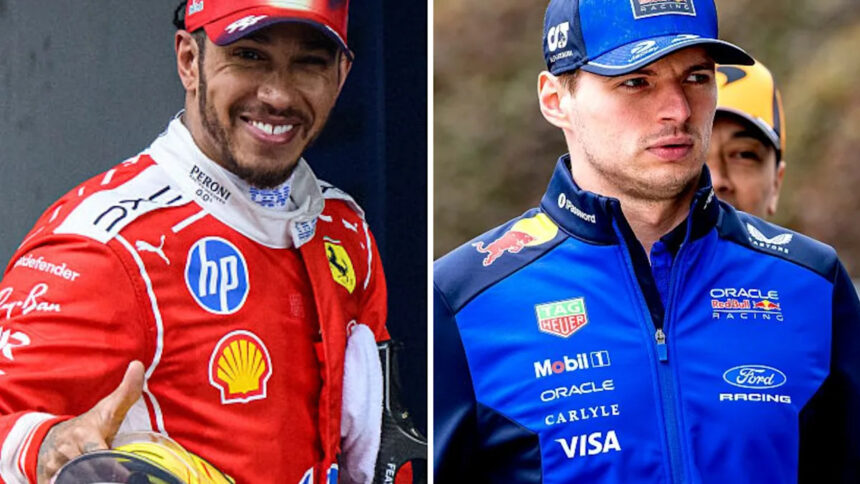
The contrast could not have been more theatrical. On one side, a beaming Lewis Hamilton, finally tasting champagne with Ferrari after a two-year drought. His fierce, race-long duel with teammate Charles Leclerc for third and fourth was a masterclass in defensive driving and opportunistic attack. For Hamilton, it was pure racing nirvana. “That was awesome. Honestly, that’s the best racing I’ve ever experienced in F1,” he gushed. “It was so much fun.” His joy was visceral, a champion rediscovering the thrill of the fight.
On the other side, a scowling Max Verstappen, his Red Bull hobbled by a failing Energy Recovery System (ERS), trundling home a frustrated seventh before a late retirement. For the dominant champion, the race was an infuriating procession of artificiality. “If someone likes this, then you really don’t know what racing is like,” he fumed. “Playing Mario Kart. This is not racing. Boosting past, then you run out of battery, the next straight they boost past you again. For me, it’s just a joke.”
In one paddock, two realities: the elation of hard combat and the disgust at perceived gimmickry. This is the core paradox of modern F1.
Deconstructing the Duel: What Makes Racing “Real”?
To understand this schism, we must dissect what Hamilton and Verstappen are actually describing. Their experiences, though opposite, stem from the same technological root: the 2022 aerodynamic overhaul designed to promote closer racing.
- The Hamilton/Leclerc Battle: This was a strategic, tactical fight. It involved managing tire degradation, deploying electrical energy (ERS) at critical moments on the straights, and exploiting DRS zones. The cars could follow closely through corners, allowing for sustained pressure. For Hamilton, this complexity is the skill—the multi-layered chess match at 200 mph.
- The Verstappen Frustration: The reigning champion’s “Mario Kart” analogy points to the reduction of overtaking to a binary energy-boost transaction. His complaint is that the driver’s raw skill in braking and cornering is diminished; the race becomes a game of who has the better battery or the more favorable tow. It feels artificial, a spectacle of pre-programmed passes rather than spontaneous brilliance.
Enter Fernando Alonso, the sage veteran, who often finds the elegant simplicity to nail an issue. While not quoted directly from China, his past philosophy applies: “Racing is not just going fast. It is the art of doing everything perfectly under immense pressure.” The question for 2024 is whether that “art” now resides more in the engineering of energy flow than the intimate dance between driver, brake, and throttle.
The SEO of Speed: How F1 Sells Its Product
This debate transcends driver opinion; it strikes at the heart of F1’s commercial and sporting identity. For years, the sport was criticized for processional races where overtaking was impossible. The current regulations were a direct response, engineered to create more “action.”
From a fan and broadcaster perspective, the Shanghai race delivered. The leaderboard churned, there were multiple battles through the field, and the podium story was compelling. SEO-optimized highlights packages write themselves: “Hamilton’s Epic Ferrari Fight!” “DRS Thrills in Shanghai!” This is the product F1 believes it needs to sell to a new, global audience.
But Verstappen’s critique exposes the risk: in pursuing watchable action, has the sport diluted its essence? If every overtake is aided by DRS and battery boosts, does the “pure” racing that purists revere still exist? The sport is caught between catering to traditionalists who value technical purity and meritocracy, and appealing to casual fans who crave constant drama and overtaking.
The Road Ahead: Predictions for a Sport at a Crossroads
Where does F1 go from this philosophical rift? The drivers’ war of words in China is a symptom, not the disease. The path forward will be shaped by several key factors:
- The 2026 Power Unit Regulations: The next major technical shift looms. Will the new engines and even greater electrical power emphasis amplify the “Mario Kart” effect, or can they be crafted to feel more organic and driver-centric?
- The Verstappen Effect: As the sport’s biggest star, his vocal discontent carries weight. If his dominance ends and he finds himself in more battles, will his perspective soften? Or will his criticism push the FIA to tweak the racing formula?
- The Data Tells the Story: Liberty Media and the FIA will rely heavily on metrics. If fan engagement and TV ratings remain high, they will see the formula as a success, regardless of driver grumbling. The business case often overrules the sporting ideal.
Predictably, the future will be a compromise. Expect minor adjustments to DRS zones and ERS deployment rules to try to find a sweeter spot. But the core concept—cars designed to follow closely, with overtaking aids—is here to stay.
Conclusion: The Uncomfortable Truth of Modern F1
The raw, unfiltered reactions from Shanghai reveal an uncomfortable truth: in modern Formula 1, the definition of “great racing” is now subjective and situational. For Lewis Hamilton, mired in Mercedes struggles for years, the chance to fight tooth-and-nail on equal terms with a fierce competitor was a liberation. It was the best racing ever because it was a fair, visible, and winnable fight.
For Max Verstappen, accustomed to winning through sheer car dominance and surgical precision, a race spent trading artificial boosts in the midfield was an affront to his craft. It was a joke because it felt arbitrary and divorced from what he believes is true driver skill.
Perhaps both are right. F1 has always been a hybrid of sport and spectacle, engineering and art. Today, that balance is more precarious than ever. The Chinese Grand Prix didn’t create this divide; it simply handed a microphone to its loudest voices. The sport now races on, trying to please everyone, and in doing so, risks confirming that in the pursuit of being the best show on earth, it might just be forgetting what it means to be a pure race.
Source: Based on news from Yahoo Sports.