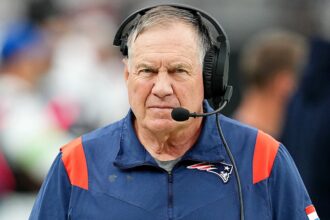
Bill Belichick’s Hall of Fame Snub: A ‘Patriot’ Outrage or Procedural Reality?
The Pro Football Hall of Fame’s Class of 2025 will be notable for who is in it. Yet, the deafening story of this selection cycle is definitively about who is not. For the first time in modern memory, a coach universally regarded as the greatest defensive strategist in NFL history and a central architect of the league’s most enduring dynasty has been told to wait. The omission of Bill Belichick in his first year of eligibility has sent shockwaves through the football world, eliciting a response that perfectly encapsulates the sentiment of a generation of Patriots fans and players: pure, unadulterated disbelief.
That reaction was voiced loud and clear by one of Belichick’s most iconic players. Rob Gronkowski, the future Hall of Fame tight end whose career was defined by Belichick’s system, didn’t mince words. “It’s asinine,” Gronkowski stated bluntly. “It makes no sense.” This visceral response from “Gronk” echoes a popular opinion gaining steam across football circles. The snub isn’t just a slight against a coach; to many, it feels like a rewriting of history, a baffling hesitation to enshrine a career that has long been considered a first-ballot lock.
The Unprecedented Resume of a First-Ballot Lock
To understand the outrage, one must simply look at the resume. Bill Belichick’s credentials are not merely Hall of Fame-worthy; they are the benchmark against which all coaching careers are now measured. The argument for his first-ballot induction isn’t nuanced—it’s mathematical and historical.
- Eight Super Bowl championships (six as head coach, two as defensive coordinator).
- The most postseason wins by a head coach in NFL history (31).
- Third all-time in regular season wins (302), trailing only Don Shula and George Halas.
- Architect of a two-decade dynasty with the New England Patriots, featuring 17 division titles in 19 years.
- Widely credited with designing the game plan that held the record-setting “Greatest Show on Turf” St. Louis Rams to 17 points in Super Bowl XXXVI.
As reported by ESPN, sources close to Belichick indicated the coach himself was “puzzled” and “disappointed” by the Hall’s decision, legitimately wondering what more he could have done. It’s a question with no satisfactory answer. Sportscaster Jim Gray, discussing the snub on ‘America Reports,’ framed it as a disconnect between statistical reality and the selection committee’s current temperament. The case is so self-evident that the debate isn’t *if* he belongs, but why there’s any debate at all.
Decoding the Snub: Politics, Procedure, or Post-Patriots Bias?
So, what explains this unprecedented delay for an unprecedentedly successful coach? Football insiders and analysts point to a confluence of factors that likely stalled Belichick’s first-ballot momentum.
The “Spygate” and “Deflategate” Shadows: For some voters, Belichick’s legacy is inextricably tied to the controversies that dogged his Patriots. While the competitive impact of these scandals is hotly debated, their effect on Belichick’s reputation as a ruthless rule-bender is undeniable. The Hall of Fame selection process is, at its core, a human vote, and lingering resentment or a desire to make a statement about “integrity of the game” could have swayed a critical bloc.
The Unceremonious Ending in New England: Belichick’s final years with the Patriots, culminating in a 4-13 season and a mutual parting of ways, were a stark contrast to the dynasty’s peak. For voters with short memories, this exit may have diluted the awe of his two-decade run. His subsequent, fruitless job search this offseason may have, unfairly, reinforced a narrative of a coach whose methods had passed their expiration date.
Logjam of Legendary Candidates: The modern-era player candidate pool is increasingly stacked with superstars. Some committee members may have strategically used their votes on players they felt were more immediately time-sensitive, operating under an assumption that Belichick’s induction was inevitable and could wait a year. This procedural gamesmanship, while logical in a vacuum, fails to respect the stature of the candidate in question.
The Gronkowski Perspective: A Player’s Testament to Greatness
When Rob Gronkowski calls the decision “asinine,” he speaks from the ultimate insider’s perspective. His career—from a raw, talented rookie to the most dominant tight end the game has seen—was molded in the demanding crucible of Belichick’s system. Gronkowski’s success was a product of both his otherworldly physical gifts and Belichick’s strategic deployment of them.
“He’s the best coach of all time. Hands down,” Gronkowski asserted. This player-coach dynamic is central to the argument. The Hall of Fame is filled with Belichick’s pupils—from Tom Brady to countless role players who maximized their potential under his tutelage. To honor the players of the Patriots dynasty while sidelining its mastermind creates a dissonant historical record. Gronkowski’s outrage is less about personal loyalty and more about a fundamental understanding of football causality: the Patriots’ success was not an accident; it was by design.
Looking Ahead: Inevitable Enshrinement and a Redefined Legacy
Make no mistake: Bill Belichick will be in the Pro Football Hall of Fame. The only question is whether his bronze bust will be unveiled in 2026 or shortly thereafter. This initial snub, however, has already altered the narrative.
Prediction 1: A Coronation in 2026. The backlash to this decision has been so severe and widespread that it will likely galvanize his election next year. The committee will be hard-pressed to justify a second delay for a figure of his stature, especially without the “first-year eligible” spotlight.
Prediction 2: A More Complicated Legacy. Ironically, this snub may ultimately enrich Belichick’s legacy. It has sparked a furious, definitive defense of his career, reminding a new generation of fans of his sheer tactical dominance absent the controversies. The conversation is no longer about deflated footballs or sideline tapes; it’s a forced re-examination of 30 years of defensive innovation and unparalleled team-building.
Prediction 3: A Changed Standard for Coaches. This event sets a perplexing new precedent. If the coach with eight rings and the third-most wins isn’t a first-ballot inductee, who is? The barrier for first-ballot coaching entry now appears impossibly high, potentially affecting how future legends like Andy Reid are viewed when their time comes.
Conclusion: A Stain on the Process, Not the Legacy
The Pro Football Hall of Fame’s mission is to preserve professional football’s history. In delaying Bill Belichick’s enshrinement, the selection committee has, in the eyes of many, momentarily failed that mission. Rob Gronkowski’s characterization of the snub as “asinine” resonates because it reflects a simple, truth-based evaluation of facts over feelings.
Bill Belichick’s legacy was cemented long before this vote. It is etched in six Lombardi Trophies, in a generation of coaches who trace their philosophies to his, and in the absolute certainty he instilled in his players—a certainty that leads a Gronkowski to immediately and passionately defend his coach’s honor. This snub is a footnote, a curious artifact of a voting process susceptible to human whims. The story of Bill Belichick, the greatest coach in NFL history, will inevitably have its rightful ending in Canton. The Hall of Fame needs Bill Belichick. The only thing this delay proves is that, for one puzzling year, they didn’t seem to know it.
Source: Based on news from Fox Sports.