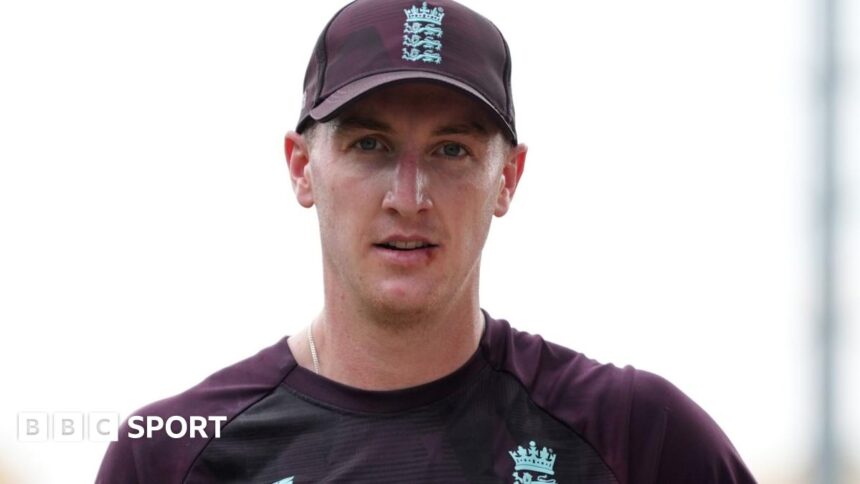
Harry Brook’s Nightclub Admission: A Captain’s Lie and the Weight of Leadership
The life of a modern international cricketer is played out under a relentless spotlight, where on-field brilliance is scrutinized as intensely as off-field conduct. For Harry Brook, a prodigious talent now shouldering the unexpected responsibility of captaining England in Sri Lanka, that glare has just intensified. What began as a minor, late-night altercation in Wellington has evolved into a revealing story about pressure, protection, and the complex calculus of leadership. Brook’s admission that he lied “to protect” teammates from scrutiny peels back the curtain on the unspoken codes within a team environment and poses urgent questions as England’s T20 World Cup defense looms.
The Wellington Incident: From Solo Stroll to Team Admission
For months, the official narrative was straightforward. In the lead-up to a one-day international against New Zealand last November, a young Harry Brook was involved in a verbal disagreement with a nightclub bouncer. The then 24-year-old’s explanation was simple: he was out on his own. It was framed as an isolated, personal misstep. However, that story unraveled this week following a report by the Daily Telegraph. The newspaper alleged that Brook was not alone, but with teammates Jacob Bethell and Josh Tongue, and that the England and Wales Cricket Board (ECB) cricket regulator could launch an investigation.
Faced with this, Brook released a swift and revealing statement. “I accept responsibility for my actions in Wellington and acknowledge that others were present that evening,” he said. The crucial line followed: “My initial statement was misleading; I said I was alone that night because I wanted to protect my teammates and avoid them being drawn into a situation which was not of their making.” This shift from a solo error to a collective cover-up, however nobly intended, changes the story’s complexion entirely.
Analysis: The “Protection” Paradox and Leadership Under Fire
Brook’s actions present a fascinating leadership dilemma. On one hand, his instinct to shield younger or less-established teammates like Bethell and Tongue from media frenzy is a classic, almost old-school, dressing-room reflex. It speaks to a sense of brotherhood and responsibility. In the high-pressure bubble of international sport, the impulse to present a unified front and absorb external fire is powerful. He attempted to be the buffer.
However, as the newly appointed England white-ball captain, even temporarily, this logic is fatally flawed. Leadership is fundamentally built on accountability and transparency. By fabricating a story, Brook exchanged a minor disciplinary issue for a significant crisis of credibility. The lie, not the nightclub dispute, becomes the headline. It places the ECB integrity unit in a difficult position, forcing them to investigate not just the original altercation but now the subsequent attempt to obscure it. This creates several immediate consequences:
- Erosion of Trust: Public and institutional trust is damaged. What is said in future must now be verified.
- Increased Scrutiny: Teammates Bethell and Tongue are now inevitably drawn deeper into the spotlight he sought to avoid.
- Captaincy Questions: It invites debate about his judgment under pressure, a key captaincy commodity.
Expert cricket commentators are divided. Some sympathize with the protective instinct, especially for a player new to leadership roles. Others argue that true leadership would have involved managing the truth from the start, presenting a united but honest account to team management and accepting collective responsibility. The “code of silence” can be a dangerous precedent, setting a trap where minor issues snowball into major scandals.
World Cup Ramifications: A Storm Cloud on the Horizon
The timing of this revelation could not be more delicate. Brook is leading England in Sri Lanka in a series that is a direct tune-up for the T20 World Cup 2024 in the Caribbean and USA. While regular captain Jos Buttler will resume command for the tournament, this episode casts a shadow over the squad’s environment.
The key predictions and ramifications are now clear:
- Internal Discipline: The ECB is almost certain to issue a formal reprimand. A fine is likely, but a suspension before the World Cup seems improbable given Brook’s importance to the batting lineup.
- Dressing Room Dynamics: How teammates perceive Brook’s actions will be critical. Does his lie breed loyalty or resentment? Has he inadvertently created a faction between those involved and those not?
- Opposition Targeting: Opponents at the World Cup will not forget this. Brook can expect pointed verbal challenges, testing his temperament and focus when England need his runs most.
- Management Challenge: For coach Matthew Mott and captain Jos Buttler, this is an unwanted distraction. Their man-management skills will be tested to reintegrate Brook and ensure the squad remains focused on cricket.
Ultimately, Brook’s form with the bat will be the quickest route to redemption. A match-winning century can temporarily mute any controversy. But the off-field narrative is now inextricably linked to his tournament, a subplot waiting to resurface with every failure or moment of on-field frustration.
Conclusion: A Hard Lesson in the Spotlight
Harry Brook’s Wellington saga is a modern sporting parable. It highlights the immense, often unforgiving, pressure on young athletes who are not just players but brands and leaders. His attempt to “protect” others was a miscalculation born from a commendable impulse, but it underestimated the fundamental currency of professional sport: integrity.
For Brook, this is a brutal but potentially career-defining lesson. True leadership is not about constructing convenient narratives; it is about steering the truth through difficult terrain with honesty and courage. As England jets toward the Caribbean, the hope will be that this episode strengthens the squad’s resolve rather than fractures it. Brook has taken his eye off the ball off the field; his challenge now is to demonstrate the mental fortitude to do the exact opposite when it matters most, under the world’s gaze. The lie may have been intended to protect, but the path to true protection for his team—and his own reputation—lies solely in wielding the bat and speaking the truth.
Source: Based on news from BBC Sport.