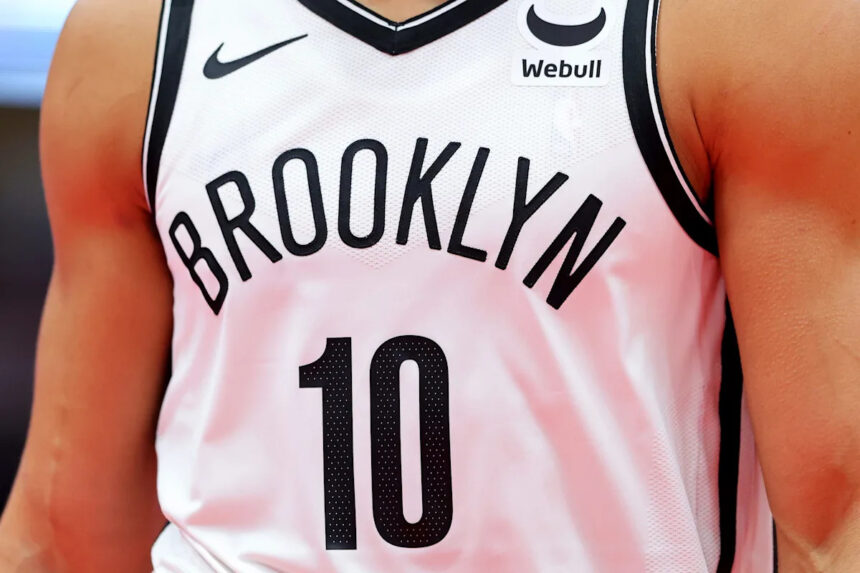
Beyond the Jersey: The Unlikely Journey of Bill Willoughby and Nets No. 34
In the sprawling tapestry of the Brooklyn Nets franchise, a history that stretches from the ABA’s red, white, and blue ball to the black-and-white aesthetic of Barclays Center, certain jersey numbers resonate with legacy. Some are retired, immortalizing legends. Others, like No. 34, tell a different story—one of winding roads, unrealized potential, and the quiet dignity of a career’s final act. Worn by 15 different players in team annals, the number found its way onto the back of forward Bill Willoughby for the 1982-83 and 1983-84 seasons. His tenure was brief, a footnote in the team’s New Jersey era, but Willoughby’s journey to and from the Nets is a profound chapter in basketball history, making him one of the most significant, if statistically modest, bearers of the number.
The Prodigy and the Precedent: Willoughby’s Pioneering Path
To understand Bill Willoughby’s Nets chapter, you must start at a revolutionary beginning. A 6’8″ phenom from Englewood, New Jersey, Willoughby made a decision in 1975 that would ripple through the sport for decades: he declared for the NBA Draft directly out of high school. He was not the first to do so—Moses Malone had paved the way from the ABA a year prior—but Willoughby was a pivotal second data point in a then-radical experiment. Selected 19th overall by the Atlanta Hawks, he bypassed college, betting on his raw, athletic talent.
This decision framed his entire career. Willoughby entered the league as a project, a breathtaking athlete trying to hone his skills against seasoned veterans. His early years were a nomadic quest for development and consistency. Before landing with the Nets, his career trajectory included:
- Atlanta Hawks (1975-77): His formative years, playing limited minutes behind established stars.
- Buffalo Braves/Cleveland Cavaliers (1977-79): A period of transition, traded mid-season in the complex deal that sent Bob McAdoo to the Knicks.
- Houston Rockets (1979-80): A stint where he showed flashes, including a career-high 24 points in a game.
- San Antonio Spurs (1980-82): A role player on competitive teams led by George Gervin.
By 1982, Willoughby was a seasoned journeyman, his early “prodigy” label replaced by the reality of a career as a defensive-minded reserve. When he signed with his home-state New Jersey Nets, it was a homecoming of sorts, but for a player now defined by perseverance rather than hype.
The Nets Tenure: A Veteran’s Final Stand
Bill Willoughby’s arrival in New Jersey coincided with a fascinating period for the franchise. The team, led by Buck Williams and Otis Birdsong, was fighting for playoff relevancy in the Eastern Conference. Willoughby, at age 25 but with seven seasons of wear, was brought in to provide defensive versatility and veteran depth off the bench. His role was specific and limited.
In 65 total games across two seasons, his averages—2.4 points and 1.7 rebounds—tell only a sliver of the story. Willoughby was a utility forward, asked to guard multiple positions, use his still-impressive athleticism in spot minutes, and mentor a younger core. He played his final NBA game on April 7, 1984, a quiet exit for a player whose entrance had been so loudly debated. His time with the Nets wasn’t about statistical glory; it was about professional survival and contributing to a team in the only ways left available. In doing so, he cemented his place in the numeric lineage of Nets No. 34, a bridge between eras and a reminder of the many forms an NBA career can take.
Expert Analysis: The Legacy of the “What If?”
Analyzing Bill Willoughby’s career requires a lens broader than box scores. Historically, he occupies a crucial, often overlooked, space in the evolution of player empowerment and development. His direct leap from high school, while pioneering, came with immense cost. Without the structure of college basketball or the modern NBA’s sophisticated player development programs, his raw talent was often left to languish on the bench.
Willoughby’s career is a foundational case study in the preps-to-pros movement. The lessons learned from his and others’ experiences in the 70s and 80s informed the eventual success of later generations, from Kevin Garnett to Kobe Bryant and LeBron James. These later stars benefited from franchises that understood how to nurture teenage talent, a support system Willoughby largely lacked. His Nets years represent the tail end of that learning curve—a player, once seen as the future of the game, now adapting his game to extend his career as a specialist. In the Nets’ jersey history, he symbolizes the import of context; his number 34 is not just about his two seasons in New Jersey, but about the entire, arduous journey that led him there.
Predictions & Reflection: How Willoughby’s Story Informs the Modern Game
Looking forward, the legacy of players like Bill Willoughby is more relevant than ever. As the NBA again debates age limits and the viability of alternative development paths (like the G League Ignite or Overtime Elite), Willoughby’s narrative serves as a historical checkpoint. The league has now institutionalized the path he helped pioneer, but it has done so with safeguards he never had.
For the Nets franchise and its fans, honoring jersey history means appreciating these nuanced stories. No. 34 will likely one day be worn by a star who defines it for a new generation. But that player will stand on the shoulders of those who wore it before, including a local kid who took a monumental risk. Willoughby’s story predicts a future where player development is holistic, where a prospect’s entry into the league is not an endpoint, but a carefully managed beginning—a future he helped create through his own challenging experience.
In conclusion, the history of Brooklyn Nets jersey No. 34 is richer for including Bill Willoughby. His statistical contribution in New Jersey was minimal, but his historical footprint is immense. He was a pioneer who paid the price of early entry, a journeyman who found a final NBA home in his home state, and a player whose true impact is measured in the doors he helped open for others. In commemorating the 52 numbers and over 600 players in franchise history, it is essential to celebrate not only the superstars but also the trailblazers like Willoughby. His two-season stint with the Nets was the closing paragraph of a complex, important basketball story, forever stitching his name into the fabric of the team’s enduring legacy.
Source: Based on news from Yahoo Sports.