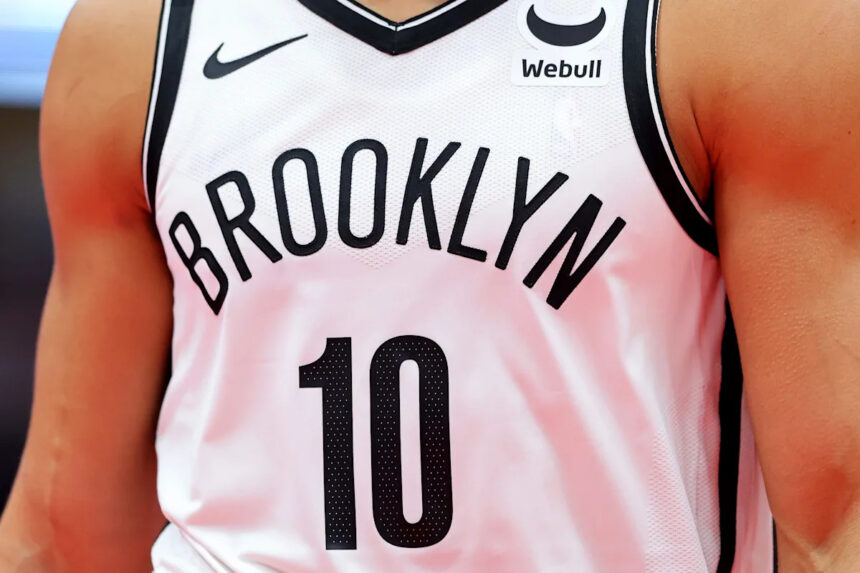
Brooklyn Nets Jersey History: The Brief But Impactful Legacy of Cliff Robinson’s No. 45
In the sprawling tapestry of the Brooklyn Nets franchise, a history that stretches from the ABA’s red, white, and blue ball to the black-and-white aesthetic of Barclays Center, some jersey numbers tell epic, novel-length stories. Others offer compelling short stories. The saga of jersey number 45, particularly during the two-season tenure of forward Cliff Robinson (1979-81), is decidedly the latter—a concise chapter of unfulfilled potential that nonetheless left an indelible mark on a franchise in flux. He was not the legendary “Uncle Cliffy” of Portland Trail Blazers fame, but an earlier model: a high-lottery pick whose time in New Jersey was a prologue to a solid career, emblematic of the Nets’ challenging era between ABA glory and NBA relevance.
From Trojan to Net: The Arrival of a Lottery Talent
When the New Jersey Nets selected Clifford T. Robinson out of the University of Southern California with the 11th overall pick in the 1979 NBA Draft, they believed they were securing a cornerstone. The Nets, just three years removed from their last ABA Finals appearance, were navigating a difficult transition into the NBA’s mainstream. Robinson arrived with a sterling pedigree: a 6’10” forward with a polished inside game honed under Coach Bob Boyd at USC, where he averaged a double-double in his senior season. His selection was a signal of intent—a move to inject young, high-end talent into a lineup that still featured legends like Julius “Dr. J” Erving in recent memory.
Robinson’s rookie season presented a steep learning curve. The 1979-80 Nets finished a dismal 34-48, and Robinson, while showing flashes, came off the bench behind established veterans. His numbers—5.7 points and 3.4 rebounds per game—were modest, but his athletic frame and soft shooting touch were evident. The following season, 1980-81, saw a shift. With increased opportunity, Robinson’s production jumped to 9.4 points and 4.6 rebounds per contest. He started 33 games, showcasing an evolving offensive repertoire. Key attributes of his game included:
- A reliable mid-range jumper that extended out to 18 feet, a valuable skill for a big man in that era.
- Strong rebounding instincts, particularly on the offensive glass, using his length and timing.
- Versatile frontcourt defense, capable of guarding both power forwards and centers.
Despite his individual growth, the team’s fortunes did not improve, setting the stage for a franchise-altering decision.
A Trade and a Turning Point for the Franchise
In October 1981, just before the start of the new season, the Nets made a decisive move. Cliff Robinson, along with a 1984 first-round draft pick, was traded to the Kansas City Kings for power forward Sam Lacey and a 1984 second-round pick. On the surface, it was a deal that swapped youth for veteran stability. Lacey was a seasoned center known for his passing and defense. For the Nets, it was an attempt to solidify a roster they hoped could compete immediately.
In hindsight, this trade crystallizes a period of short-term thinking for the Nets. Robinson, just 23 years old and on an upward trajectory, was dealt away. The first-round pick sent to Kansas City later translated into All-Star guard Otis Birdsong for the Kings, while the Nets’ return was temporary. This period in Nets history is marked by such maneuvers—moves that often sacrificed future assets for present-day fixes that rarely panned out. Robinson’s departure in the No. 45 jersey was less a reflection of his failure and more a symptom of a franchise struggling to find its identity and build sustainably in the NBA.
Robinson’s career, however, was far from over. In Kansas City (which soon became Sacramento), he blossomed into a dependable starter. He would go on to play 13 total NBA seasons, averaging a solid 12.8 points and 7.2 rebounds for his career, peaking with 18.4 points per game for the Kings in the 1983-84 season. His Nets tenure, therefore, became the foundational years for a very respectable professional journey.
No. 45 in Context: A Number of Transition
Cliff Robinson was only the second player to wear No. 45 for the franchise, following George Johnson’s single season in 1978-79. The number itself has never been retired by the Nets and has often been worn by role players or those on short-term contracts, making Robinson’s stint as its most prominent early occupant noteworthy. His story with the number mirrors the Nets’ own narrative in the early 80s: potential glimpsed but not fully realized in New Jersey.
Analyzing Robinson’s fit with those Nets teams reveals a mismatch of timeline and philosophy. He was a developing talent on a team that, after the departure of its ABA superstars, lacked a clear direction. He did not have the veteran point guard to maximize his pick-and-pop game, nor was he yet the go-to scorer a floundering offense desperately needed. Wearing No. 45, he was a piece of a puzzle the front office couldn’t quite solve, leading to his premature exit. The jersey, in this light, symbolizes the transient nature of that era—players cycling through as the organization sought a winning formula.
Legacy and the Modern Lens
Today, Cliff Robinson’s name is a deep-cut reference in Nets lore, known primarily to dedicated historians and jersey number enthusiasts. Yet, his chapter is crucial for understanding the franchise’s journey. He represents the high draft picks of the post-ABA era who carried the weight of resurrection—a list that includes contemporaries like Buck Williams (who arrived a year later and found stardom). Robinson’s path diverged, but his subsequent success elsewhere validated the Nets’ original scouting assessment.
Predicting the legacy of a number like 45 in a modern context is fascinating. In today’s NBA, a player with Robinson’s skill set—a floor-stretching four who can rebound and switch defensively—would be immensely valuable. One can easily imagine a player like him thriving in a contemporary Nets system, spacing the floor for star guards. His trade, judged by modern asset-management standards, would be viewed as a significant misstep. The Nets of today, under General Manager Sean Marks, have demonstrated a pronounced focus on developing and retaining young talent, a stark contrast to the early-80s philosophy that saw Robinson shipped out.
Conclusion: A Short Story Worth Remembering
The history of a franchise is not written solely by its superstars and retired numbers. It is also etched by the players like Cliff Robinson, who wore their jersey for a brief time, flashed promise, and moved on, leaving behind a “what if” narrative. His tenure in the Nets’ No. 45 is a compact tale of transition—for the player, who used New Jersey as a springboard to a lengthy career, and for the franchise, then grappling with its place in the basketball world.
As we continue to chronicle the 52 jersey numbers and over 600 players in Nets history, Robinson’s story stands as a poignant reminder. It underscores the importance of patience in team building and the reality that not every promising draft pick will blossom in the uniform that drafts them. The Brooklyn Nets’ rich history is a mosaic, and Cliff Robinson’s two seasons in New Jersey are a distinct, meaningful tile in that vast and colorful picture—a snapshot of potential in a number, 45, waiting for its next occupant to write a new chapter.
Source: Based on news from Yahoo Sports.