The Forgotten 50: Adrian Caldwell’s Fleeting Nets Tenure and the Legacy of a Jersey Number
In the sprawling, star-studded narrative of the Brooklyn Nets franchise—a saga that stretches from the ABA’s red, white, and blue ball to the black-and-white chic of Barclays Center—certain jersey numbers resonate with historic weight. No. 5 is for Jason Kidd. No. 52 is for Buck Williams. But what of the others? The digits worn by the journeymen, the temporary tenants, the players whose tenures were brief but whose stories are woven into the very fabric of the team’s 50-plus year history. Today, we turn to one such number and one such player: No. 50 and the man who wore it for a fleeting moment in 1996, Adrian Caldwell. His story is not one of championships or All-Star appearances, but a compelling chapter in the relentless, often unforgiving, grind of professional basketball.
From Undrafted to the NBA: The Grind of Adrian Caldwell
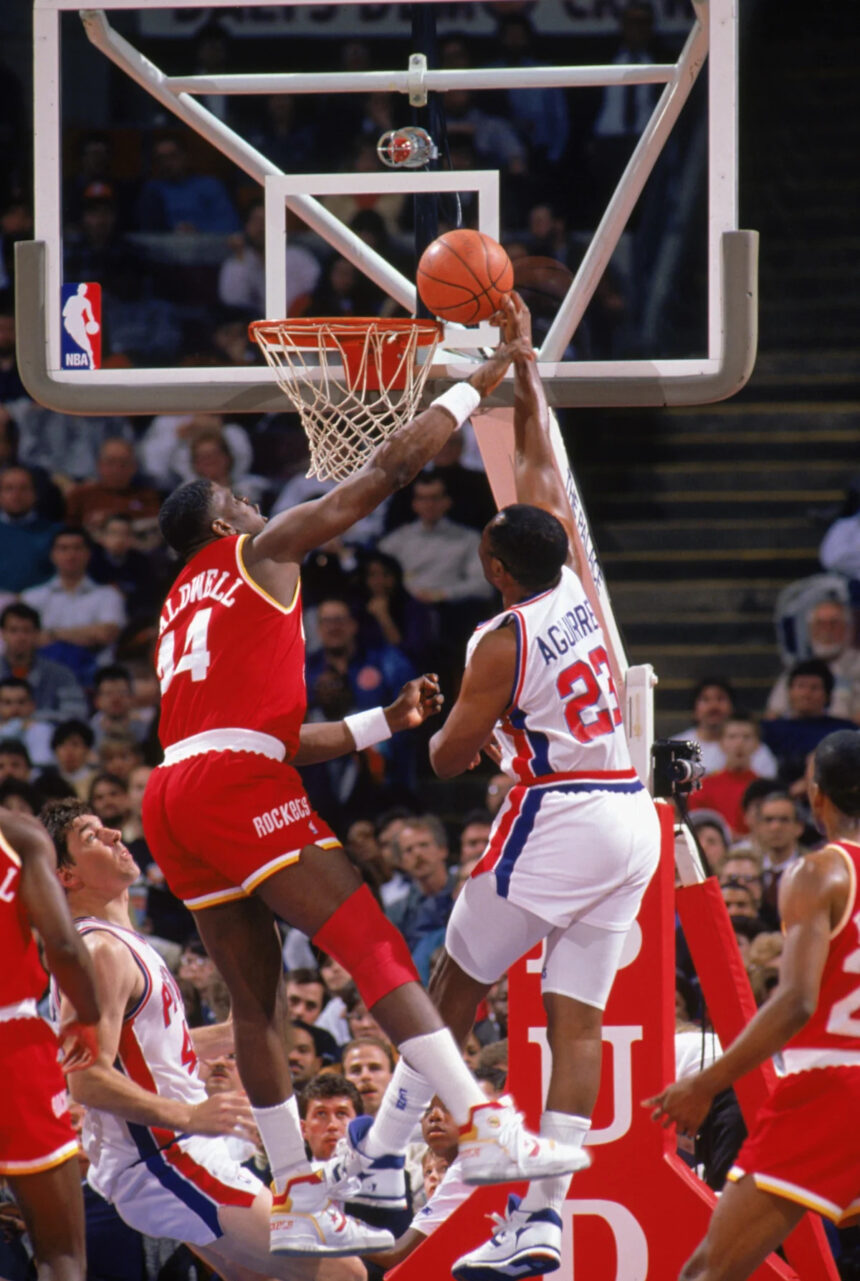
Before the No. 50 jersey hung in a locker at the Meadowlands, it belonged to a player forged in the fires of perseverance. Adrian Caldwell, a 6’8″, 265-pound forward out of Lamar University, entered the 1989 NBA Draft with hopes of hearing his name called. It never was. In an era before the G League offered a structured path, Caldwell’s road to the NBA was the classic, hardscrabble route of the undrafted free agent. He signed with the Houston Rockets, a team that would become the defining organization of his professional life, albeit in a stop-start fashion.
Caldwell’s early career was a testament to his resilience. He played three seasons with the Rockets, known primarily for his physical, rebounding-focused style. His game wasn’t about finesse; it was about effort, muscle, and securing possessions. After his initial stint in Houston, his journey took a detour that many fans forget: three seasons in the Continental Basketball Association (CBA), the premier minor league of its day. This wasn’t a demotion but a proving ground. Caldwell honed his craft, dominated the paint, and reminded NBA scouts he belonged. By the 1995-96 season, he was back in the league with the Indiana Pacers, providing frontcourt depth for a playoff team. His path had been circuitous, but it led him to a new opportunity in the summer of 1996: a contract with the New Jersey Nets.
The 1996-97 Nets: A Team in Transition
To understand Caldwell’s short-lived stint, one must contextualize the Nets team he joined. The mid-90s Nets were an organization caught between eras. The promising core of the early 90s had dissipated, and the franchise was searching for an identity. The 1996-97 season, in particular, was a year of significant change:
- New Leadership: The team had just drafted point guard Sam Cassell in 1993 and acquired Jayson Williams, who was emerging as a rebounding force and fan favorite.
- Roster Overhaul: It was a period of constant roster churn as the front office sought the right mix to return to competitiveness.
- The Caldwell Signing: Bringing in a veteran like Adrian Caldwell was a classic “depth and toughness” move. The Nets needed rebounding and a physical presence behind Williams and starting center Yinka Dare. Caldwell, with his NBA and CBA experience, fit the profile of a reliable role player who could provide exactly that.
When training camp broke, Caldwell made the team and donned the No. 50 jersey. His role was clearly defined: use his strength, set hard screens, crash the glass, and provide minutes when called upon. In a league where roster spots at the end of the bench are fiercely contested, Caldwell had earned his.
A Tenure Measured in Weeks: The Brief Life of No. 50
The Adrian Caldwell era for the New Jersey Nets was tragically brief. He appeared in only seven games during the early part of the 1996-97 season. His stat line was minimal—a handful of points and rebounds in sparse minutes. The NBA, especially for teams in flux, is a volatile business. By early December of 1996, the Nets front office made a roster calculation. Needing to make a move, perhaps to address another position or give a younger player a look, the team made the decision to waive Adrian Caldwell.
Just like that, his time as a Net was over. His No. 50 jersey was passed on later that same season to another player, Reggie Slater, continuing the transient nature of the number. Caldwell’s Nets chapter closed almost as quietly as it opened. He would return to the Houston Rockets for parts of two more seasons later in his career, but his connection to the Nets franchise remains a footnote—a “what could have been” or more accurately, a “what barely was.”
Expert Analysis: The Value of the “Forgettable” Player
As a sports historian, the story of Adrian Caldwell is far more significant than his seven-game stat line suggests. Players like Caldwell are the unsung infrastructure of the NBA. They are the training camp bodies who push the starters, the veterans who impart professional wisdom in practice, and the ready-made replacements who provide insurance against injury. The 1996 Nets didn’t sign Caldwell by accident; they signed him because his specific skill set—rebounding, physicality—addressed a perceived need.
His abrupt release speaks to the cold, calculated pace of team building. Sometimes, a player’s fit isn’t right, or the team’s direction shifts. Caldwell’s story highlights the immense pressure and impermanence faced by players on the fringe of NBA rosters. Every practice, every minute of garbage time, is an audition—not just for their current team, but for the other 29 watching. Wearing No. 50 for the Nets was likely a point of pride for Caldwell, a symbol of another chance in the league. Its short duration is a stark reminder of how quickly those chances can vanish.
Predictions & Legacy: The Future of No. 50 in Brooklyn
What does the future hold for jersey No. 50 in Brooklyn? The number’s history is one of transience. Since Caldwell, it has been worn by only a handful of players, most notably Jason Collins during the 2013-14 season. It remains a number without a defining, long-term star attached to it in Nets lore.
- Future Outlook: It is unlikely to be retired unless a future franchise icon chooses it. It will almost certainly continue to be a number available for role players, projects, or veterans on short-term deals.
- Historical Importance: The true legacy of No. 50, through the lens of Adrian Caldwell, is as a testament to the depth of the franchise’s history. For every Kidd or Julius Erving, there are dozens of Caldwells—men who contributed, however briefly, to the ongoing story.
- Fan Appreciation: As the Nets continue to build their history in Brooklyn, recognizing these threads connects the new era to the rich, complex tapestry of the past. The Caldwells of the world are part of the foundation.
Conclusion: More Than a Footnote
Adrian Caldwell’s time with the New Jersey Nets may have lasted only a few weeks in the winter of 1996, but his journey to that point—undrafted, a CBA grind, an NBA comeback—encapsulates the spirit of countless professionals who chase the dream. His No. 50 jersey is a relic of a specific time and place in Nets history: a team searching for itself, trying out pieces to see what fit. While his name won’t headline the franchise record books, his presence in the lineage of over 600 players to don a Nets uniform is vital. It reminds us that a team’s history is written not only by its stars but by the collective effort, however brief, of every player who steps onto the court. The story of the Brooklyn Nets’ jersey numbers is incomplete without acknowledging the Adrian Caldwells—the fleeting tenants whose dedication helped fill the pages.
Source: Based on news from Yahoo Sports.