Brooks Koepka’s $85 Million Gamble: A PGA Tour Prodigal Son Returns
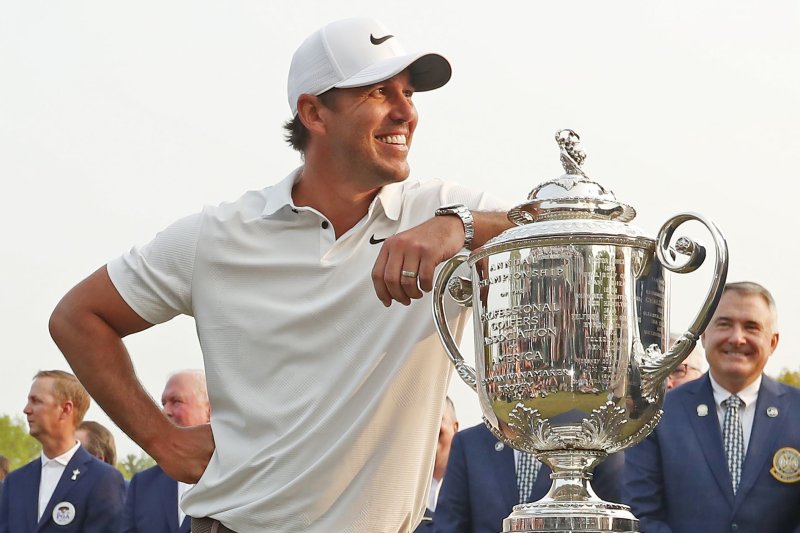
The landscape of professional golf has shifted once again, this time with a seismic homecoming. Brooks Koepka, the five-time major champion whose defection to LIV Golf in 2022 symbolized the sport’s great schism, is officially returning to the PGA Tour. His announcement, however, comes with a staggering financial caveat: an acceptance of up to $85 million in potential lost earnings. This isn’t just a player changing tours; it’s a high-stakes strategic pivot that speaks volumes about the evolving power dynamics, personal priorities, and uncertain future of professional golf.
The Staggering Cost of Coming Home
When the PGA Tour and its Strategic Sports Group (SSG) investors unveiled a “returning member program,” few anticipated its first major beneficiary would be a star of Koepka’s magnitude. The core of this program is a brutal financial calculus. Players who left for LIV must forfeit the entirety of their outstanding signing bonuses and other unearned compensation. For Koepka, whose LIV deal was reportedly worth north of $100 million, the forfeiture is monumental. The $85 million figure represents potential lost earnings, a sum that underscores the gravity of his initial departure and the Tour’s intent to deter mercenary movement without imposing a lifetime ban.
Koepka’s statement was a masterclass in diplomatic messaging. He expressed unwavering excitement about his childhood dream, emphasized family, and voiced belief in the Tour’s new direction under CEO Brian Rolapp and the SSG. Most critically, he directly addressed the elephant in the room: “I understand there are financial penalties associated with this decision, and I accept those.” This acceptance transforms the narrative from one of surrender to one of calculated choice, paying a known price for a desired future.
Decoding the Motivations: Why Leave $85M on the Table?
On the surface, walking away from generational wealth seems irrational. But a deeper analysis reveals a multifaceted strategy. Koepka’s motivations likely include:
- Competitive Legacy: Despite winning a PGA Championship with LIV, Koepka is a competitor forged in the crucible of major championships. The diluted fields and 54-hole format of LIV never seemed to satiate his appetite for the sport’s toughest tests. The PGA Tour remains the primary pathway to the majors and the arena where legacies are most fiercely contested.
- Family and Schedule: Koepka’s mention of “being closer to home” is telling. The LIV schedule, while lighter, is globally sprawling. The PGA Tour’s North American-centric calendar, despite its own demands, offers more consistency for a player now married to Jena Sims and building a family life.
- Equity and Ownership: The new PGA Tour Enterprises, with its $1.5 billion SSG investment, offers something LIV cannot: player equity. Top-tier players like Koepka are poised to receive significant grants, making them literal owners in the tour’s commercial future. This shifts them from paid contractors to stakeholders with long-term upside.
- Sponsorship Rejuvenation: While LIV offers guaranteed money, it severely limits traditional sponsorship opportunities. A high-profile presence on the PGA Tour reopens the floodgates for lucrative endorsement deals, which could, over time, offset a portion of the forfeited LIV income.
The PGA Tour’s Strategic Checkmate
The return of Brooks Koepka is a massive public relations and strategic victory for the PGA Tour. It signals that their new model—blending competitive tradition with modern financial incentives—can attract even the biggest defectors. The returning member program serves a dual purpose: it allows for reconciliation without amnesty, maintaining a consequence for leaving while offering a path back. This is crucial for Tour morale and for any future negotiations with the Saudi Public Investment Fund (PIF).
By welcoming Koepka back, the Tour also instantly reinjects a needle-moving superstar into its fields. Koepka’s presence at events like the Farmers Insurance Open and WM Phoenix Open boosts ticket sales, television ratings, and narrative intrigue. It proves the Tour’s ecosystem, for all its recent turmoil, still holds immense value that pure money cannot replicate.
Predictions and Ripples Across the Golf World
Koepka’s move will send shockwaves through the locker rooms of both tours and accelerate several key trends.
First, expect more returns. Koepka is the canary in the coal mine. Other LIV players, particularly those with major championship aspirations or who feel culturally adrift, will now seriously weigh a similar return. The PGA Tour has established a precedent and a price tag.
Second, the pressure on LIV’s model intensifies. Losing a flagship name like Koepka is a blow to LIV’s credibility as a permanent home for elite talent. It raises questions about the league’s stability and its appeal beyond the initial financial payout.
Third, Koepka’s competitive fire will be fascinating to watch. Will the return to a more grueling schedule and fiercer weekly competition re-ignite the dominant Brooks of 2017-2019? Or has the paradigm shift permanently altered his approach? His performance will be a barometer for the viability of such a circuitous career path.
Finally, this move applies indirect pressure on the stalled PIF negotiations. It demonstrates the PGA Tour can move forward with its SSG capital and still attract talent, potentially weakening the PIF’s leverage for a unification deal.
Conclusion: A Pivot Point for Player and Sport
Brooks Koepka’s return to the PGA Tour is more than a headline; it’s a watershed moment. It represents a player betting on himself, his legacy, and the long-term value of the Tour’s traditional structure over the short-term guarantee of Saudi wealth. The forfeited $85 million is not a loss, in Koepka’s calculus, but an investment—the cost of purchasing his future as a competitive legend, a stakeholder, and a family man.
For golf, it marks a significant re-balancing of power. The PGA Tour, armed with new capital and a player equity plan, has shown it can fight back and win. The sport remains fractured, but Koepka’s journey from defector to returning member establishes a new playbook for reconciliation. His story is now the ultimate test case: can a golfer pay the price, come home, and reclaim his throne? The pursuit of that answer will be one of the most compelling narratives in sports this year.
Source: Based on news from Yahoo Sports.