


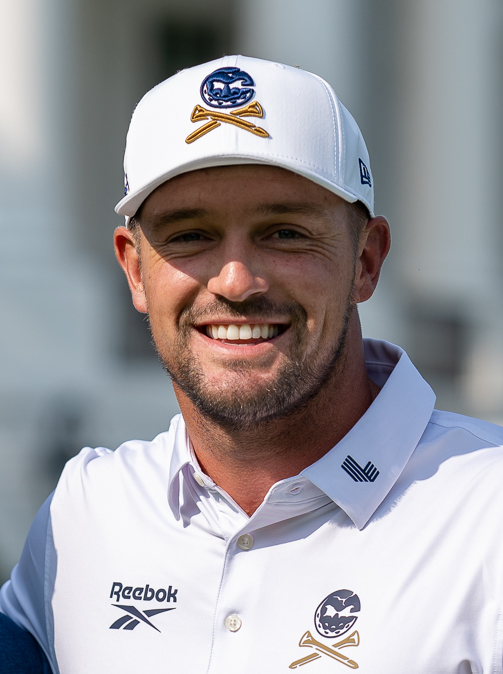
Loyalty or Leverage? DeChambeau, Rahm, Smith Spurn PGA Tour’s Return Offer
The PGA Tour, in the wake of Brooks Koepka’s surprising homecoming, extended an olive branch. The response from three of the game’s biggest stars was a unified, and resounding, “No, thank you.” In a move that recalibrates the power dynamics in professional golf’s cold war, Bryson DeChambeau, Jon Rahm, and Cameron Smith have publicly declined the Tour’s overtures, committing to the LIV Golf League for the 2026 season and beyond. Their collective stance, declared at LIV’s season preview in West Palm Beach, is more than a simple roster update; it’s a declaration of a fractured landscape that is hardening into permanence.
The PGA Tour’s Open Door Slams Shut
The backdrop to this significant rebuff was the PGA Tour’s carefully crafted Returning Members Program. Announced alongside Koepka’s reinstatement, the policy outlined a path back for players who left for LIV. While specifics remain confidential, it generally involves financial penalties, a period of ineligibility for certain events, and a commitment to play a minimum number of Tour events. It was a door left conspicuously ajar for the likes of Rahm, DeChambeau, and Smith—the crown jewels of LIV’s recruitment drive.
Yet, one by one, they shut it. Jon Rahm, the stoic Spaniard and reigning LIV Individual Champion, set the tone. “I’m not planning on going anywhere,” he stated, pivoting focus to his Legion XIII team’s title defense. Cameron Smith, the beloved Aussie and 2022 Open Champion, echoed the sentiment, his loyalty lying with his all-Australian Ripper GC squad. Bryson DeChambeau, ever the visionary, spoke of his commitment to growing his Crushers GC franchise and the league itself. Their messages were distinct but harmonized on one point: LIV Golf is their present and their future.
Beyond the Money: The Roots of Loyalty
To dismiss their decisions as purely financial is to misunderstand the ecosystem LIV has built. The upfront contracts were seismic, yes, but the league has fostered a different kind of allegiance. For these players, the appeal now is multifaceted:
- Team Franchise Equity: Unlike the solitary nature of the PGA Tour, LIV offers players ownership stakes in their teams. This isn’t just prize money; it’s an investment in an asset they are building, with potential for valuation growth, sponsorship, and eventual sale.
- Reduced Schedule & Format Clarity: The 54-hole, no-cut, shotgun start format is a major lifestyle draw. It provides predictability, less wear and tear, and more time at home—a factor Smith and Rahm, both family men, have emphasized.
- Legacy Building in a New Arena: Rahm and DeChambeau, in particular, have positioned themselves as foundational pillars of the new league. Winning a LIV title or multiple team championships offers a path to a legacy distinct from traditional Tour records.
- Contractual Certainty: Rahm’s deal reportedly runs beyond 2026, and others are similarly locked in. These are legally binding commitments that outweigh the uncertain and potentially punitive terms of a PGA Tour return.
“It’s about the project,” one high-profile agent, speaking on background, noted. “They bought in early, they’re helping shape it, and they’re not going to walk away from that equity—both literal and figurative—for a mea culpa tour on terms they didn’t set.”
Koepka’s Return: An Outlier, Not a Trend
Brooks Koepka’s decision to accept the PGA Tour’s offer now looks like a fascinating outlier rather than the start of a wave. Koepka’s motivations appear unique: a relentless, almost singular focus on major championships and his historical standing. The PGA Tour, with its more traditional preparation through weekly competition, may still be viewed by him as the optimal path for major prep. Furthermore, his departure from LIV was reported to be amicable, suggesting his contract terms or personal vision differed from the long-term team construct.
Koepka’s return does not signal a crumbling of LIV’s foundation. Instead, it highlights a growing divergence in player priorities. For Koepka, legacy is measured in majors. For Rahm, DeChambeau, and Smith, legacy is being woven into the fabric of a new league, with majors serving as brilliant, standalone validations of their elite skill amidst a different weekly grind.
The Future: A Bifurcated World With Glaring Questions
The solidified stance of these three superstars makes one reality inescapable: professional golf will operate with two premier leagues for the foreseeable future. The much-discussed “merger” or “unification” between the PGA Tour and the Saudi Public Investment Fund (PIF) remains in limbo, and with each passing season, the rosters and loyalties on both sides become more entrenched. This creates several pressing questions for the sport:
- Major Championships & Rankings: How will majors navigate eligibility if more top players are absent from the PGA Tour? The Official World Golf Ranking (OWGR) still does not award points to LIV events, systematically downgrading the rankings of its players. This unsustainable tension must break.
- Fan Engagement: Can the sport maintain mainstream audience interest when its stars are permanently split between two tours, only converging four times a year? The narrative of “best vs. best” is now a seasonal rarity.
- The Next Generation: Will emerging talents see the team franchise model as a more attractive, stable path than the volatile, merit-based grind of the PGA Tour? LIV’s next signing period will be telling.
Predicting a mass exodus back to the PGA Tour is now folly. The path of least resistance is no longer a return. It is forward, on the parallel track they have chosen.
Conclusion: A Line Drawn in the Sand
The statements from Bryson DeChambeau, Jon Rahm, and Cameron Smith were not impulsive. They were calculated, definitive, and delivered in unison. They represent a critical inflection point. The PGA Tour’s offer of return was not just declined; it was used as a platform to reaffirm commitment to their rival. This is no longer a waiting game or a leverage play for many. It is a chosen career path.
The golf “civil war” has moved past the initial shock-and-awe of defections. It has entered a protracted state of coexistence, marked by competing visions for the sport’s future. Koepka may have gone back, but the defection of three of LIV’s most prominent faces has been thoroughly stanched. The message to the golf world is clear: LIV is not a holding pen. It is a destination. And for its biggest stars, the journey there is one-way. The battle for golf’s soul is over. The arduous task of building a divided future has begun.
Source: Based on news from Deadspin.
Image: CC licensed via commons.wikimedia.org


