Cadillac vs. Audi: A Tale of Two Titans in the 2026 F1 Revolution
The roar of a Formula 1 engine has always been a siren song for automotive giants, but the melody changed in 2026. New power unit regulations, emphasizing electrification and sustainable fuels, have orchestrated the most significant grid expansion in a generation. Two colossal names have answered the call: Audi and Cadillac. Both harbor the same burning ambition—to conquer the pinnacle of motorsport—yet their blueprints for victory could not be more distinct. This isn’t just a new team battle; it’s a clash of corporate philosophies, engineering cultures, and a fascinating preview of F1’s future.
The 2026 Catalyst: Why Now?
The synchronized entry of Audi and Cadillac is no coincidence. It is a direct and calculated response to Formula 1’s evolving technical landscape. The 2026 power unit regulations represent a fundamental shift, designed to align the sport with global automotive trends.
The key changes that proved irresistible are:
- Increased Electrical Power: The MGU-K will produce nearly three times the electrical power, with the hybrid system contributing close to 50% of the total power output.
- Sustainable Fuel Mandate: The introduction of 100% sustainable fuels aligns perfectly with corporate sustainability goals.
- Cost and Development Controls: The power unit is cheaper and simpler to produce, with development freedoms strategically limited to key areas.
For Audi, this amplified hybrid element is a direct extension of its road car technology, particularly in its premium electric vehicles. For Cadillac and parent company General Motors, it’s a global stage to showcase its Ultium battery technology and electrification prowess. Both see the F1 hybrid system not as a racing component, but as the ultimate marketing tool for their road-car portfolios.
Audi’s Methodical Takeover: The Works Team Blueprint
Audi’s approach is one of Germanic precision and long-term strategic acquisition. Rather than building from scratch, Audi executed a full takeover of the existing Sauber operation. This Swiss-based team, currently running under the Stake F1 Team banner, provides immediate infrastructure, a seasoned workforce, and a crucial head start.
This is a full-factory works effort in the classic sense. Audi is designing and building its own power unit entirely in-house at its Neuberg facility in Germany. The chassis will be developed in Hinwil, Switzerland, creating a dual-axis engineering hub. They have poached top talent, including former McLaren Team Principal Andreas Seidl as CEO, to steer the project.
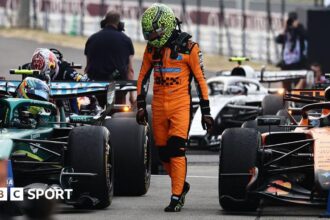
The scene of Valtteri Bottas in the Cadillac ahead of Audi’s Gabriel Bortoleto during pre-season testing in Bahrain was a symbolic snapshot. It highlighted Audi’s current reality: they are in a transitional phase, running a customer car while their bespoke machine is forged. Their path is about evolution, transforming an established midfield entity into a championship-winning juggernaut through immense investment and technical integration. It is the Volkswagen Group’s meticulously planned first shot at F1 glory.
Cadillac’s Disruptive Alliance: The American New-Build
In stark contrast, the Cadillac project is a bold American venture built on a powerful alliance. General Motors has partnered with Andretti Global, a racing dynasty led by Michael Andretti, under the banner of the newly formed Team TWG (The World’s Greatest). This is not a takeover; it’s a ground-up creation.
While GM’s Cadillac branding leads, the initial technical partnership is a pragmatic one. They will begin with a customer engine supply, likely from Honda or Renault, while GM’s engineers immerse themselves in the complex world of F1. The stated goal is to develop a GM-built power unit for the 2028 season, a phased approach that mitigates risk while building knowledge.
This model leverages Andretti’s proven racing acumen and GM’s vast resources. It’s a disruptive, agile strategy that seeks to bypass corporate inertia. They are building a new culture, a new facility, and a new team identity from a blank sheet of paper—a quintessentially American “start-up” ethos, albeit one backed by one of the planet’s largest automakers. Their challenge is immense, but their freedom to innovate without legacy constraints is a unique advantage.
Expert Analysis: Divergent Paths to the Same Podium
From a sporting perspective, these divergent strategies present fascinating variables. Audi’s Sauber foundation offers a clear short-term benefit: operational continuity. They inherit F1’s brutal learning curve and can focus resources solely on performance gains from day one in 2026. However, they also inherit a team culture and limitations that may require years to fully reshape.
The Cadillac-Andretti project, while starting from zero on the grid, starts from zero in the factory as well. They can instill a winning culture from the outset, design a state-of-the-art facility, and avoid any legacy technical dead-ends. Their initial customer engine will be a performance handicap, but it allows them to hone their chassis and operations before introducing the variable of their own power unit.
The key battleground will be talent. Audi’ methodical build-up has already attracted top engineers and a seasoned driver in Bottas. Cadillac-Andretti’s appeal is one of pioneering spirit and the chance to build a legend. Which philosophy proves more attractive to the next generation of F1’s brightest minds could decide the long-term winner.
Predictions for the Coming Era
Forecasting success in Formula 1 is a fool’s errand, but the trajectories are clear. Expect a staggered timeline of competitiveness:
- 2026-2027 (The Settling-In Period): Audi is likely to have the initial upper hand. With a integrated works engine and a developed team base, points and occasional podiums should be the target. Cadillac, mastering the art of simply being a new team, will benchmark success as regular Q2 appearances and closing the gap to the midfield.
- 2028 Onwards (The True Test): This is when the projects truly converge. Audi should be a solidified top-half team, threatening for wins. Cadillac’s fate hinges on the introduction of its own power unit. If it is competitive, their clean-sheet approach could see a meteoric rise. If it falters, they face a prolonged rebuild.
Ultimately, both projects elevate the sport. They bring genuine manufacturer competition, fresh narratives, and prove that F1’s technical roadmap is resonating with the industry. The dream scenario for fans is a late-2020s championship fight between these two titans, each representing a radically different path to the same summit.
Conclusion: More Than Just New Names on the Grid
The arrival of Audi and Cadillac is a watershed moment for Formula 1. It validates the sport’s relevance in the era of electrification and global entertainment. They share an ambition to win, but their stories are beautifully opposed: one of calculated evolution, the other of revolutionary alliance.
Audi seeks to refine and conquer an existing fortress. Cadillac aims to build a new castle entirely. This duality enriches the fabric of the championship, offering a masterclass in how corporate ambition can manifest in dramatically different ways. When the lights go out in 2026, the battle between the methodical German powerhouse and the disruptive American alliance will be a compelling subplot for years to come, proving that in Formula 1, there is never just one road to victory.
Source: Based on news from BBC Sport.