From Sebring to Miami: Can You Name Every Location to Have Hosted a US Formula 1 Race?
The Formula 1 circus has been on a five-week hiatus, but the engines are about to roar back to life this weekend for the Miami Grand Prix. As the paddock descends on the Hard Rock Stadium complex, it marks a pivotal moment in the sport’s American expansion. But Miami is far from a newcomer to the US Grand Prix history books. In fact, when it debuted in 2022, it became the 11th distinct venue to host a Formula 1 World Championship race on American soil.
Here’s the challenge: can you name the other ten? From dusty airfields to iconic street circuits, the United States has a rich, chaotic, and often overlooked F1 heritage. This article is your expert guide to every single location, offering analysis on why each venue mattered and how they shaped the sport’s relationship with America.
The Pioneer Era: Where It All Began (1950s–1960s)
Before the glitz of Las Vegas and the glamour of Miami, Formula 1’s first steps in the US were tentative and often improvised. The early races were a test of endurance for both cars and fans, held in places that now seem almost surreal for a modern Grand Prix.
- Sebring International Raceway (1959): The very first US Grand Prix wasn’t in a city center. It was held on a converted World War II airfield in rural Florida. The 1959 race is legendary for its photo finish, where Bruce McLaren (then just 22 years old) won his first Grand Prix. The circuit was bumpy, flat, and punishing on tires. It only hosted one F1 race, but its place in history is secure.
- Riverside International Raceway (1960): Moving west, the championship landed in Southern California. Riverside was a purpose-built road course that offered a completely different challenge. It was fast and flowing, but the 1960 race was marred by a fatal accident. Like Sebring, it was a one-off, but it proved that America could host a competitive, if dangerous, Grand Prix.
- Watkins Glen International (1961–1980): This is the heavyweight champion of US F1 venues for the 20th century. Watkins Glen in upstate New York became the spiritual home of American F1 for two decades. It started as a public road course before becoming a permanent facility. The Glen produced some of the most dramatic races of the era, including Jim Clark’s dominant wins and the tragic 1975 race where Mark Donohue lost his life. The atmosphere was legendary—think Woodstock with racing cars. The circuit’s eventual decline due to safety standards and financial issues ended its run, but it remains a sacred site for purists.
The Unstable Middle Years: Failed Experiments (1970s–1980s)
The post-Watkins Glen era was a period of intense instability. Promoters tried everything from downtown street circuits to temporary airport layouts. Most failed, but they added unique chapters to the US F1 story.
- Long Beach Street Circuit (1976–1983): This was the savior of American F1. Taking over from Watkins Glen, the Long Beach Grand Prix brought the show to the streets of California. The circuit wound through the city’s convention center and marina, creating a unique, tight, and technical challenge. It became famous for its glamour and the 1982 race, where Niki Lauda and Didier Pironi had their infamous team orders dispute. Long Beach proved a street circuit could work in the US, setting a template for Miami.
- Las Vegas Caesars Palace (1981–1982): Often cited as one of the worst circuits in F1 history. The Caesars Palace Grand Prix was held in the hotel’s parking lot. The track was a flat, featureless, and incredibly hot asphalt ribbon. Drivers hated it, calling it a “car park” race. It was a financial disaster and a PR nightmare. However, it did produce a dramatic championship finale in 1982 when Keke Rosberg clinched the title. It’s a cautionary tale of style over substance.
- Detroit Street Circuit (1982–1988): The Motor City got its shot, but the circuit was a disaster of a different kind. The Detroit Grand Prix track was incredibly bumpy, narrow, and lined with unforgiving concrete walls. It was a test of survival, not speed. Drivers compared it to driving through a war zone. While it produced exciting, crash-filled races, the logistics were a nightmare, and the city eventually pulled the plug.
- Dallas Fair Park (1984): One of the most infamous single races in F1 history. The Dallas Grand Prix was held on a temporary circuit in Fair Park. The track surface literally disintegrated in the Texas heat, requiring emergency repairs with a helicopter and tar. The race was a farce, with drivers passing on the grass to avoid the crumbling asphalt. It was a one-and-done, a perfect example of ambition exceeding engineering reality.
- Phoenix Street Circuit (1989–1991): By the late 1980s, F1 was desperate for a stable US home. Phoenix was the answer, but it was a poor one. The circuit was designed by a local architect, not a racing expert. It was a series of awkward, slow corners that offered no flow. The desert heat and low attendance killed it after just three years. It was the last time F1 tried a downtown US street circuit until Miami.
The Modern Revival: A New Golden Age (2000s–Present)
After a near-decade absence, F1 returned to America with a purpose-built facility that finally matched the sport’s global ambitions. This era has been defined by stability and massive commercial success.
- Indianapolis Motor Speedway (2000–2007): The legendary Brickyard hosted F1 on a hybrid circuit that used part of the famous oval and a new infield road course. The 2005 US Grand Prix is infamous for the Michelin tire fiasco, where only six cars started the race. But beyond that disaster, IMS produced some great races, including Michael Schumacher’s dominant wins. It was a high-speed, high-prestige venue that finally gave America a permanent, world-class home.
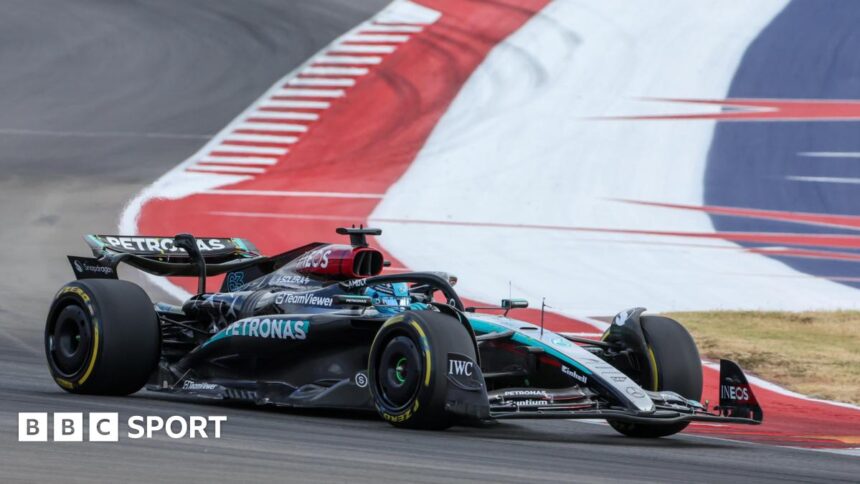
- Circuit of the Americas (2012–Present): The savior of American F1. COTA in Austin, Texas, is a Tilke-designed modern masterpiece. It features a massive climbing first corner, a fast, sweeping esses section inspired by Silverstone, and a long back straight. It has been the anchor of the US calendar for over a decade, hosting sell-out crowds and producing legendary moments like Lewis Hamilton’s 2015 title win and Max Verstappen’s epic 2021 battle with Hamilton. COTA proved that a dedicated, modern circuit could thrive in the US.
- Miami International Autodrome (2022–Present): The newest member of the club. The Miami Grand Prix is a street circuit built around the Hard Rock Stadium. It’s a mix of temporary and permanent sections, designed to be fast and visually spectacular. It has already become a celebrity magnet and a massive commercial success, despite some criticism about the number of corners and the lack of overtaking. It represents the modern, entertainment-focused direction of F1 in America.
- Las Vegas Strip Circuit (2023–Present): The return to Vegas is a completely different beast from the 1980s parking lot race. The Las Vegas Grand Prix is a 3.8-mile street circuit that blasts down the iconic Strip, past the Bellagio, Caesars Palace, and the Venetian. It’s a high-speed, low-downforce track that runs at night. The 2023 race was a logistical triumph and a huge spectacle, though the early practice session was cut short by a loose drain cover. It’s the most expensive and ambitious race on the calendar, and it’s here to stay.
Expert Analysis: What 11 Venues Tell Us About F1 in America
The journey from Sebring’s bumpy airfield to the neon-lit Las Vegas Strip is a story of the sport’s evolution. The early venues were often dangerous, temporary, and financially unstable. They reflected a sport trying to find a foothold in a nation that preferred NASCAR and IndyCar.
The modern era, bookended by COTA, Miami, and Vegas, is a different animal. These are purpose-built entertainment destinations. They are not just races; they are multi-day festivals designed to capture a global audience. The failure of Phoenix and Dallas taught promoters a critical lesson: a US F1 race needs a unique identity, a strong local infrastructure, and a willingness to invest billions.
Looking ahead, the future of US F1 is bright but not without challenges. The sheer number of races (three in 2024) risks fan fatigue. The high ticket prices in Miami and Vegas have drawn criticism for pricing out traditional fans. However, the data is clear: the US is now F1’s largest market. The sport has gone from a struggling curiosity to a dominant force in American sports culture.
Can you name every F1 World Drivers’ Champion? From Juan Manuel Fangio to Max Verstappen, the list is a who’s who of motorsport royalty. Similarly, can you name every F1 Constructors’ Champion? From Ferrari’s dominance to Red Bull’s modern reign, the team championship tells the story of engineering excellence. And what about teenagers in F1? The sport has a long history of young talent, from Bruce McLaren’s 1959 win to Max Verstappen’s 2015 debut at 17. The current crop, like Oscar Piastri and Liam Lawson, continues that tradition.
Conclusion: A Unique American Tapestry
The 11 venues that have hosted a US Formula 1 race are more than just a trivia question. They are a living history of the sport’s turbulent, triumphant, and sometimes bizarre relationship with the United States. From the sacred ground of Watkins Glen to the glitzy spectacle of the Las Vegas Strip, each location tells a story of ambition, failure, and ultimate success.
As the grid lines up in Miami this weekend, take a moment to appreciate the journey. The next time you watch a US Grand Prix, remember the crumbling asphalt of Dallas, the parking lot of Caesars Palace, and the lonely airfield at Sebring. They all paved the way for the golden era we are living in now. So, how many did you get right? Eleven venues, eleven chapters, one incredible story.
Source: Based on news from BBC Sport.