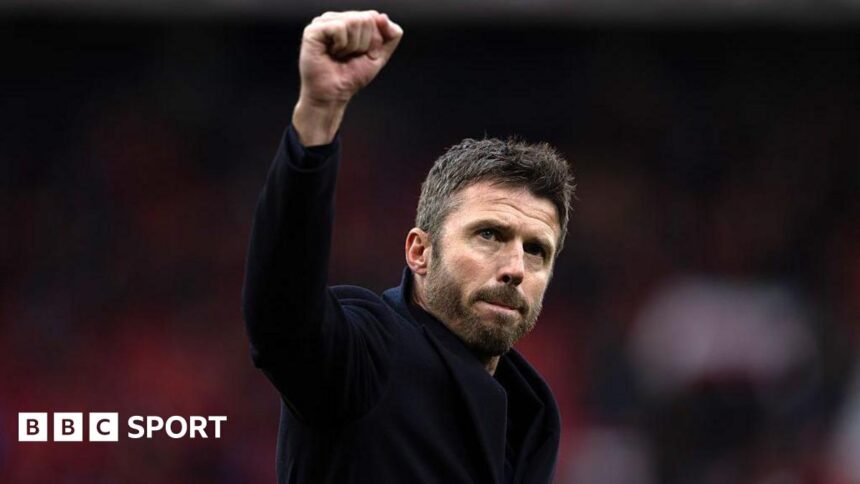
Carrick’s United Debut Gives Fans a ‘Taste of Ferguson Era,’ Says Rooney
The pall that had settled over Old Trafford in recent weeks was, for one glorious afternoon, violently torn away. In its place: a noise, a fury, and a performance that felt excavated from a bygone age. Manchester United, under the interim stewardship of a club legend with just one day on the training pitch, defeated the mighty Manchester City 2-0. In the aftermath, as the stadium reverberated with a long-forgotten fervor, another icon from the Ferguson dynasty offered a potent perspective. Wayne Rooney believes the younger generation of United supporters finally got a “taste of what it was like under Sir Alex Ferguson.”
A Stark Transformation: From Tepid to Terrific
The contrast could not have been more jarring. Just days prior, United’s play was lethargic, their structure non-existent, and the connection with the Old Trafford faithful had frayed to a whisper. The appointment of Michael Carrick as interim head coach was seen as a necessary steadying hand, but few predicted the immediate seismic shift in mentality and atmosphere.
Against Pep Guardiola’s reigning champions, United played with a tactical discipline and aggressive intent that had been sorely missing. Goals from Bryan Mbeumo and the impressive Patrick Dorgu secured the victory, but the story was in the fabric of the performance.
- Organized Defensive Shape: United’s lines were compact, with midfielders and defenders moving as a cohesive unit.
- Purpose in Possession: Passes had intent, with players showing for the ball and driving forward with confidence.
- Relentless Intensity: The famous United counter-press made a welcome return, unsettling City’s usually serene rhythm.
Rooney, watching from the studio, pinpointed the most significant change of all. “The big difference was the crowd,” he stated. “Under Michael, you saw a reaction. The players worked, they fought, and the crowd responded to that. It felt like the United of old.”
Carrick’s Calm: The Ferguson Imprint on a Modern Coach
So, how does a coach with a modest managerial record—63 wins from 136 games at Middlesbrough—orchestrate such an instant revival at the highest level? The answer lies not in a complex new tactical doctrine, but in the restoration of core principles ingrained in him during his playing days.
Michael Carrick spent 12 years at the heart of Sir Alex Ferguson’s midfield, a period encompassing five Premier League titles and a Champions League triumph. He was the embodiment of calm authority and tactical intelligence. His approach on Saturday was a reflection of that schooling.
He did not overcomplicate. Instead, he simplified. The message was clear: show passion, play for the badge, respect the privilege of representing Manchester United at Old Trafford. These are Ferguson-era fundamentals that had become diluted. Carrick, with his quiet assurance and inherent understanding of the club’s DNA, was able to recalibrate the team’s mindset instantly. He restored a sense of pride and responsibility that translated directly onto the pitch and into the stands.
This was not a fluke. It was a demonstration of the respect a club legend commands and the powerful, often underestimated, impact of clear, authentic leadership.
Rooney’s Verdict: A Blueprint for the Future?
Wayne Rooney’s analysis carried the weight of a man who lived through the apex of the Ferguson era. His comment about younger fans getting a “taste” was profoundly insightful. For a generation raised on the commercialized, inconsistent “Superclub” era, the visceral connection between performance, passion, and result had been intermittent.
Saturday was a masterclass in that symbiosis. Rooney hopes this is more than a nostalgic one-off. “I hope it’s a glimpse of what is to come under Michael Carrick,” he said, framing the victory not as an end point, but a potential beginning. His implication is clear: the club’s future success may be rooted in its past identity, and Carrick could be a conduit for that.
While the win was celebrated, Rooney and other savvy observers caution against immediate coronation. The real test for Carrick and United will be consistency. Can this intensity be maintained against lesser-fancied opponents when the spotlight is less bright? Can he evolve a sustainable tactical model beyond the adrenaline-fueled “cup final” performance?
Predictions: Is Carrick the Long-Term Answer?
The dramatic victory has inevitably thrust Carrick’s name into the conversation for the permanent role. The decision United’s hierarchy must now make is a philosophical one.
The Case For Carrick:
He has proven he can command the dressing room and reconnect the club with its soul in record time. He understands the “United Way” intrinsically. If he maintains a strong run of form and secures a top-four finish, the narrative of a prodigal son returning to restore the club’s identity will be powerful and emotionally compelling for fans.
The Case For Caution:
His overall managerial record at Middlesbrough was a work in progress, not a resounding success. The club may still seek a more experienced, proven winner with a multi-clay pedigree to undertake a major multi-year rebuild. A bright start does not guarantee long-term success, as the post-Ferguson years have painfully shown.
The most likely scenario is that Carrick is auditioning, not just for the United job, but for his own future as a top-level manager. A strong interim period makes him a prime candidate for other Premier League roles, or perhaps even positions him as a future United boss after more seasoning elsewhere.
Conclusion: More Than Just Three Points
Manchester United’s 2-0 victory over Manchester City under Michael Carrick will be remembered for more than just three precious points. It was a cultural reset, however temporary. It was a reminder that before the glitz, the commercial deals, and the endless discourse, Manchester United was built on a foundation of fierce pride, relentless work ethic, and a sacred bond with its supporters.
Wayne Rooney called it perfectly. For 90 minutes, the ghosts of the Ferguson era walked the touchline and roared from the stands. Michael Carrick didn’t just set up a team; he unlocked a feeling. Whether this is the start of a new dawn or simply a beautiful, fleeting echo of the past is now the defining question at Old Trafford. But for the first time in a long time, the future feels like it could be molded by someone who truly remembers what made the club great.
Source: Based on news from BBC Sport.