Carrick’s Calculated Gambit: Steve Holland’s Arrival Signals Tactical Shift for Manchester United
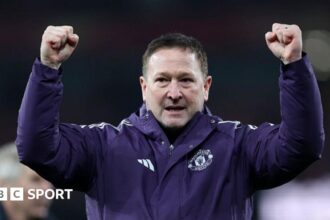
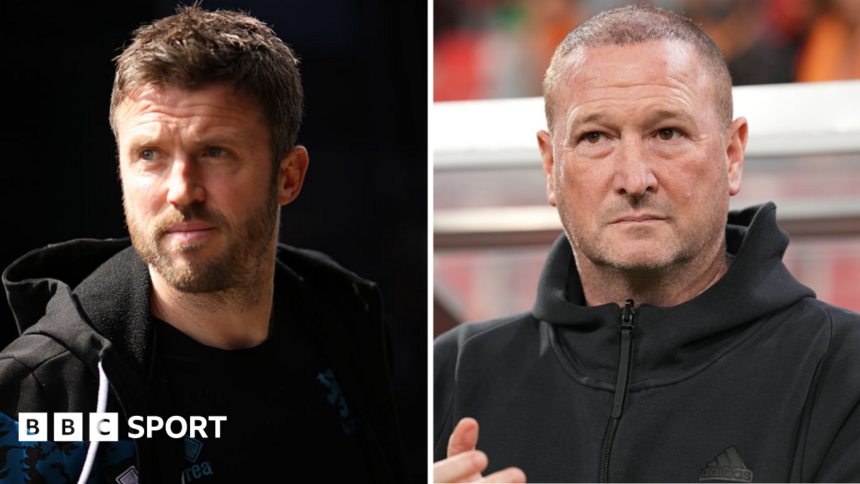
The Old Trafford carousel spins once more, but this time, it’s stopping on a familiar face with a distinctly new blueprint. With the confirmation that Michael Carrick will step into the breach as Manchester United’s interim head coach, the club has moved swiftly to construct a support staff that speaks volumes about their immediate intentions. The most telling appointment? The anticipated arrival of Steve Holland, the former England and Chelsea assistant, as Carrick’s right-hand man. This isn’t just a backroom reshuffle; it’s a statement of intent, a nod to pragmatism, and perhaps the most tactically astute decision the club has made in a turbulent period.
The Holland Blueprint: A Pedigree of Proven Success
While Michael Carrick embodies the United DNA, Steve Holland represents a masterclass in elite-level coaching pedigree. His CV is not just impressive; it’s a modern primer on winning in the Premier League and on the international stage. Holland’s expertise was forged in the crucible of Stamford Bridge, where he served as a crucial lieutenant to a trio of managerial titans: Jose Mourinho, Antonio Conte, and Rafael Benitez.
This unique experience is his superpower. From Mourinho, he absorbed the dark arts of game management and defensive solidity. From Conte, he witnessed the transformative power of a ruthless, system-driven philosophy, notably the shift to a title-winning 3-4-3. From Benitez, he honed meticulous tactical preparation. Later, as Gareth Southgate’s indispensable assistant with England, he helped architect a cohesive, structured, and resilient national team that reached a World Cup semi-final and a European Championship final. Holland isn’t a cheerleader; he is a tactical architect and a cultural builder.
His expected role at Carrick’s side suggests United are seeking immediate stability and a clear, communicable tactical identity—something conspicuously absent in recent months. Holland’s presence is a direct antidote to the perceived tactical disarray.
Carrick’s Cabinet: Blending United Heritage with Fresh Insight
Carrick and Holland form the strategic core, but the broader staff appointments reveal a thoughtful, multi-layered approach to steadying the ship. This is not a solo mission, but a collective effort designed to address various facets of the club’s current malaise.
- Michael Carrick (Interim Head Coach): The figurehead. Respected, calm, and possessing an innate understanding of the club’s expectations. His task is to be the bridge between the dressing room and the new tactical directives, providing the trusted voice to sell the vision.
- Steve Holland (Assistant Coach): The tactical engine. Expected to be the primary driver of training-ground drills, set-piece organization, and in-game strategic adjustments. His relationship with Carrick will be the defining dynamic of this interim period.
- Jonathan Woodgate (First-Team Coach): Adds another layer of top-level experience. A former England defender known for his technical prowess, Woodgate’s work with individual defenders, particularly the burgeoning talents like Harry Maguire and Raphael Varane, could be invaluable.
- Jonny Evans (Player-Coach): A masterstroke of man-management and continuity. The recently re-signed defender offers a direct, respected link to the squad, understands the current dressing room dynamics, and can provide on-pitch leadership while beginning his coaching education.
- Travis Binnion (Academy Integration): A critical nod to the future. Binnion’s promotion from his role with the U23s ensures the pathway from the academy remains open and signals an intent to potentially blood young talent during this transitional phase.
This cabinet blends United heritage with external trophy-winning expertise, creating a potentially potent short-term formula.
Immediate Impact: What to Expect on the Pitch
The influence of Steve Holland will be visible almost immediately. Expect a shift away from a loose, transitional style towards a more structured, disciplined, and hard-to-beat unit. The focus will be on fundamentals: shape, spacing, and clear responsibilities.
We can anticipate several key changes:
- A Return to Defensive Solidity: Holland’s teams are organized first and foremost. Drills will focus on defensive cohesion, compactness between the lines, and reducing the catastrophic individual errors that have plagued United.
- Structured Pressing Triggers: The days of a haphazard, energy-sapping press are likely over. Instead, look for a more coordinated, intelligent press based on specific triggers—perhaps a pass to a particular opponent or a space on the pitch.
- Set-Piece Renaissance: Both offensively and defensively, set-pieces will become a primary weapon. Holland’s work with England, where they became a lethal threat from corners and free-kicks, will be directly imported.
- Simplified Roles for Star Players: The paradox of Holland’s systems is that collective structure often liberates individuals. By providing clear tactical boundaries, players like Bruno Fernandes and Jadon Sancho may find themselves with more defined, and therefore more executable, roles.
The initial goal is not necessarily free-flowing football; it is restoring competence, resilience, and a clear game plan. Points and clean sheets will be the currency of this interim reign.
The Bigger Picture: A Stepping Stone or a New Direction?
This interim setup raises fascinating questions about United’s long-term strategy. Is this a pure firefighting operation, or are the club auditioning a potential future model?
Carrick is undoubtedly being assessed for his managerial potential, but the inclusion of Holland adds a different dimension. If this partnership yields a dramatic upturn in performances and results, it will pose a difficult question for the board: do they still pursue a big-name, superstar manager in the summer, or do they consider making this pragmatic, complementary partnership permanent?
Furthermore, the appointments of Woodgate and the retention of a link to the academy through Binnion suggest a desire to build a sustainable coaching culture, not just hire a lone savior. This interim period is now a high-stakes audition for a potential “British core” with elite continental tactical support—a model that has brought success at Chelsea and England.
Conclusion: A Pragmatic Path Forward
In the wake of yet another managerial departure, Manchester United have opted for intelligence over glamour, structure over spectacle. The expected appointment of Steve Holland as Michael Carrick’s assistant is a move that should be applauded for its sheer footballing logic. It addresses the most glaring weakness—tactical frailty—with one of the most qualified technicians in the game.
This interim team, blending Carrick’s stature, Holland’s brain, Woodgate’s experience, Evans’s voice, and Binnion’s future vision, represents the most coherent football operation United have assembled in years. While the long-term managerial question remains, for the first time in a long time, the short-term plan at Old Trafford looks deliberate, smart, and built on a foundation of proven coaching expertise. The message is clear: the era of vibes is over; the era of detailed, structured, and resilient football begins now. The Carrick-Holland axis may be a temporary fix, but its lessons could—and should—define Manchester United’s next permanent chapter.
Source: Based on news from BBC Sport.