Charles Barkley on Jason Collins’ death: ‘We live in a homophobic society’
The sports world paused this week to mourn the loss of Jason Collins, the former NBA center who died from cancer at the age of 47. Collins was more than a journeyman big man who played for six teams over 13 seasons. He was a trailblazer—the first openly gay active male athlete in any of America’s four major professional sports leagues when he came out in a 2013 Sports Illustrated cover story.
- The Barkley Bombshell: Why ‘Unfortunate’ Is an Understatement
- The Fortune That No One Has Claimed: The Lost Endorsement Era
- Expert Analysis: The ‘Michael Sam Effect’ Still Haunts the League
- Predictions: What Comes Next After Barkley’s Wake-Up Call?
- Strong Conclusion: The Legacy of Jason Collins and the Unfinished Work
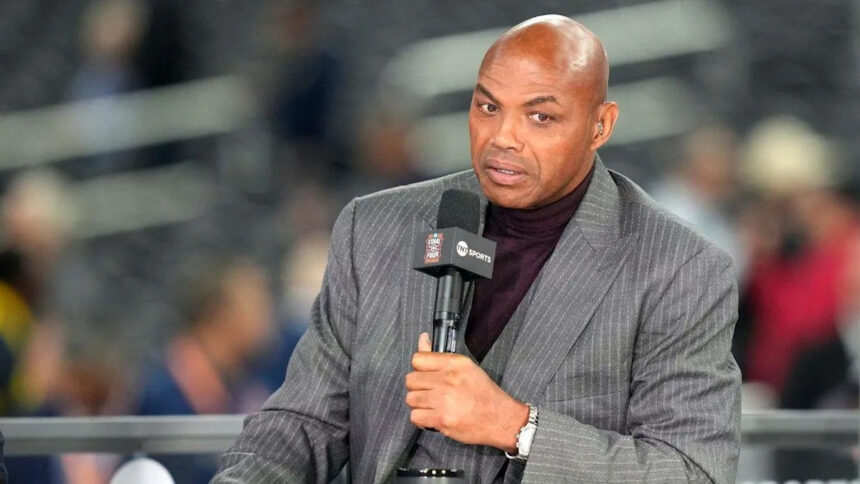
But on Wednesday night, during an emotional segment of ESPN’s Inside the NBA, Hall of Famer Charles Barkley delivered a sobering reality check about where the United States of America stands in 2026 when it comes to embracing male athletes who are not straight. His blunt assessment, delivered with the candor that has made him a broadcasting legend, cut through the typical platitudes and forced viewers to confront an uncomfortable truth.
“We live in a homophobic society, and that’s unfortunate,” Barkley said, his voice measured but firm.
Barkley’s comments arrived at a moment of reflection. Jason Collins’ death has reopened a painful conversation about progress, silence, and the enormous pressure that still exists inside locker rooms. While Collins’ courage in 2013 was celebrated globally, the hard data since then tells a stark story: no other active NBA player has publicly come out as gay, bisexual, or queer in the 13 years since Collins made history.
The Barkley Bombshell: Why ‘Unfortunate’ Is an Understatement
Barkley did not mince words during the broadcast. He argued that the “unfortunate” part of the equation is not that homophobia exists—it’s that countless closeted male athletes are currently playing in the NBA, NFL, MLB, and NHL who feel they cannot be honest about their identity without destroying their careers.
“Anybody who thinks we ain’t got a bunch of gay players in all sports, they’re just stupid,” Barkley said. “But there is such an atmosphere toward the gay community, and that’s what’s really unfortunate.”
His frustration is rooted in a simple, painful math problem. Since Collins’ announcement in 2013, the only active male athlete in a major U.S. sport to come out while still playing was Carl Nassib, then a defensive end for the NFL’s Las Vegas Raiders, who made history in 2023. Nassib’s announcement was widely praised, but he retired from football just two years later. R.K. Russell, a former NFL free agent, came out as bisexual in 2019 but never returned to an active roster.
Meanwhile, there is a long list of veteran athletes in the NFL, MLB, and the NBA—along with a handful of active minor league baseball players—who have come out only after their playing careers were effectively over. The pattern is unmistakable: the closet remains safer than the field.
- Jason Collins (2013): First active male athlete in major U.S. sports to come out. Played one more season before retiring.
- Michael Sam (2014): Came out before the NFL Draft, was drafted in the seventh round, but never played a regular-season snap. His story remains a cautionary tale.
- Carl Nassib (2023): Came out as active NFL player. Retired in 2025.
- R.K. Russell (2019): Came out as bi while a free agent. Never signed again.
- Luke Prokop (2021): Came out as gay while a prospect in the Nashville Predators organization. Has yet to play an NHL game.
The message is loud and clear: coming out still carries a career tax that straight athletes never have to think about.
The Fortune That No One Has Claimed: The Lost Endorsement Era
Perhaps the most ironic twist in this ongoing saga is the economic reality that Barkley alluded to. As Out magazine reported as far back as 2013, there is actually a fortune waiting for the first active male athlete in a major sport who comes out publicly and sustains a long, successful career. Nike reportedly promised a sweet endorsement deal to the first active professional male athlete to come out—a deal that, over a decade later, remains unclaimed by any active NBA, NFL, or MLB player.
Think about that for a moment. We live in an era where athletes sign $300 million contracts, where social media influence can generate millions in ancillary income, and where corporate America has spent billions on Pride Month campaigns. Yet the financial incentive to come out has not been enough to overcome the fear of locker-room rejection, the threat of being labeled a “distraction,” or the very real risk of being blackballed by front offices and coaches.
Barkley’s point is devastatingly simple: if the money is there, and the societal acceptance is supposedly there, why is the silence still deafening?
The answer, he argues, is that homophobia is not a relic of the past. It is a living, breathing reality inside the hyper-masculine culture of professional sports. It shows up in the jokes that go unchallenged in the huddle. It shows up in the draft boards where teams quietly knock prospects down for “character concerns” that have nothing to do with criminal behavior. It shows up in the veterans who warn rookies to “keep that stuff to yourself.”
Expert Analysis: The ‘Michael Sam Effect’ Still Haunts the League
To understand why no active NBA player has followed Jason Collins’ lead, one need only look at the cautionary tale of Michael Sam. Sam was the SEC Defensive Player of the Year in 2013, a dominant pass rusher at the University of Missouri. He came out publicly before the 2014 NFL Draft and was celebrated on the cover of Sports Illustrated. But the draft night drama—the infamous kiss with his boyfriend that aired on ESPN—became a national debate.
Sam was selected in the seventh round by the St. Louis Rams. He was cut before the regular season. He spent time on the Dallas Cowboys’ practice squad and later in the Canadian Football League. He never played a single down in an NFL regular-season game.
Was it purely football reasons? Or was it the unspoken bias that teams simply did not want the “distraction”? The answer is probably a mix of both, but the perception among athletes is clear: coming out can end your career before it starts.
“We have this fantasy that sports are a meritocracy,” said Dr. Sarah Chen, a sports sociologist at the University of Michigan. “But the data shows that athletes who come out face measurable drops in draft stock, contract value, and playing time. The locker room is the last bastion of institutionalized homophobia in America, and Barkley is right to call it out.”
The NBA, for all its progressive branding, has not been immune. Since Collins’ retirement in 2014, the league has had zero openly gay active players. The WNBA, by contrast, has long been a leader in LGBTQ+ visibility, with numerous players openly identifying as gay, bisexual, or queer. But the gender divide is stark. Male athletes, particularly in the revenue-generating sports of football, basketball, and baseball, face a different set of pressures.
Predictions: What Comes Next After Barkley’s Wake-Up Call?
Charles Barkley’s words on Wednesday night were not just a eulogy for Jason Collins. They were a challenge to the next generation of athletes, executives, and fans. So what happens now?
Prediction 1: The next active NBA player to come out will be a star, not a role player. Collins was a backup center. Nassib was a rotational defensive end. The next barrier-breaker will likely be a top-10 draft pick or an All-Star who has already secured a max contract. Only then will the endorsement fortune that Nike promised actually materialize.
Prediction 2: The NFL will remain the most difficult environment. Despite the league’s “Football is for Everyone” campaigns, the NFL’s hyper-masculine culture and short career spans create the highest barrier to entry. Expect more players to come out after retirement, not during their playing days.
Prediction 3: College sports will become the next battleground. With NIL (Name, Image, and Likeness) money now flowing to college athletes, a gay male athlete in the NCAA could become the first to cash in on the endorsement deals that have eluded professionals. The financial incentive is higher than ever.
Prediction 4: Barkley’s comments will spark a real conversation—but only if the media keeps the pressure on. The Inside the NBA crew has a massive platform. If they continue to ask hard questions of league commissioners and team owners, real change could follow. But if the conversation fades after a news cycle, nothing will change.
Strong Conclusion: The Legacy of Jason Collins and the Unfinished Work
As the sports world says goodbye to Jason Collins, we must remember that his legacy is not just about the courage to come out. It is about the unfinished work that remains. Collins opened a door, but the room inside is still largely empty.
Charles Barkley, never one for sugarcoating, told us exactly where we stand in 2026: in a homophobic society that has not yet fully embraced its gay athletes. The fortune that Nike promised remains unclaimed. The locker rooms remain silent. The fear remains real.
But Barkley’s candor is itself a form of progress. When a Hall of Famer with a national platform says the quiet part out loud, it forces everyone—players, owners, fans, and media—to stop pretending that progress is complete. Jason Collins died knowing he made a difference. The question now is whether the next generation of athletes will have the support system to follow his lead, not just in retirement, but while they are still playing the game they love.
The ball, as always, is in the league’s court. And Charles Barkley just threw it right through the backboard.
Source: Based on news from Yahoo Sports.