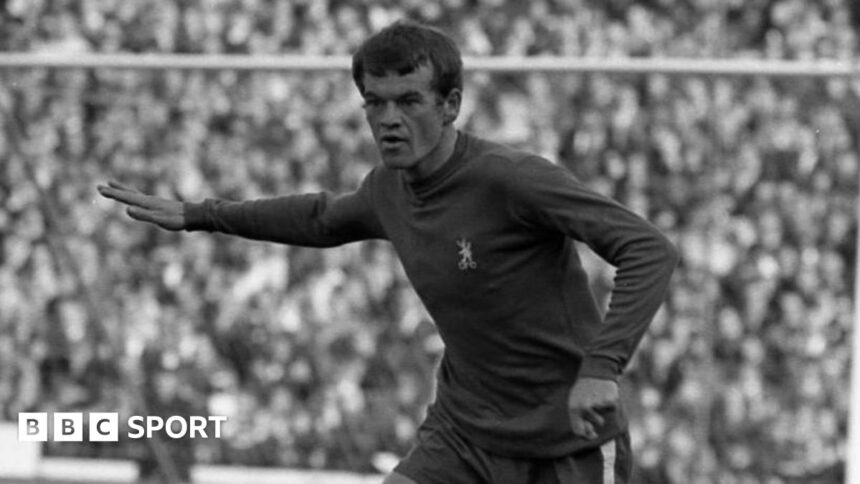
Chelsea and Scotland Legend Eddie McCreadie Dies Aged 85: A Bridge Between Eras
The football world mourns the passing of a true icon, a man whose name is woven into the very fabric of Chelsea Football Club. Eddie McCreadie, the elegant and tenacious left-back hailed as one of Europe’s finest, has died at the age of 85. His journey from the shipyards of Glasgow to the hallowed turf of Wembley, and later into the Chelsea dugout, tells the story of a club’s evolution from stylish cup fighters to a side forged in relentless spirit. McCreadie was not just a player; he was a bridge between the flamboyant Chelsea of the swinging sixties and the hard-nosed, promotion-winning side of the seventies, leaving an indelible mark on all who witnessed his class and commitment.
The Glasgow Rock: Forging a Defensive Dynamo
Born in Glasgow in 1940, Eddie McCreadie’s footballing education was forged in the uncompromising environment of Scottish football. He arrived at Chelsea in 1962 for a modest fee from East Stirlingshire, a signing that would prove to be one of the club’s most astute. Under the mercurial management of Tommy Docherty, McCreadie quickly established himself as the archetypal modern full-back—a defender first, but with the pace, technique, and attacking verve to become a potent offensive weapon. His 410 appearances for Chelsea were a testament to his consistency and durability in an era of physically demanding football. Docherty’s famous proclamation that McCreadie was “the best left-back in Europe” was no hollow praise; it was recognition of a player whose athleticism and intelligence set him apart.
McCreadie’s game was built on a formidable combination of attributes:
- Pace and Recovery: His exceptional speed allowed him to nullify wingers and rectify defensive breaches.
- Tenacious Tackling: A clean but fiercely competitive tackler, he relished the one-on-one duel.
- Attacking Overlap: He pioneered the overlapping full-back role at Stamford Bridge, providing width and precision.
- Big-Game Temperament: McCreadie consistently saved his most influential performances for the grandest stages.
Wembley Hero and Heartbreak: Defining Moments in Blue
Eddie McCreadie’s Chelsea legacy is punctuated by iconic moments at Wembley Stadium, a venue that brought him both his greatest glory and his most profound disappointment. In 1965, he etched his name into Chelsea folklore in the League Cup final against Leicester City. In a tight, tense encounter, it was the marauding left-back who surged forward to score the game’s only and winning goal, securing the club’s first major trophy in a decade. It was a goal that perfectly encapsulated his value to the side—defensive solidity transformed into match-winning attacking impetus.
Five years later, he was a cornerstone of the side that triumphed in the epic 1970 FA Cup final replay against Leeds United, a brutal and brilliant two-part saga that defined an era. However, Wembley also dealt him cruel blows. A year after that FA Cup win, he suffered defeat in the 1971 final against Tottenham. Worse was to follow on the continental stage. Having been instrumental in Chelsea’s run to the 1971 European Cup Winners’ Cup final, a cruel injury robbed him of the chance to play against Real Madrid in Athens. He could only watch as his teammates secured a famous victory, a personal heartbreak for a man who had done so much to get them there.
His international career with Scotland mirrored this mix of high achievement and frustration. He earned 23 caps for Scotland, with the pinnacle being a role in the legendary 3-2 victory over world champions England at Wembley in 1967. Yet, like many talented Scots of his generation, major tournament football remained just out of reach.
From Captain to Gaffer: A Managerial Legacy of Grit and Youth
After retiring as a player in 1973, McCreadie remained at Chelsea, first as a coach and then, in 1975, as assistant to manager Ron Suart. When Suart was dismissed in April 1977, with the club staring at the unthinkable—relegation to the Second Division—McCreadie was handed the reins. His mission was immediate: keep Chelsea up. He couldn’t, and the drop was confirmed. What followed, however, was a masterclass in rebuilding a club’s identity from the ground up.
Facing financial constraints, McCreadie made a bold and lasting decision. He placed his faith in youth, promoting a crop of talented teenagers from the academy and blending them with the few experienced professionals who remained. This group, including the likes of Mike Fillery and Clive Walker, played with a fearless, high-energy style that reflected their manager’s own playing philosophy. In his first full season, he guided Chelsea to promotion at the first attempt. His management of Chelsea was characterized by a disciplined, team-first ethos. He famously banned players from wearing jeans and boots at the training ground, insisting on a professional standard. His tenure, though brief, reconnected the club with its fighting spirit and laid a foundational ethos that valued homegrown talent—a principle that resonates at Stamford Bridge to this day.
Analysis: The Enduring McCreadie Blueprint
Expert analysis of Eddie McCreadie’s career reveals a blueprint that remains relevant. As a player, he was a prototype for the dynamic, two-way full-back that is now a prerequisite in top-level football. The modern stars who dominate the flanks, contributing as much to attack as defense, walk a path he helped to pave at Chelsea in the 1960s. His success was not based on brute force but on athleticism, tactical understanding, and technical quality—a truly modern player in a bygone era.
His managerial impact, while often overshadowed by the more trophy-laden reigns that followed, was profoundly significant. In an era of crisis, he stabilized the club not with expensive signings, but with a clear philosophy and unwavering standards. He proved that Chelsea’s academy could produce first-team players capable of achieving success, a lesson the club has cyclically returned to throughout its history. The spirit of that late-70s, promotion-winning side—gritty, together, and fiercely proud—was a direct reflection of McCreadie’s own character.
A Legacy Cast in Stamford Bridge Iron and Silk
The passing of Eddie McCreadie marks the loss of a genuine Chelsea legend. His story is one of elegant defiance—the silk of his surging runs down the left flank combined with the iron of his defensive resolve. He was a winner, a leader, and a visionary who served the club with distinction in two vastly different capacities. From his Wembley winner to his promotion triumph as manager, his contributions were foundational. In today’s game, where full-backs are kings and academy products are prized, we see the echoes of McCreadie’s influence. He was a footballer ahead of his time and a manager who understood the timeless values of heart and identity. As Stamford Bridge pays its respects, it remembers a man who didn’t just wear the badge; he helped to define what it meant to be Chelsea, in an age of transition, with a passion and a professionalism that will forever inspire.
Source: Based on news from BBC Sport.