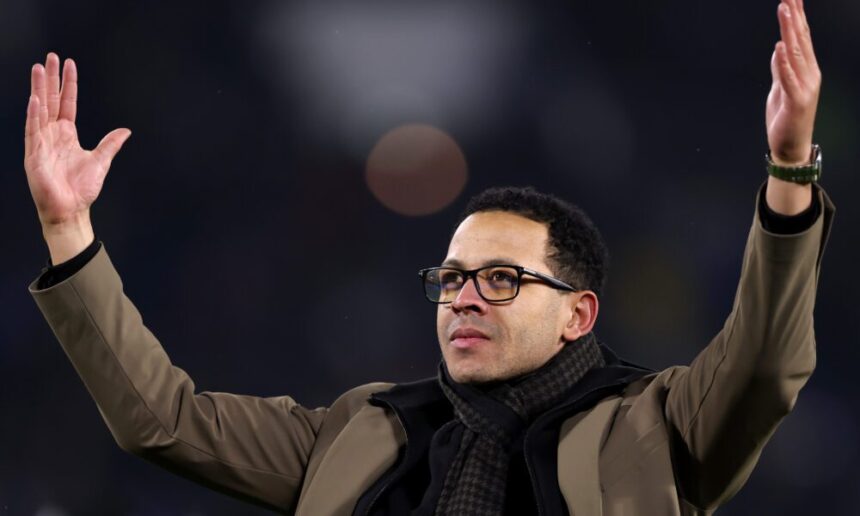
Chelsea Appoint Liam Rosenior: A Bold Long-Term Bet After Maresca’s Swift Exit
In a move that has sent shockwaves through the Premier League, Chelsea Football Club has appointed Liam Rosenior as its new head coach, handing the 39-year-old a staggering long-term contract until the summer of 2032. The announcement comes just days after the abrupt departure of Enzo Maresca, whose tenure unravelled with startling speed following a breakdown in relations with the club hierarchy and a dismal run of form. Chelsea’s decision to pivot from a highly-touted European coach to a promising, yet less proven, English manager represents one of the most fascinating and risky gambles in the club’s modern history.
The Maresca Meltdown: A Project Unraveled
To understand the significance of Rosenior’s appointment, one must first examine the vacuum it fills. Enzo Maresca’s arrival in the summer was framed as the next step in a meticulous project, a disciple of Pep Guardiola tasked with implementing a complex, possession-dominant philosophy. For a brief period, it showed flashes of promise. However, the foundation was fragile. Reports of a strained relationship with sporting directors Paul Winstanley and Laurence Stewart began to surface, centering on transfer strategy and tactical rigidity.
The situation on the pitch ultimately became untenable. A crippling run of just one win from their last seven Premier League games saw Chelsea plummet down the table, leaving them a cavernous 15 points adrift of leaders Arsenal. The football was often criticised as sterile and predictable, with the squad’s youthful exuberance seemingly stifled by over-coaching. New Year’s Day brought the inevitable divorce, a stark admission that a project years in the making had collapsed in mere months.
Rosenior’s Rise: Why Chelsea Chose the Englishman
In the aftermath, Chelsea’s leadership moved with uncharacteristic decisiveness. Their target: Liam Rosenior, a coach highly respected within football circles but without a top-tier club pedigree. Rosenior’s work at Derby County, in impossible circumstances, and particularly at Hull City, marked him as a rising star. At Hull, he engineered an attractive, progressive style of play and narrowly missed out on Championship playoff qualification last season, yet was surprisingly dismissed—a decision widely condemned within the industry.
Chelsea’s data-driven model clearly sees immense potential. Rosenior represents a different profile entirely from Maresca:
- Man-Management Focus: Known for his exceptional communication skills and ability to develop young players, a trait paramount for Chelsea’s squad.
- Adaptable Tactics: While principled, he has shown more pragmatic flexibility than his predecessor, often tailoring setups to opponents.
- Cultural Alignment: As a young English coach, he is perceived as better positioned to understand the pressures of the Premier League and connect with the club’s core identity.
The decision to offer an eight-and-a-half-year contract until 2032 is the most eye-catching element. It is a monumental show of faith, designed to provide stability and signal a commitment to a new, patient project under a coach they believe can grow with the club’s immense young talent.
Immediate Challenges and Tactical Integration
Rosenior walks into a dressing room brimming with world-class potential but scarred by instability and underperformance. His in-tray is overflowing. The immediate challenge is psychological: restoring belief, simplifying the message, and building cohesion within a group that has seen multiple managerial philosophies in a short span.
Tactically, observers can expect a shift. Rosenior’s Hull City were known for structured build-up, intelligent pressing triggers, and utilising dynamic wing-backs. This could revitalise players like Ben Chilwell and Malo Gusto. The question is how his system accommodates Chelsea’s collection of star number 10s—Cole Palmer, Christopher Nkunku, and Carney Chukwuemeka. Rosenior’s first test will be forging a clear, effective identity from a squad built by several different visions.
Key early priorities will include:
- Solidifying a leaky defence and establishing a consistent back-four or back-five.
- Rebuilding the confidence of marquee signings like Moisés Caicedo and Enzo Fernández.
- Managing the weight of expectation at Stamford Bridge, where patience has worn thin.
Expert Analysis: A Masterstroke or a Miscalculation?
This appointment divides expert opinion. Supporters see a visionary move, finally betting on a progressive English coach with the man-management skills to harness a chaotic squad. The long-term contract is praised as a necessary antidote to the club’s hire-and-fire culture, offering Rosenior the security to build properly without the immediate spectre of the sack.
Sceptics, however, view the long-term contract until 2032 as a dangerous overcorrection. They argue that throwing a relatively inexperienced coach into the furnace of Chelsea, with its relentless demand for top-four finishes and trophies, is a recipe for disaster. The risk is that the project collapses under pressure, leaving the club entangled in another expensive separation.
The truth likely lies in the middle. Rosenior is a gifted coach, but this is an astronomical leap. His success will depend heavily on the support structure above him. Will the board finally align with a manager in the transfer market? Will they withstand inevitable difficult periods? The breakdown in relations with Maresca suggests previous failures in this very area.
Predictions for Chelsea’s New Era
The Rosenior era begins with tempered expectations. A charge for the Champions League spots this season seems improbable given the points deficit. The realistic aims are a strong top-half finish, a deep cup run, and most importantly, visible progress in team shape and spirit.
Looking ahead, the strategy is clear: Rosenior is the chosen figure to guide Chelsea’s prodigious young squad—from Palmer and Levi Colwill to the next academy graduates—into their prime years. The club is betting that his coaching acumen and personal skills will yield greater returns than another cycle of hiring established, expensive names.
If given time and support, this could be the start of a truly sustainable and exciting period at Stamford Bridge. If the old patterns of impatience resurface, it could become another costly chapter in the post-Abramovich flux. The appointment of Liam Rosenior is a definitive pivot; now, Chelsea must hold their nerve and support the bold vision they have committed to on paper.
Conclusion: Stability Over Stardom
Chelsea’s appointment of Liam Rosenior is a profound statement of intent. It is a conscious move away from the glamour of big-name managers towards a project built on development, culture, and long-term planning. The shadow of Enzo Maresca’s rapid failure looms large, a cautionary tale of what happens when vision and reality clash. In Rosenior, Chelsea see not just a coach, but a cultural architect suited to a young squad.
The long-term contract until 2032 is a bold, perhaps reckless, but undeniably brave device to enforce stability. Success will not be judged in weeks, but in seasons. For a club that has lost its way, this is a calculated attempt to rediscover its soul. The Premier League will watch with fascination as one of its brightest young coaching minds takes on one of its most daunting challenges. The Rosenior era has begun; its defining feature will be patience, a commodity rarely afforded at Stamford Bridge.
Source: Based on news from Yahoo Sports.