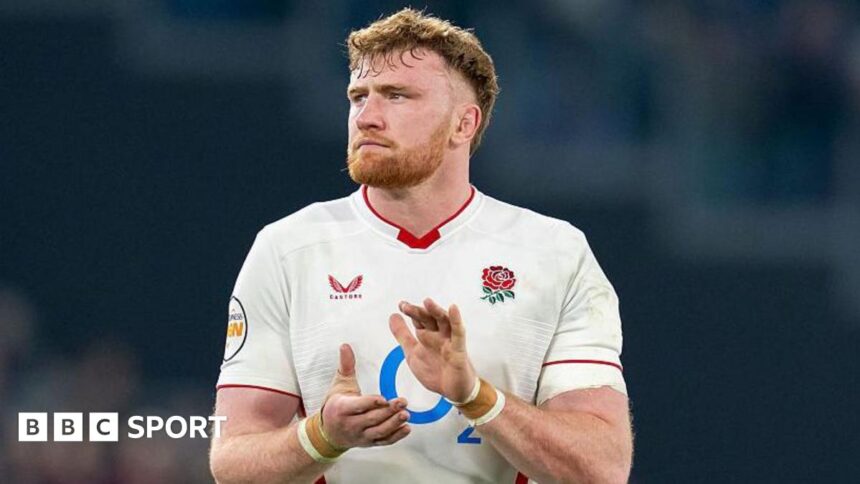
Chessum Shifted as England’s Lone Change in Bid to Halt Six Nations Slide Against France
As the dust settles on a deflating defeat in Rome, the England camp has responded not with a sweeping revolution, but with a single, calculated adjustment. For their final Six Nations assignment—a daunting trip to face the in-form France in Lyon—head coach Steve Borthwick has made just one change to his starting XV. The reintroduction of Ollie Chessum, not in his familiar second-row berth but shifted to the blind-side flanker role, is the solitary tweak in a selection that signals a demand for improvement from within. This is a team tasked with stopping the rot, not just of a two-game losing streak, but of a growing narrative of stagnation. The move, forced by injury but rich in strategic intrigue, places the versatile Leicester Tiger at the heart of England’s attempt to salvage pride and a result from a turbulent campaign.
A Tactical Pivot: Chessum’s Crucial Role in the Back Row
The selection of Ollie Chessum at number 6 is far more than a simple like-for-like replacement for the injured Tom Curry. It is a deliberate recalibration of England’s forward power. Having started the Championship alongside Maro Itoje in the engine room, Chessum now brings his 6ft 7in frame and considerable athleticism to the back row. This decision is layered with intention from Borthwick’s coaching team.
Firstly, it addresses the immediate loss of ball-carrying power and line-out disruption. France boasts one of the most physically imposing packs in world rugby. By deploying Chessum on the flank, England adds a heavyweight, direct carrier who can dent the gainline and tie in multiple French defenders. His presence also creates a formidable line-out option, forming a triple-threat with Itoje and number 8 Ben Earl, crucial for both securing and contesting French throws.
Secondly, it maintains a degree of continuity. Chessum is no novice, boasting 34 previous caps for England and the experience of a British and Irish Lions tour in Australia last summer. His understanding of the England system is total. “Ollie’s versatility and physical attributes give us a different dynamic,” Borthwick noted, framing the change as a strategic opportunity rather than a forced compromise. The shift also allows the promising George Martin to continue his developing partnership with Itoje in the second row, a duo that offers immense grunt.
Injury Fallout and the Pepper Promotion
The chain reaction began with the cruel blow to Tom Curry, who suffered a calf injury in the warm-up before the Italy game. His absence is a significant one, robbing England of his world-class breakdown intensity and defensive leadership. The reshuffle sees 20-year-old Guy Pepper, who earned his first cap off the bench in Rome, promoted to the starting openside role.
This is a monumental test for the Newcastle Falcon. Pepper’s inclusion is a bold, future-focused move, but facing the French jackalling threat of Charles Ollivon and François Cros is a baptism of fire. The experienced Sam Underhill, who stepped in for Curry at the last minute in Rome, moves to the bench. This suggests Borthwick is seeking a specific, high-energy profile from the start, with Underhill’s proven tackling ferocity held in reserve to shore up the defence in the latter stages.
- Key Absence: Tom Curry (Calf Injury).
- Direct Replacement: Guy Pepper starts at openside.
- Experience on Bench: Sam Underhill provides cover and impact.
- Strategic Reshuffle: Chessum’s move facilitates Pepper’s inclusion and rebalances the pack.
The bench, with Underhill joined by the likes of Ellis Genge and Danny Care, appears designed to inject tempo and power if England are in the fight entering the final quarter.
Stopping the Rot: England’s Uphill Battle in Lyon
The phrase “stop the rot” is not used lightly. Consecutive defeats to Scotland and Italy have plunged England into a state of introspection. Their attack has lacked coherence, their discipline has wavered at critical moments, and the collective confidence seems fragile. Travelling to face a French team that has found its devastating rhythm in victories over Scotland and Wales is arguably the toughest challenge in world rugby right now.
England’s game plan under Borthwick has always been built on a foundation of set-piece solidity and defensive resilience. The selection for Lyon doubles down on that philosophy. The pack, with Chessum’s added heft, is selected to meet fire with fire. The key battles will be in the collision zone and at the breakdown. If England can slow down French ball and manufacture opportunities through their kicking game and driving maul, they can apply pressure. However, if France generate quick ruck ball and unleash their powerful carriers and elusive backs in space, it could be a long evening.
The pressure is not just on the team, but on the management. Another heavy defeat would see England finish the Championship with three losses, potentially as low as fourth place, and would raise severe questions about the trajectory of the project less than a year and a half out from the next World Cup.
Expert Analysis and Prediction: Can the Chessum Gamble Pay Off?
From a tactical standpoint, the Chessum switch is a logical response to the specific threat of France. It makes England harder, bigger, and more disruptive in the areas where France seeks to dominate. His work rate and ability in the wide channels, honed as a lock, could also be an asset in countering the French wide attacking plays.
However, the gamble lies in the back row’s balance. Pepper, for all his promise, is a rookie at this level. The combination of him, Chessum (a lock by trade), and Earl is new and untested at the intensity of a France-England clash. The onus will fall heavily on Earl’s shoulders to be the primary link player and defensive organiser. The risk is that England’s breakdown efficiency suffers without a specialist, seasoned openside from the start.
Prediction: France enter this match as firm and justified favourites. They are playing at home, with confidence, and possess a more fluid and potent attacking structure. England’s best chance lies in a brutal, territory-based arm-wrestle, squeezing errors from France and capitalising through the boot of George Ford. While the Chessum selection strengthens their hand in that kind of battle, it may not be enough to overcome the French flair. Expect a physically punishing contest, but for France’s superior firepower and cohesion to tell in the final quarter. France to win by 10-15 points.
Conclusion: A Defining Test of Character
Steve Borthwick’s minimal selection change is a clear message: the solution to England’s problems must come from the players already in the shirt. The repositioning of Ollie Chessum is a fascinating pivot, a move that seeks to bolster England’s physicality in direct response to the Gallic juggernaut awaiting them. This game transcends the battle for the Antoine Dupont Trophy. It is a defining test of character for an under-pressure England side.
A spirited, coherent performance—even in defeat—could provide a scaffold for future growth. Another disjointed display, however, would confirm that the issues run deeper than a single personnel change can fix. All eyes will be on Lyon to see if the Chessum shift can be the catalyst that stiffens England’s spine and allows them to finally, decisively, stop the rot.
Source: Based on news from BBC Sport.