College Basketball Coach’s Fiery Plea After Brown University Shooting: “It’s the Guns”
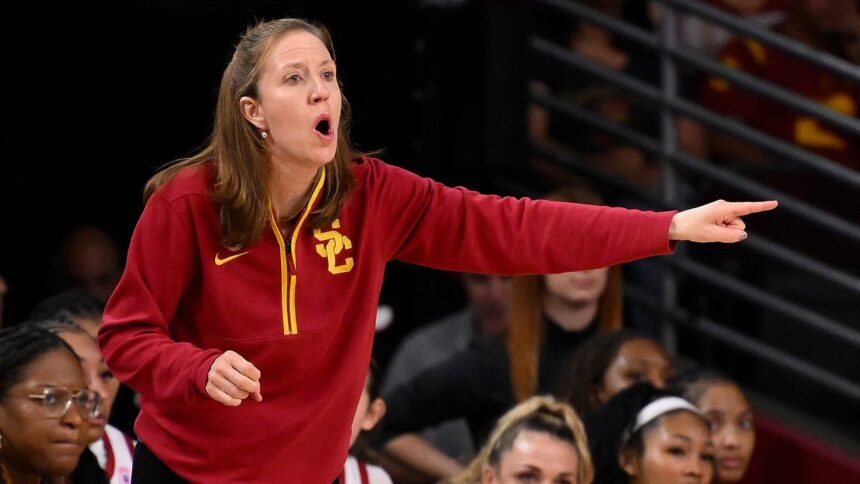
The world of college sports, often a sanctuary of rivalry and camaraderie, was jolted over the weekend by a tragedy far from the court. In the wake of a deadly shooting at Brown University in Providence, Rhode Island, that left two dead and nine wounded, a powerful voice from the world of athletics pierced the usual post-game analysis. USC Trojans women’s basketball head coach Lindsay Gottlieb, a leader shaping young lives, stepped beyond the bounds of sport to deliver a raw and emotional indictment: “It’s the guns.” Her comments, echoing a national anguish, have ignited a conversation about the role of coaches, the pervasive reach of gun violence, and the urgent call for solutions that resonates from locker rooms to legislative halls.
A Coach’s Mandate: Protecting Players On and Off the Court
For figures like Lindsay Gottlieb, the job description extends far beyond X’s and O’s. In today’s climate, a head coach is a de facto life coach, a mentor, and a protector. The development they oversee isn’t confined to a jump shot; it encompasses the holistic well-being of their student-athletes. When gun violence strikes a university community, it strikes at the heart of that covenant. “We recruit these young people with a promise of safety, opportunity, and growth,” a veteran Power 5 assistant coach, who wished to remain anonymous, told us. “An event like the Brown shooting is a horrific reminder that our duty to protect them doesn’t end when they leave the gym. It’s a 24/7 anxiety now.” This sentiment frames Gottlieb’s outrage not as a political diversion, but as an extension of her core responsibility. Her platform, built on leadership and competition, becomes a megaphone for a fear shared by parents, educators, and coaches nationwide.
The incident itself remains under active investigation. Providence police took a person of interest into custody but later released them, underscoring the complex and ongoing nature of the case. Yet, the chilling facts—two killed, nine wounded on a university campus—provided a grim backdrop for a national discussion amplified on platforms like Fox News, where senior medical analyst Dr. Marc Siegel addressed the event, often focusing on the psychological and societal impacts of such trauma.
Beyond “Thoughts and Prayers”: The Sports World’s Evolving Conscience
Gottlieb’s blunt statement is part of a significant shift in the sports landscape. Gone are the days when coaches and athletes were expected to remain silent on social issues. From racial justice to mental health, the modern sports figure is increasingly vocal, leveraging their influence to spotlight crises. Gun violence, as a recurring American tragedy, has inevitably become a focal point.
- Athlete Activism: NBA stars like Stephen Curry and Chris Paul have openly advocated for gun reform.
- Institutional Statements: Leagues and NCAA programs often release statements and promote awareness campaigns after mass shootings.
- Coach Leadership: Figures like Gottlieb use their podium to translate collective grief into a demand for action, representing a constituency of young people directly affected.
This evolution reflects a understanding that sports do not exist in a vacuum. The athletes they celebrate are products of communities ravaged by violence, and the students they recruit attend schools where active shooter drills are as routine as fire drills. For a coach to say “It’s the guns” is to acknowledge a fundamental threat to the ecosystem that sustains their profession.
Expert Analysis: The Public Health Lens on Trauma and Response
Medical and psychological experts frame events like the Brown shooting as a cascading public health crisis. Dr. Marc Siegel, in his Fox News analysis, likely touched on the immense strain such incidents place on community mental health and emergency systems. The trauma radiates far beyond the immediate victims.
“The impact is viral,” explains Dr. Elena Ramirez, a sports psychologist who works with collegiate athletes. “You have the direct victims, then the witnesses, then the entire student body and faculty who experience profound fear and vulnerability. For athletes, who often process stress through physical exertion and structured teamwork, this kind of external, uncontrollable threat can be particularly destabilizing. It undermines their sense of safety, a foundation for performance.” Coaches like Gottlieb are then on the front lines of managing this secondary trauma, helping their players process fear while trying to maintain focus on their sport—an almost impossible balance.
This expert view underscores that the conversation is not merely ideological. It is about practical crisis management, mental health resources, and the long-term psychological safety of student populations. When a coach speaks out, they are also advocating for the support systems necessary to pick up the pieces.
Predictions: The Growing Chorus and Potential Backlash
Looking ahead, the trajectory seems clear. The chorus of coaches and athletes speaking on gun violence will likely grow louder and more coordinated. We can anticipate:
- Organized Advocacy: More coaches may use their collective voice through organizations like the National Association of Basketball Coaches (NABC) to issue unified statements or lobby for specific safety measures.
- Recruiting Impact: Campus safety, including a school’s stance and preparedness regarding gun violence, may become a more explicit part of recruiting conversations between coaches, parents, and prospects.
- Platform Expansion: Post-game press conferences and sports talk shows will increasingly become forums for these discussions, blurring the lines between sports commentary and social advocacy.
However, this advocacy will not be without significant backlash. Critics will argue that coaches should “stick to sports,” facing potential pressure from donors, fans, or administrators who disagree with their stance. The debate will mirror the nation’s deep divisions, placing athletic departments in the center of a cultural firestorm. The courage to speak, as Gottlieb did, will require a fortitude equal to facing a full-court press in a championship game.
Conclusion: A Rallying Cry From the Sidelines
The tragedy at Brown University is a story of loss, investigation, and a community in mourning. But the powerful, succinct commentary from USC’s Lindsay Gottlieb—”It’s the guns“—has framed it within a larger, more urgent American narrative. It is the cry of a leader whose primary constituency is young adults coming of age in an era of lockdown drills and headlines of horror. Her words transcend the typical coach-speak of “controlling controllables”; they are an admission that some threats are too vast to game-plan away.
This moment signifies more than a single soundbite. It marks the further erosion of the artificial barrier between the arena and the real world. As gun violence continues to touch every corner of society, including the hallowed grounds of Ivy League campuses, the voices from the sidelines will become harder to ignore. The play call is no longer just for a zone defense, but for a defense of our very communities. The final buzzer on this debate is far from sounding, but coaches like Gottlieb have just checked into the game.
Source: Based on news from Fox Sports.