Controversial Strike Three Seals USA’s Dramatic WBC Semifinal Win, Sparking Umpire Firestorm
In the pressure-cooker atmosphere of a World Baseball Classic semifinal, where national pride hangs on every pitch, the game often finds its defining moment in a blur of heat and sound. For Team USA on Sunday night, that moment arrived not with a thunderous crack of the bat, but with the silent, disputed flick of an umpire’s wrist. A called third strike on Dominican Republic shortstop Geraldo Perdomo with two outs in the ninth inning sealed a nail-biting 2-1 victory, propelling the United States into the championship final. Yet, as Perdomo stood frozen in disbelief, a different kind of roar was building—one that would erupt across social media and ignite a fierce debate about the human element in the sport’s most high-stakes international tournament.
A Pitcher’s Duel for the Ages Ends in a Whimper of Controversy
The matchup itself was a baseball purist’s dream: a star-studded United States lineup facing the relentless power of the Dominican Republic, a team many considered the tournament favorite. The game unfolded as a tense, low-scoring masterpiece of pitching and defense. Every run was precious, every baserunner a potential crisis. The U.S. scratched across single runs in the fourth and fifth innings, while the Dominican Republic answered with one in the sixth, setting the stage for a heart-stopping finish.
The controversy, however, was not an isolated incident. It was a bookend to a growing narrative throughout the late innings. In the critical eighth, with the tying run on base, Dominican superstar Juan Soto, one of the game’s most discerning eyes, was rung up on a called third strike by home plate umpire Shinji Hayashi on a pitch from David Bednar that appeared to skirt the outer edge. Soto’s visceral reaction—a stunned turn and exasperated look—was a precursor of what was to come.
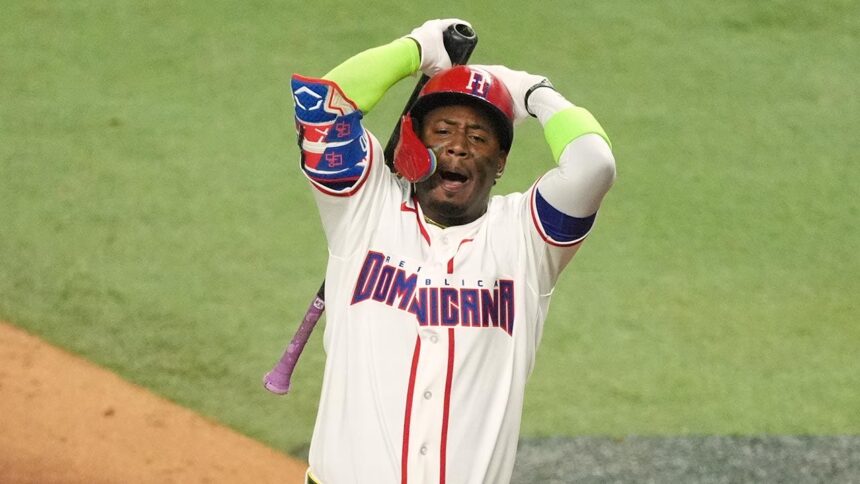
Fast forward to the ninth, with the electrifying Mason Miller on the mound for the USA. After securing two outs, he faced Perdomo. With the count full and a nation holding its breath, Miller unleashed a 101-mph fastball that painted the black on the outside corner—or so it was ruled. Perdomo, like Soto before him, took the pitch. Hayashi’s punch-out call was immediate. Game over. The image of a despondent Geraldo Perdomo, hands on his helmet, mouth agape in protest, instantly became the enduring snapshot of the semifinal.
Strike Zone Scrutiny: Anatomy of a Social Media Umpire Showdown
Within seconds, the digital diamond was flooded with analysis, outrage, and fervent debate. The World Baseball Classic strikeout controversy became a global trending topic, dissected from every possible angle.
- Pitch Track Technology Takes Center Stage: Broadcast and fan-shared pitch-tracking graphics were the primary evidence. For both the Soto and Perdomo strikeouts, the visualizations suggested the pitches were, at best, catching the absolute fringe of the zone, with a significant portion of the baseball appearing outside. The question became not just “was it a strike?” but “is that a call you make, in that situation, to end a game of this magnitude?”
- The “Human Element” vs. The Quest for Precision: Defenders of the call pointed to the supreme velocity and movement of the pitches, the difficulty of the catcher’s receiving, and the long-standing tradition of the umpire’s judgment. Critics, however, argued that in an era of precise technology and in a tournament with the world watching, the margin for error on game-ending calls must be zero. The debate highlighted the growing tension between baseball’s traditional roots and the push for automated strike zones.
- A Divided Baseball World: Social media split along predictable and unexpected lines. Fans of Team USA celebrated the gritty win, while Dominican Republic supporters cried robbery. Interestingly, many neutral analysts and players from other nations expressed sympathy for the Dominican team, noting the brutal finality of the calls. The phrase “Let them play” and “You have to swing in that spot” became opposing mantras in the thread wars.
Beyond the Call: Pressure, Pitching, and What Was Earned
To frame this victory solely through the lens of controversy does a disservice to the phenomenal pitching performance that created the situation. The U.S. staff, from the starters through the bullpen, executed a near-flawless game plan against one of the most fearsome lineups ever assembled. They attacked the zone, trusted their stuff, and forced Dominican hitters into passive positions with two strikes. The late-inning sequences from Bednar and Miller were exercises in sheer power and nerve.
“You work all game to get to that moment with your best stuff,” a former MLB All-Star pitcher told us in analysis. “Miller made a premium pitch on the edge. Was it a strike? By the book, it’s probably a ball. But when you’re throwing 101 with that kind of life, and you’ve established the outer half all inning, you’re forcing the umpire to make a split-second decision. The Dominican hitters were put in a terrible spot by brilliant pitching—take and hope it’s a ball, or swing at something almost unhittable.”
Similarly, the Dominican Republic’s pitchers were magnificent, keeping the game within reach and giving their legendary offense a chance. The game was a testament to the elevated quality of play in the World Baseball Classic, where every pitch carries the weight of a nation. The thin margin for error is what makes the tournament so captivating, and, as Sunday showed, so potentially heartbreaking.
Looking Ahead: Fallout and Predictions for the Final
The immediate fallout is a Team USA squad riding a wave of momentum and resilience into the final. They have proven they can win a tight, defensive battle against elite competition. However, they will also carry the label of a team that benefited from a disputed call, a narrative that will add an edge to the championship game.
Predictions for the championship final must now account for this psychological factor. The U.S. will be battle-tested and confident, but their opponents will see a team that can be pressured into close, late-inning drama. The key for Team USA will be to leverage their deep lineup to create more offensive breathing room and avoid another nail-biter decided by a single pitch.
For the sport itself, this incident is rocket fuel for the ongoing conversation about automated strike zone technology. While not yet used in the WBC, the sheer volume and intensity of the global reaction to these calls will undoubtedly accelerate discussions for its implementation in future tournaments. When the world is watching, the demand for perceived fairness becomes deafening.
A Conclusion Etched in Debate, Not Just in Victory
The United States’ 2-1 victory over the Dominican Republic will be recorded in the history books as a win, a ticket punched to the World Baseball Classic final. But its legacy will be far more complex. It will be remembered as a pitching clinic, a cultural spectacle, and the night the “human element” of baseball sparked a firestorm that reached every corner of the sports world.
In the end, the semifinal presented the beautiful agony of baseball in its purest form: a game of inches decided by a millimeter’s judgment on a 101-mph fastball. Team USA advances, their triumph real but shadowed by debate. The Dominican Republic exits, their pride wounded by a call that will be argued for years to come. And the World Baseball Classic, once again, proved it is more than just an exhibition—it is the grand stage where every moment, every swing, and every called strike carries the weight of a nation’s dreams and the scrutiny of a connected world.
Source: Based on news from Fox Sports.