Fueling Greatness: How Ironman World Champion Lucy Charles-Barclay Masters Coeliac Disease
The image of an Ironman World Champion is one of supreme physical power: sinewy muscle, relentless drive, and a body honed to the peak of human endurance. For Britain’s Lucy Charles-Barclay, that hard-won title was forged not just through thousands of hours of swim, bike, and run, but in a meticulous, daily battle with her own immune system. In a revealing discussion, the triathlon superstar opened up about managing coeliac disease—a condition that, if unmanaged, could sabotage the very engine of her extraordinary performances.
Beyond a “Gluten Allergy”: The Athlete’s Autoimmune Adversary
For the uninitiated, coeliac disease is often mistakenly simplified as a gluten intolerance or allergy. For Lucy Charles-Barclay and millions worldwide, it is a serious autoimmune disorder. When gluten—a protein found in wheat, barley, and rye—is ingested, the body’s immune system mounts an attack on the lining of the small intestine. This internal assault damages the villi, tiny finger-like projections responsible for absorbing nutrients from food.
For an elite athlete whose livelihood depends on optimal fuel absorption, recovery, and energy levels, the implications are profound. Undiagnosed or poorly managed coeliac disease can lead to:
- Chronic fatigue and energy depletion – a death knell for endurance sport.
- Nutrient malabsorption, including iron (leading to anemia), calcium, and vitamin D.
- Gastrointestinal distress, bloating, and pain that can derail training.
- Increased risk of stress fractures and longer recovery times due to nutritional shortfalls.
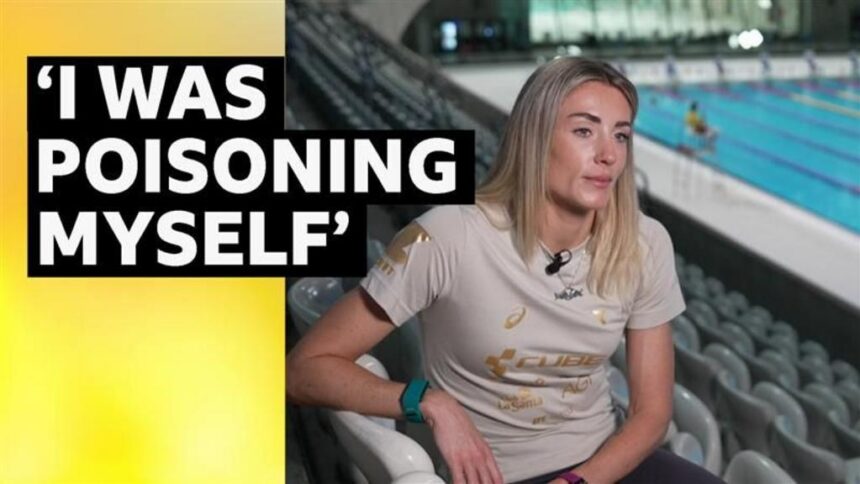
Charles-Barclay’s candid admission that she was essentially “poisoning myself before endurance events” before her diagnosis underscores the stark reality. Her pre-race meals, likely packed with gluten-rich carbs meant to fuel her, were instead silently crippling her system from within.
The Gluten-Free Podium: A Protocol of Precision
Winning an Ironman World Championship requires a military-grade operation. For Lucy, this extends far beyond training plans and pace charts into the very core of her nutrition. Managing coeliac disease at this level is not a dietary choice; it is a non-negotiable pillar of her performance architecture. Her protocol is a masterclass in athletic precision.
Absolute dietary vigilance is the cornerstone. There is no “cheat day” with coeliac disease; even trace cross-contamination can trigger a damaging immune response. This means scrutinizing every label, vetting every restaurant kitchen, and preparing her own food whenever possible. Her diet is inherently whole-food focused—lean proteins, fruits, vegetables, rice, quinoa, and certified gluten-free oats—but the complexity lies in the extreme caloric and carbohydrate demands of Ironman training, which can exceed 5,000 calories a day.
Her strategy likely involves:
- Bulk preparation of safe, gluten-free staples like rice, roasted vegetables, and proteins.
- Partnering with trusted nutrition brands that provide certified gluten-free energy gels, bars, and drink mixes for training and racing.
- Meticulous race-day planning, often bringing her own nutrition to unfamiliar venues to avoid any risk.
- Constant communication with her support team, including a sports dietitian specializing in coeliac disease, to ensure her micronutrient levels are optimal.
This turns fueling from a simple task into a logistically complex, yet critically empowering, part of her routine. By controlling her diet so completely, she controls her health, turning a potential weakness into a source of strength and consistency.
The Unseen Advantage: Discipline Forged in Adversity
While coeliac disease is a formidable challenge, expert analysis suggests that the discipline required to manage it at an elite level can forge a unique psychological edge. Charles-Barclay’s story is not one of competing *despite* her condition, but perhaps, in some respects, excelling *because* of the rigor it demands.
The constant attention to detail, the proactive planning, the deep listening to her body’s signals—these are all transferable skills that define champion mentality. While other athletes might be casual about their nutrition, Lucy’s condition forces an unparalleled level of bodily awareness and personal responsibility. This hyper-vigilance ensures she is never complacent. Her gut health is a daily metric, as important as her heart rate or sleep score. This cultivates a resilience and a problem-solving mindset that is invaluable when facing the inevitable lows of a 140.6-mile race.
Furthermore, the necessity of a clean, whole-food-based diet may contribute to superior recovery and reduced inflammation compared to athletes who rely on more processed options. By eliminating gluten, she also eliminates a common inflammatory trigger, potentially allowing for faster adaptation to training stress. It’s a powerful reminder that optimal performance often lies at the intersection of peak physiology and meticulous lifestyle management.
The Future of Fueling: A New Blueprint for Gluten-Free Athletes
Lucy Charles-Barclay’s dominance on the world stage is more than an athletic achievement; it is a beacon for the gluten-free community and a blueprint for the future of sports nutrition. Her success proves that a coeliac disease diagnosis is not a barrier to world-class performance, but a parameter to be mastered. We predict her influence will catalyze several key developments:
- Increased awareness and earlier diagnosis of coeliac disease in athletes, moving beyond vague “stomach issues” to specific screening.
- Greater innovation and scrutiny in the sports nutrition industry, with more certified gluten-free, high-performance products entering the market.
- A shift in perception, where managed autoimmune conditions are seen as part of an athlete’s unique performance fingerprint, rather than a liability.
- Inspiring a generation of young athletes with coeliac disease to pursue sport at the highest level, armed with a proven roadmap for success.
The conversation is shifting from limitation to optimization. Charles-Barclay represents the vanguard of athletes who use deep, personalized health knowledge as their ultimate competitive tool.
Conclusion: Redefining the Limits of Human Potential
Lucy Charles-Barclay’s journey from unknowingly poisoning herself to standing atop the Ironman World Championship podium is a profound narrative of modern sport. It dismantles the myth of the invulnerable champion, replacing it with a more powerful archetype: the informed, resilient, and meticulously self-aware athlete. Her management of coeliac disease is a performance in itself—a parallel discipline that runs as relentlessly as her swim, bike, and run.
Her story transcends triathlon. It is a testament to the power of diagnosis, the necessity of precision, and the incredible potential that can be unlocked when an athlete listens to their body with unwavering attention. Lucy Charles-Barclay hasn’t just won a world title; she has redefined the very ingredients of greatness, proving that with knowledge, discipline, and courage, the human body—in all its complex, individual glory—can achieve the extraordinary.
Source: Based on news from BBC Sport.