Could More Notre Dame Football Stars Make the Leap to the Hardwood?
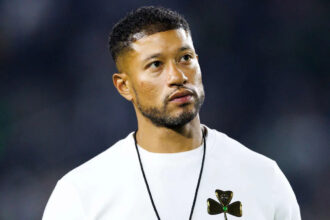
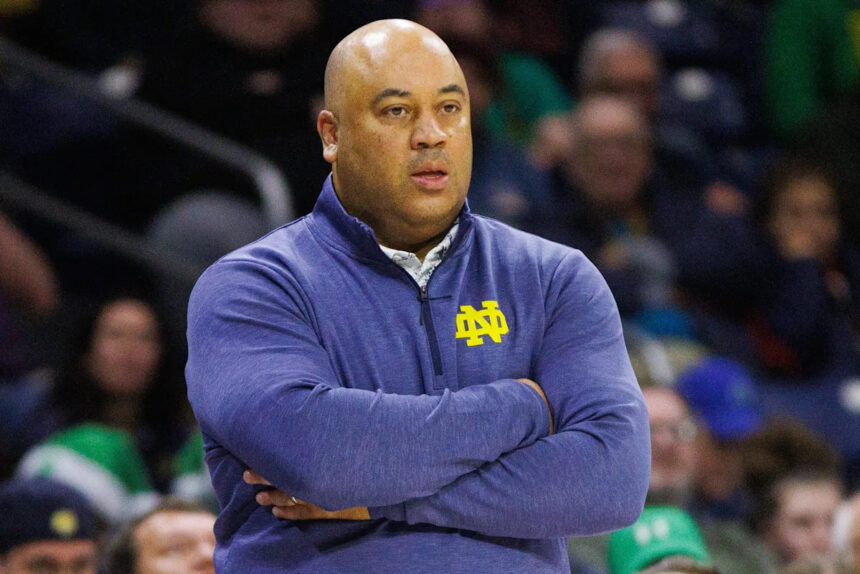
The Notre Dame athletic department has long been a bastion of tradition, but a recent roster move has sparked a fascinating conversation about cross-sport collaboration. The addition of freshman football standout, cornerback Mark Zackery IV, to Micah Shrewsberry’s basketball squad isn’t just a novelty—it could be the beginning of a new, strategic trend in South Bend. After the Irish basketball team’s decisive 82-58 victory over Evansville, their fourth consecutive win, the question on everyone’s mind shifted from the court to the gridiron: Is Zackery just the first, or could more Notre Dame football players join the basketball team?
A Strategic Addition: More Than Just Depth
The inclusion of Mark Zackery IV is a calculated move by Coach Shrewsberry. Zackery, a standout athlete from Indiana who had Division I basketball offers, represents a specific archetype: the elite, multi-sport athlete whose physical tools translate seamlessly between football and basketball. While he didn’t see the floor against Evansville—a prudent decision as he acclimates—his potential impact is clear.
This isn’t merely about adding a body to the roster. It’s about injecting specific, high-level athletic traits that are increasingly rare. Zackery brings:
- Elite Perimeter Defense: A cornerback’s footwork, hip fluidity, and anticipation are directly transferable to locking down opposing guards.
- Next-Level Physicality: The strength and toughness required in the ACC, especially on the defensive end, are second nature to a football player.
- Winning Pedigree: As a state champion in both sports in high school, he adds a proven competitive mentality.
This move signals that Shrewsberry values defensive identity above all, and he’s willing to look beyond the traditional recruiting pipeline to fortify it.
The Shrewsberry-Freeman Pipeline: A Blueprint for Collaboration
The most telling part of this story emerged post-game when Micah Shrewsberry was asked about further collaborations with football coach Marcus Freeman. His answer was revealing, blending humor with genuine insight into their working relationship.
Shrewsberry joked about coveting safety Tae Johnson (“long, athletic”) and even quarterback CJ Carr (“he can really shoot it”), before acknowledging that star cornerback Leonard Moore was, unfortunately, “off the table.” This casual exchange underscores a critical point: the lines of communication between the two programs are not just open; they are actively being used to assess talent.
This unprecedented cooperation between Shrewsberry and Freeman is a modern asset. In an era where athletes are increasingly specialized from a young age, Notre Dame is leveraging its status as a premier two-sport school to mine its own campus for hidden or dormant talent. It builds a unique camaraderie within the athletic department and presents a selling point to recruits who dream of excelling in multiple arenas at the highest level.
Potential Candidates and Practical Realities
While the idea is thrilling, the practical application is complex. Not every football player can contribute to an ACC basketball program. The ideal candidate fits a specific profile. Beyond the names Shrewsberry mentioned, who on the football roster has the background and build to potentially help?
Look for players with:
- Verified High School Basketball Excellence: State-level recognition or clear Division I offers.
- Positional Similarity: Wide receivers, defensive backs, and athletic linebackers have the size and skill sets most analogous to basketball wings and guards.
- Offseason Availability: This is the biggest hurdle. Spring football is sacrosanct. Any crossover would almost certainly be confined to the winter, after football season and before spring ball, limiting integration time.
The commitment is also a major factor. Playing two sports at this level is a monumental task, requiring buy-in from the athlete, both coaching staffs, and the support staff for scheduling, nutrition, and recovery. Zackery’s move works because he is a freshman, likely not in the immediate football starting lineup for spring, and has a clear, recent basketball pedigree. The calculus changes for an established football starter.
Analysis: A Niche Advantage or a Lasting Trend?
From a strategic standpoint, this initiative is a low-risk, high-reward proposition for Shrewsberry. For the football program, it’s a testament to Freeman’s player-centric approach, allowing an athlete to pursue another passion, which can aid in retention and morale.
This is not a move born of desperation; the Irish basketball team is 9-3 and building something tangible. Instead, it’s an opportunistic search for a competitive edge. In the grueling ACC, having one or two football players who can provide tenacious defense, rebounding, and energy in short bursts could be the difference in a close conference game. It adds a layer of unpredictability and physicality that opponents cannot easily scout.
However, temper expectations of a full-blown pipeline. This will likely remain a selective, niche strategy. The primary focus for both programs is—and will always be—recruiting and developing dedicated, single-sport stars. But in the margins, where roster construction is an art, having the option to tap into the football team’s athletic reservoir is a unique advantage few schools can claim.
Prediction: A Selective Future for Two-Sport Irish
So, will we see more Notre Dame football players on the hardwood? The answer is a qualified yes.
Mark Zackery IV will not be the last. The success of this experiment—measured by his integration into the rotation, his impact in practice, and the overall team chemistry—will dictate its frequency. We predict that Shrewsberry will continue to monitor the football roster, particularly incoming freshman classes, for players with legitimate basketball credentials.
The most likely future additions will be:
- Young, developmental football players with high school basketball fame, looking to stay sharp and contribute in a secondary role.
- Specific “need” players—if Shrewsberry identifies a lack of defensive stoppers or physical rebounding in a given year, he may inquire with Freeman about a targeted addition.
- Walk-on opportunities that could evolve into scholarship roles, much like former Irish wide receiver Avery Davis did briefly under a previous coaching staff.
The Shrewsberry-Freeman partnership has laid the groundwork. It has moved from a theoretical possibility to an operational reality.
Conclusion: A Uniquely Notre Dame Advantage
The addition of Mark Zackery IV is more than a fun footnote in a season. It is a statement about the evolving nature of roster management and the distinctive culture being built at Notre Dame. In an age of transfer portals and narrow specialization, Notre Dame is leaning into its holistic identity, fostering an environment where elite athletes can explore the full scope of their talents.
While the football team’s primary goal is to reclaim a place among the college football elite, and the basketball team aims to climb the ACC ladder, they are now, more than ever, allies in a shared mission. They are proving that the resources to win can sometimes be found just across campus, in a different locker room. So, keep an eye on the Irish bench as the season progresses. The next disruptive defender wearing blue and gold might just be wearing shoulder pads come the fall.
Source: Based on news from Yahoo Sports.