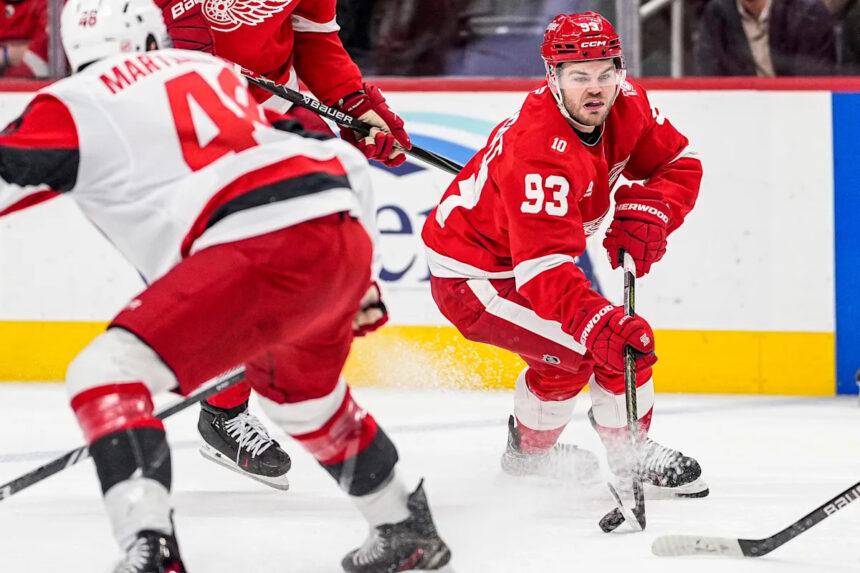
Red Wings’ Rollercoaster Win on Fedorov Night Highlights Present Needs, Past Glory
The ghosts were in the building, watching from the suites. As Sergei Fedorov’s No. 91 ascended to the rafters of Little Caesars Arena, joining the icons of a golden era, the current iteration of the Detroit Red Wings delivered a performance that was equal parts tribute and cautionary tale. On a night dripping with nostalgia for a time of effortless superstardom, the 2024 Red Wings authored a chaotic, thrilling, and ultimately victorious script that laid bare their compelling promise and their glaring vulnerabilities.
A Celebration of Genius, A Reminder of What’s Missing
The evening was a masterclass in legacy. Sergei Fedorov, the breathtakingly skilled two-way force who defined an era of Red Wings dominance, was finally given his permanent home in the rafters. The highlights reels showed his impossible speed, his lethal shot, and his cool under pressure—the very attributes that could snuff out an opponent’s hope in a shift. As the former luminaries—Yzerman, Lidstrom, Shanahan, and more—looked on, the connection between past and present was palpable, yet underscored a stark contrast.
The current Wings are a story of collective effort, of grit and system, a team built by General Manager Steve Yzerman in a different NHL landscape. They are deep, they are resilient, but as Monday night proved, they lack that singular, game-breaking force who can control tempo and crush momentum swings. When they roared to a commanding 3-0 lead, it was a product of hard work and opportunistic scoring. What followed was a testament to what happens when a skilled, desperate opponent pushes back against a team without a Fedorov, Yzerman, or Datsyuk to settle the storm.
The Three-Goal Lead That Vanished in a Hurricanes’ Gale
For two periods, the script was perfect. The Wings, feeding off the emotional energy of the ceremony, played fast and direct. They capitalized on chances, got stellar goaltending from Alex Lyon, and seemed poised to deliver a tidy, celebratory victory. The arena buzzed with the joy of the past and the promise of the present.
Then, the third period arrived, and the Carolina Hurricanes, a perennial contender known for their relentless forecheck, did what they do. They turned the pressure dial to its maximum setting. The Wings, suddenly on their heels, began to retreat. The crisp exits became turnovers. The defensive coverage frayed. The Hurricanes, with their wave-after-wave attack, chipped away.
- Carolina’s push was a systematic dismantling of Detroit’s composure.
- The Wings’ transition game vanished, stifled by Carolina’s aggressive pinches.
- A once-commanding lead evaporated into a 3-3 tie, forcing overtime and sucking the celebratory air from the building.
It was a stark lesson in what playoff-intensity hockey looks like and how difficult it is to close out elite teams. The Wings’ lack of a dominant, puck-possession forward who could slow the game down and manufacture a calming shift was glaring during the Hurricane’s onslaught.
Copp’s OT Salvage Job and the Tightrope of the Standings
Just as the narrative was about to turn from a celebration to a collapse, redemption came from a familiar workhorse. In overtime, Andrew Copp pounced on a play, driving to the net and scoring the winner, salvaging two critical points from what felt like a sinking ship. The relief was immense, but the message was clear: this team wins on effort and detail, not overwhelming individual talent.
The victory was massive in the hyper-competitive Eastern Conference playoff race. The two points propelled Detroit into a tie, points-wise, for first place in the conference with the very Hurricanes they just defeated. But the standings tell a nuanced story:
- Both Detroit and Carolina have 60 points.
- Carolina holds games in hand, a crucial advantage.
- Atlantic Division rivals Tampa Bay and Montreal also won, keeping pace just one and two points back, respectively, with fewer games played.
This playoff position is both exhilarating and precarious. Every point is precious, and wasting a three-goal lead against a direct competitor is a luxury this team cannot afford, even on an emotional night. The win is a testament to their resilience, but the path to it is unsustainable for a serious postseason run.
Looking Ahead: Tough Tests and the Trade Deadline Loom
The schedule offers no respite. The Wings immediately travel to face the Boston Bruins, another Atlantic powerhouse, on Tuesday night. It’s the first half of a critical back-to-back that will test their mettle and their depth. How they respond after such an emotionally and physically draining game will be telling.
This game also serves as a perfect prelude to the approaching NHL Trade Deadline. The performance was a microcosm of the team’s identity: deeply competitive, flawlessly coached, but potentially a piece or two short. The question Yzerman must ask is whether this group, as constructed, has the high-end talent to withstand the hurricane-like pressures of a seven-game playoff series against Carolina, Boston, or the New York Rangers.
Expert analysis suggests the Red Wings are likely to be buyers, but prudent ones. They may not be in the market for a rental superstar, but the need for a top-six forward with size and puck control, or a stabilizing top-four defenseman, feels more urgent after Monday’s third period. They have prospects and draft capital, but Yzerman’s history suggests a calculated, not desperate, move.
Conclusion: A Night of Echoes and Lessons
Sergei Fedorov’s night ultimately ended with a win, preserving the feel-good story. But the 60 minutes of hockey between ceremony and celebration provided a powerful, real-time documentary on the state of the franchise. The past was honored for its unparalleled skill and championship certainty. The present was celebrated for its heart and relentless work ethic, but it was also exposed for its fragility under duress.
The Detroit Red Wings are unequivocally back in the playoff conversation, a fantastic story this season. Their playoff position is a testament to their structure and will. However, their inability to lock down a game against an elite opponent, even on a night of supreme inspiration, reveals the final bridge they must cross. They have rebuilt the culture and the foundation. The next step, as echoed by the numbers in the rafters, may require finding a player who can, just for a moment, bend the game to his will. Until then, they will remain a thrilling, nerve-wracking, and fascinating team to watch, winning games the hard way.
Source: Based on news from Yahoo Sports.