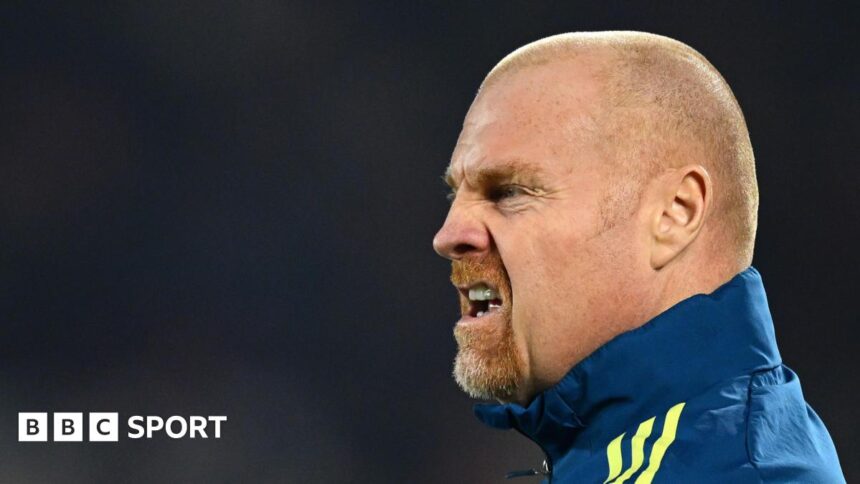
Did Sean Dyche Deserve the Sacking at Nottingham Forest?
The ruthless world of Premier League management delivered another brutal twist this week. Just seven days after being nominated for January’s Manager of the Month award, Sean Dyche found himself clearing his desk at the City Ground. The trigger? A defeat to Leeds United and a goalless draw with Wolverhampton Wanderers. In the volatile court of Evangelos Marinakis, that was enough to end a four-month tenure. But in the court of footballing reason, the verdict is far less clear-cut. Was Dyche’s dismissal a necessary jolt or a premature panic from Forest’s ownership?
A Tenure Defined by Turbulence, Not Failure
To judge Dyche’s 18-game reign fairly, one must first acknowledge the landscape he inherited. He arrived in late September, a firefighter parachuted into a club still finding its feet after a seismic summer of 22 new signings. His mandate was not aesthetic revolution; it was pragmatic stabilization. In that context, his record of six wins, four draws, and eight losses is a complex tapestry, not a simple failure.
The Premier League form under Dyche was inconsistent, yet showed clear signs of grit and organization. The wins that earned him that Manager of the Month nomination—against Brentford and West Ham—were textbook Dyche: disciplined, physical, and effective. The point against Arsenal and a narrow loss to Aston Villa demonstrated a capacity to compete with the elite. The recent downturn, culminating in the dismal Wolves draw, provided the immediate cause for dismissal, but it represents a small sample size in a much larger project.
Beyond the league, the story was similarly mixed:
- Europa League: A disappointing loss to Sporting Braga was followed by a thumping 5-0 win over Ferencvaros to secure a knockout play-off.
- FA Cup: A painful exit on penalties to a spirited Wrexham side, a result that undoubtedly stained his record in the eyes of a success-hungry fanbase.
This was, as described, a true mixed bag. But sacking a manager for inconsistency in a season defined by transition seems a curious remedy.
The Marinakis Mandate: Patience is Not a Virtue
To understand the sacking, one must understand the owner. Evangelos Marinakis operates with a distinct and well-documented philosophy. At both Nottingham Forest and Olympiacos, his model is one of high turnover, constant pressure, and a relentless demand for upward trajectory. Dyche, a manager who builds slowly and cultures resilience, was always an ideological mismatch.
Marinakis’s vision for Forest is grand and impatient. He has invested heavily not just in players, but in the expectation of rapid progress. A goalless draw at home to the league’s bottom side, in this context, isn’t a bump in the road—it’s a direct contradiction of the project’s ambition. Dyche’s pragmatic, low-block football, even when effective, likely jarred with the owner’s desired image for a resurgent Forest.
The timing, however, is the most perplexing element. Why extend the vote of confidence with a Manager of the Month nomination only to pull the plug days later? It suggests a reactive, emotionally-driven decision rather than a strategic one. The Championship-level recruitment of 22 players created a squad lacking cohesion; Dyche was arguably paying the price for a chaotic summer window he had no part in.
The Case for the Defence: Why Dyche Was Hard Done By
From a purely footballing perspective, a strong argument can be made that Dyche was harshly treated. Consider the foundational issues he faced:
- Squad Overhaul: He was tasked with molding a gargantuan, newly-assembled squad into a unit.
- Injury Crises: Key players like Taiwo Awoniyi and Morgan Gibbs-White faced significant absences, robbing him of attacking potency.
- Inherited Position: He steadied an initial slide and built a platform. The recent blip came with the club still seven points clear of the relegation zone.
Dyche’s underlying metrics showed a team becoming harder to beat and more organized. The clean sheet against Wolves, for all its attacking poverty, was a sign of defensive solidity. His win percentage of 33% in the Premier League, while not stellar, is comparable to managers given far longer reigns at similar clubs. He was implementing a clear, if unglamorous, survival blueprint. In a league where Fulham have thrived under Marco Silva and Brentford under Thomas Frank with long-term projects, Forest’s impatience stands out.
What Next for Forest and the Premier League’s Sack Race?
The immediate fallout places Nottingham Forest in a precarious position. The search for a fourth permanent manager since promotion begins anew, with the club in a no-man’s land—not in immediate danger, but not pushing for Europe. The new appointment will be telling.
Will Marinakis pivot to a more expansive, attacking coach to fulfill his vision, potentially risking the defensive structure Dyche built? Or will he seek another pragmatic operator to simply secure safety? The choice will reveal whether this was a dismissal of Dyche the tactician, or a rejection of Dyche the symbol of a style the owner never truly wanted.
For the Premier League, this sacking reinforces a worrying trend of short-termism. The “managerial bounce” is being sought with increasing frequency, often at the expense of sustainable building. Dyche, a proven Premier League operator, was given less than half a season to solve a deeply rooted structural problem. His fate will send a chill through other managers at clubs with similar ownership models.
Final Whistle: A Verdict of Premature Execution
So, did Sean Dyche deserve the sack? Based on the evidence of his brief tenure and the context of the club’s situation, the answer is a resounding no. This was a premature execution, not a justified dismissal. He was a square peg hired for a round hole, then blamed when the fit wasn’t perfect.
Dyche’s real crime was not poor results, but failing to perform a miracle of instant fusion with an unbalanced squad. He provided stability and a clear identity, commodities that are now in short supply at the City Ground. The ownership’s decision smacks of panic and a fundamental misalignment of expectations.
History may judge this as a critical mistake. The next manager will inherit a slightly more organized team than Dyche did, a foundation he laid. But they will also inherit the immense, unyielding pressure of the Marinakis regime, where a two-game winless streak can undo a month of commendable work. Sean Dyche wasn’t sacked for failing at Nottingham Forest. He was sacked for not succeeding quickly enough in an environment where time is the rarest commodity of all.
Source: Based on news from BBC Sport.