Did the Big Ten’s Final Four Hopes Live Up to the Hype? A Tale of Two Teams
The road to the national championship for the Big Ten Conference ran through the desert this year, with two of its titans—Michigan and Illinois—earning coveted spots in the Final Four. It was a moment of validation for a league often criticized for its postseason stumbles, a chance to prove its regular-season gauntlet prepared teams for the brightest lights. Yet, as the final horn sounded in Indianapolis, the conference’s story was one of starkly divergent paths. One team confirmed its championship pedigree, while the other saw a dream season dissolve in a hail of missed shots. The question lingers: did the Big Ten ultimately live up to its predictions on college basketball’s grandest stage?
Michigan’s Methodical March: Precision Overcomes Pressure
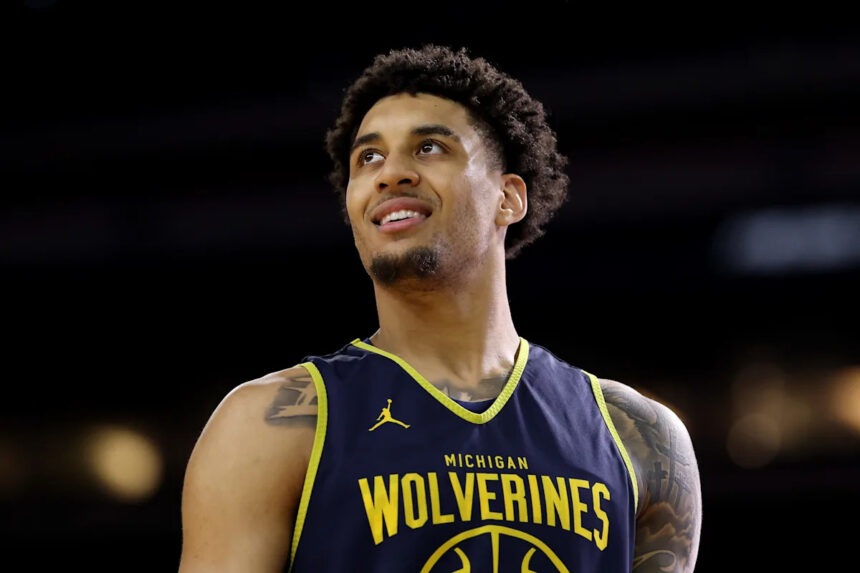
For the Michigan Wolverines, the Final Four was not a stage for drama, but a platform for execution. Facing a talented and tenacious opponent, Michigan did what it has done all tournament: imposed its will with surgical precision. The narrative around Juwan Howard’s squad was their resilience, having lost a key player late in the season. That adversity forged an unshakeable identity built on defense, ball security, and opportunistic scoring.
In their national semifinal, Michigan displayed a masterclass in controlled basketball. They were not flashy, but they were devastatingly efficient. The Wolverines’ victory was a testament to their system and their poise. Key factors in their success included:
- Defensive Discipline: They systematically dismantled their opponent’s offensive sets, forcing contested shots and limiting second chances.
- Offensive Balance: As they have all tournament, the Wolverines shared the scoring load, with multiple players stepping up in critical moments, preventing defenses from keying on a single star.
- Coach Howard’s Leadership: Howard’s steady hand and tactical adjustments have been a constant, proving his team is never out of a game plan.
Michigan did not just win; they confirmed their identity as a program built for April. They head into the title game not as a Cinderella, but as a confident, battle-tested contender that has methodically checked every box asked of them.
Illinois’ Cold Reality: When the Shots Stop Falling
The story for the Illinois Fighting Illini was a painful lesson in the fickle nature of a single-elimination tournament. Entering the clash with the UConn Huskies, the prediction was clear: Illinois’s high-powered offense, particularly from beyond the arc, would need to fire on all cylinders. After a historically poor three-point shooting performance in the Elite Eight that they miraculously survived, the assumption was that regression to the mean was inevitable. The bold forecast was that Illinois would shoot over 40% from three, using its “bread and butter” to stretch the UConn defense and secure a win.
Reality, however, was unforgiving. The Illini’s shooting woes did not correct; they cemented. Illinois finished the night a frigid 23% from three-point range. This wasn’t just a bad night; it was a catastrophic failure of their primary weapon at the worst possible time. While UConn didn’t light the world on fire from deep either, they made critical shots in key moments and, more importantly, dominated inside. The Huskies’ ability to convert in the paint and at the free-throw line kept Illinois at arm’s length all game.
Every time the Illini threatened a run, a missed open look or a tough, contested triple clanged off the rim, halting their momentum. The predicted offensive explosion turned into a profound drought, proving that even for a team as talented as Illinois, you cannot simply “buy a bucket” when the pressure is at its peak. Their dream season, filled with a Big Ten tournament title and a No. 1 seed, ended not with a bang, but with a whimper of missed opportunities.
Benchmark Missed: The Battle of the Second Units
Another key prediction heading into the Illinois-UConn matchup focused on the benches. The belief was that Illinois’s bench depth would outperform UConn’s reserves, providing a crucial scoring and energy boost. This was a reasonable assumption, given the Illini’s rotational strength throughout the season. However, the context of the game rendered this advantage moot.
UConn’s dominance in the starting lineup, particularly in the frontcourt, was so pronounced that the game’s flow never truly demanded a deep bench contribution from the Huskies. Their starters controlled the tempo and the scoreboard. Conversely, Illinois’s struggle was a team-wide issue; the shooting slump affected starters and reserves alike. When the primary scorers are stifled, the role of the bench often shifts from providing a spark to attempting a rescue mission—a task too tall for any second unit. UConn’s bench, while not statistically overwhelming, provided just enough stability to maintain the lead, while Illinois’s reserves could not ignite the necessary comeback fire. This subplot underscored a larger truth: in the Final Four, star power and starter performance often dictate the terms, minimizing the impact of even the deepest benches.
The Verdict: A Split Decision for the Big Ten
So, did the Big Ten live up to predictions? The answer is a complex, split decision. For Michigan, the conference’s standard-bearer, the answer is a resounding yes. They have not only lived up to predictions but exceeded them, navigating a difficult path to the final game with a brand of basketball that is both admirable and effective. They have validated the strength of the league and proven that a Big Ten team can indeed be constructed to win six tough games in March and April.
For Illinois, the predictions—both the optimistic and the cautious—fell short. The expected three-point barrage never materialized, and their season ended with an offensive performance that belied their talent. Their exit reinforces a stubborn narrative about the Big Ten: that its physical, grind-it-out style, while excellent for earning high seeds, can sometimes falter against the versatile, often guard-driven dynamism of other elite teams in the tournament crucible.
In the end, the Big Ten’s Final Four was a microcosm of its entire season: deep, talented, but ultimately revealing. It produced one team hardened enough for the moment and another whose flaws were exposed at the worst time. Michigan carries the league’s banner into the national championship game, offering a final chance for validation. The conference’s performance was not a failure, but it was a stark reminder that in March, predictions are just talk. It’s the making—and missing—of shots that writes the real story.
Source: Based on news from Yahoo Sports.