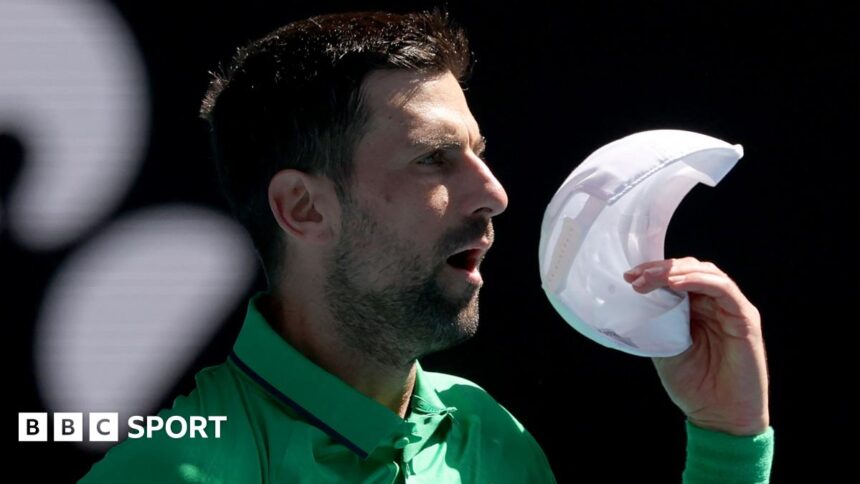
Djokovic Cruises into Australian Open Third Round, Eyes History with Calculated Precision
The roar that greeted Novak Djokovic as he walked off Rod Laver Arena on Wednesday night was one of familiar reverence. It was not for a brutal, five-set epic, nor a stunning comeback against a young challenger. Instead, it was an ovation for a masterclass in efficiency. Djokovic, the ten-time Australian Open champion, dispatched Australia’s Alexei Popyrin 6-3, 4-6, 7-6(4), 6-3 to book his place in the third round. The scoreline suggests a battle, but for the Serb, this was a calculated step in a much larger, historic campaign—one where the true opponent is not just the man across the net, but time, wear, and the weight of legacy itself.
The Grand Blueprint: Conservation Over Domination
In years past, a second-round match against a powerful but inconsistent opponent might have been a stage for a statement of utter dominance. The 2024 Novak Djokovic, however, is playing a different game. At 38, and bidding for an unprecedented 25th Grand Slam title to break the all-time singles record he currently shares with Margaret Court, his strategy has evolved. The objective is no longer to win every match; it is to win the tournament while expending the least possible energy.
This shift is born of painful experience. Last season, Djokovic’s quest for a calendar-year Grand Slam was derailed not by superior play, but by physical breakdowns at the most critical moments:
- Australian Open semi-final: A hamstring injury forced him to retire against Jannik Sinner.
- Wimbledon final: He was visibly hampered by a hip issue in a narrow loss to Carlos Alcaraz.
- US Open semi-final: He cited fatigue and “everything” hurting after falling to Daniil Medvedev.
“I know that if I am to make history at the Australian Open, I will need to conserve my energy,” Djokovic stated bluntly in the lead-up to the tournament. His performance against Popyrin was a live demonstration of this philosophy. He navigated moments of tension—saving four set points in a crucial third-set tiebreak—not with frantic, energy-sapping heroics, but with ice-cold precision and first-serve bombs when they mattered most.
Decoding the Djokovic Game Plan: A Master’s Calculated Risk
Expert analysis of his early-round matches reveals a player meticulously managing his resources. The explosive, side-to-side defensive rallies that define his peak are deployed sparingly. Instead, he is relying heavily on a weapon that costs little but yields immense rewards: his serve.
Against Popyrin, Djokovic’s first-serve percentage and potency in pressure moments were the keys to avoiding a draining fifth set. He is choosing his battles, conceding games and even sets if the cost of winning them is too high. This is not a sign of decline, but of supreme intelligence. He is pacing himself like a marathon runner who knows the real hills are in the final miles.
His movement, while still elite, is being carefully measured. The full-stretch splits are seen only when absolutely necessary. The focus is on clean, early ball-striking to shorten points and control the center of the court. This approach carries risk—it can allow opponents rhythm and confidence, as it did for Popyrin in the second set—but Djokovic trusts his mental fortress and big-match experience to slam the door when required. It is a high-wire act, balancing present danger with future necessity.
The Road Ahead: Predictions for a Historic Run
With the third round secured, the path for Djokovic becomes simultaneously more predictable and more perilous. The early, unpredictable firepower of opponents like Popyrin is behind him. Now, he will face increasingly consistent and strategic players who will test his conserved energy reserves over longer, more grueling rallies.
The central question for the fortnight is: Can his body hold up under the inevitable escalation of intensity? The early signs are promising. He has reported feeling good physically, and his on-court management suggests he is listening to his body with acute awareness. However, the specter of last year’s injuries looms. The Australian Open semi-final loss to Sinner, in particular, serves as a stark reminder of how quickly fortunes can change.
Predicting his success hinges on this physical calculus. If he can continue to navigate the middle rounds with similar efficiency, he will arrive at the quarter-finals and semi-finals—potentially facing the likes of Sinner, Andrey Rublev, or Stefanos Tsitsipas—with a critical energy reserve. In a tournament where the last stages become a war of attrition, that stored fuel could be the decisive factor.
Legacy in Motion: The Final Push for Twenty-Five
Every match Novak Djokovic plays now is viewed through the dual lens of immediate victory and historical significance. The pursuit of that 25th major is the overriding narrative of his season, and the Australian Open—his most successful slam—presents the perfect opportunity. Melbourne Park is his fortress; he has never lost a final here.
This campaign, however, feels different. It is not the overpowering force of 2011 or 2015. It is a nuanced, intelligent, and deeply strategic operation. He is not just playing opponents; he is managing a physiological budget, allocating energy shares, and investing in deep runs. The Grand Slam title record is within touching distance, and every game, every set, is a calculated transaction toward that goal.
The conclusion we can draw from his steady, if not always spectacular, progress is that Novak Djokovic is fully committed to the long game. The cruise into the third round was not a statement of invincibility, but one of intent. He is preserving his body, sharpening his mind, and positioning himself for the brutal battles that await in the second week. The history books are open, the pen is in his hand, and Djokovic is writing his final chapters with the careful, deliberate strokes of a man who knows that true greatness is not just about winning matches, but about winning the war against time itself. The journey for twenty-five continues, one conserved step at a time.
Source: Based on news from BBC Sport.