England’s Brisbane Grit: A Welcome Fightback That Could Redefine The Ashes
The narrative was set, the ink was drying on the obituaries for England’s first innings. Trailing by 43, having lost six wickets in a dismal final session on day three, the tourists were staring down the barrel of another humiliating Ashes capitulation in Brisbane. The Gabba, that great Australian coliseum of cricketing pain for England, was ready to roar its team to an innings victory. But on a tense, gripping fourth morning, something shifted. Not a riotous Bazball blitz, but something perhaps more significant: a stubborn, disciplined, and utterly essential rearguard action. England, led by their warrior captain, finally showed the fight required to thwart Australia’s charge and, in doing so, may have discovered a crucial blueprint for the series ahead.
The Gabba Gauntlet and a Necessary Shift
For years, England’s approach in Australia has been picked apart by relentless pace, bounce, and scoreboard pressure. The first Test in Brisbane often sets the tone, and England’s batting has frequently crumbled under the weight of expectation and Mitchell Starc’s swinging new ball. The third evening at the Gabba felt like a grim replay of old horrors—a clatter of wickets, a sense of impending doom. To be 134-6, still behind Australia’s total, was a position from which England rarely recover. The challenge on day four was stark: bat time, eat into the deficit, and force Australia to bat again. It required a mental shift from a team built on aggression. This wasn’t about scoring rates; it was about survival, occupation, and proving a point.
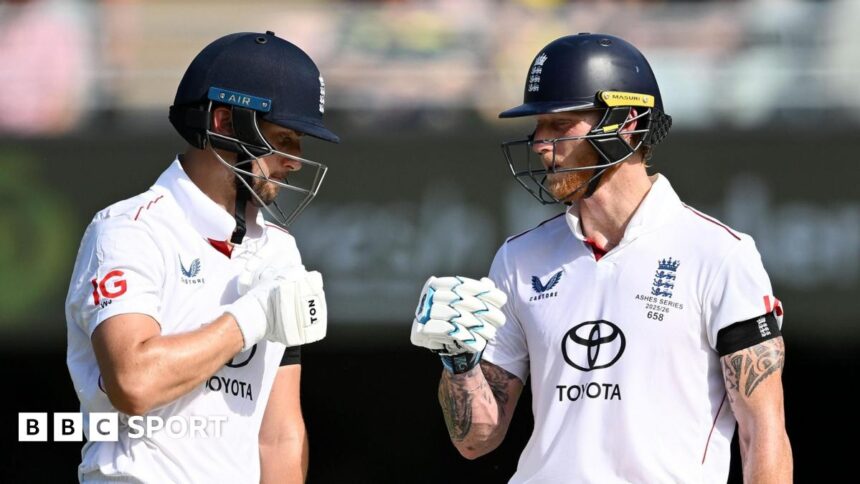
Ben Stokes, battling more than just the Australian attack, embodied this shift. His presence at the crease, even when not at his flowing best, is a statement. Alongside him was the inexperienced Will Jacks, on debut, in the cauldron of an Ashes Test, with the series on the line. The pair did not just survive; they provided a masterclass in situational awareness. They left diligently, defended with soft hands, and took their singles where possible. Their unbroken 65-run partnership was worth triple its weight in psychological runs. It communicated one vital message to the Australian dressing room: this England side can adapt.
Stokes and Jacks: The Unlikely Foundation
The partnership between Stokes and Jacks was a fascinating study in contrasts and shared purpose. Stokes, the global superstar, playing within himself, shelving the audacious strokes to provide the bedrock. Jacks, known domestically as a dynamic stroke-maker, showed immense character to subdue his natural game. Together, they navigated a fresh Australian attack that threw everything at them.
- Pat Cummins probed with relentless accuracy around off-stump.
- Mitchell Starc tested them with late swing and threatening yorkers.
- Nathan Lyon found sharp turn and bounce from the footmarks.
Yet, the pair stood firm. Stokes’s leadership from the front cannot be overstated. His example—the clenched fist after a well-left ball, the calm conversations with his junior partner—filtered through the entire team. For Jacks, this was an initiation by fire that he passed with flying colours. His composure under extreme pressure suggests England have found not just a talented player, but a resilient one. This partnership did more than just avoid the follow-on; it rebuilt eroded confidence and changed the emotional timbre of the match.
Strategic Implications: Why This Session Matters
This single session of Test match batting could have profound ramifications for the remainder of the Ashes. England’s Bazball philosophy has been a thrilling success, but its greatest test was always going to be in Australian conditions against this attack. The criticism has been that it lacks a Plan B. Day four at the Gabba was the manifestation of Plan B.
Batting through the first session achieved several key strategic objectives:
- Denied Australia Momentum: It halted the home side’s rampant charge and forced them into longer, more tiring spells in the field.
- Exposed Australian Patience: It asked questions of Australia’s bowling discipline when wickets aren’t falling, a slight chink England will have noted.
- Protected the Bowlers: By ensuring Australia must bat again, England’s seamers, notably James Anderson and Ollie Robinson, get crucial extra rest before the day-night Test in Adelaide.
- Proved Mental Fortitude: Most importantly, it showed the players themselves they can tough it out. This builds a priceless reservoir of belief.
This was not a rejection of their aggressive identity, but an evolution of it. True attacking Test cricket is built on the option of smart defence. England finally demonstrated they possess that gear.
Looking Ahead: Predictions for a Transformed Series
While saving this Test match remains a monumental task, England’s fightback has fundamentally altered the atmosphere around the series. Australia will still be favourites to win at the Gabba, but they have been served notice. England are not here to roll over. This resilience makes the upcoming fixtures infinitely more intriguing.
We can now anticipate:
- A More Nuanced England Approach: Expect England to blend their inherent aggression with periods of calculated grinding, especially in first innings scenarios. They have proven to themselves they can do it.
- Increased Pressure on Australia’s Top Order: If England can post even par scores, their swing bowlers in Adelaide and Melbourne become massive threats. Australia’s batsmen may feel the need to force the issue.
- A Battle of Wills: The series is now as much a psychological contest as a technical one. England’s Gabba grit has planted a seed of doubt. How Australia responds in the field at Adelaide will be telling.
- Vital Boost for Stokes’s Captaincy: Leading by example in this manner strengthens Stokes’s hand immensely. His authority in the dressing room is now absolute.
Conclusion: More Than Just Survival
England may not save the Brisbane Test, but they may have saved their Ashes campaign. The fight shown by Ben Stokes, Will Jacks, and the lower order to thwart Australia’s innings victory was a landmark moment. It was a declaration that this team, for all its flamboyance, possesses the steel required for the toughest arena in cricket. They have answered the most persistent criticism and shown they can adapt their game to the situation. This was not a retreat; it was a strategic recalibration. The Ashes are alive because England, faced with utter humiliation, found a resolve many thought they lacked. The Gabba fightback is no longer just about runs on a board; it’s the foundation upon which a credible, and potentially historic, Ashes challenge can be built. The message to Australia is clear: this England side will go down swinging, but now, they might just go down blocking, leaving, and fighting too.
Source: Based on news from BBC Sport.
Image: Source – Original Article