England’s Unbreakable Bond: Inside the Camp Amidst Six Nations Storm
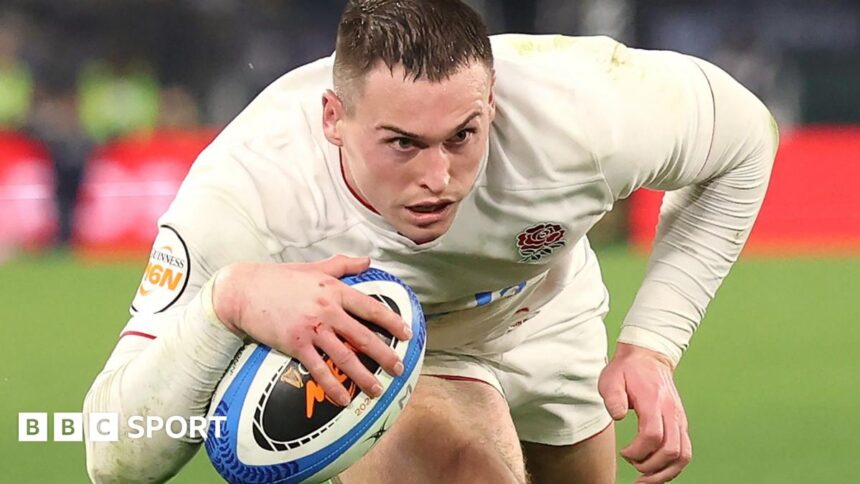
The final whistle at the Stadio Olimpico did more than confirm a historic Italian victory; it unleashed a torrent of scrutiny upon an England team in freefall. A first-ever loss to Italy in the Six Nations, a third consecutive defeat, and the looming spectre of their worst Championship finish. In the eye of this storm stands Tom Roebuck, the Sale Sharks wing who scored a try in vain, delivering a message that cuts against the prevailing narrative: this squad is not cracking up. As the Rugby Football Union issues a statement of backing for Steve Borthwick amidst “hugely disappointing” results, the real story is not of a team fracturing, but of one being forged in the fire of unprecedented adversity.
A Microphone Moment Magnified: Leadership Under the Lens
The incident, captured in stark clarity by the referee’s microphone, became the instant symbol for those diagnosing disunity. With England trailing in the second half, a penalty decision sparked a heated exchange between captain Maro Itoje and fly-half Fin Smith. Itoje’s firm, tetchy instruction—”don’t argue with me, take the three”—was broadcast to the world. To the outside, it was evidence of a rift, a captain and playmaker at odds. Yet, within the context of a Test match, such exchanges are the currency of high-stakes decision-making.
This moment speaks less to fracture and more to the fiery pressure-cooker environment England are navigating. Itoje, a leader feeling the weight of a nation’s expectation and a losing streak, was asserting his authority in a critical moment. Smith, young and eager to shape the game, was advocating for ambition. This is not a dressing room divided; it is a competitive arena where strong personalities clash in the pursuit of a solution. The true test of unity is not the absence of disagreement, but how a team moves forward from it. As Roebuck insists, these are the moments that, handled correctly, can reinforce bonds rather than break them.
Roebuck’s Rebuttal: Unity Forged in Adversity
In the aftermath, Tom Roebuck’s defence of the squad environment was unequivocal. “The group is tight,” he asserted, pushing back against the narrative of a camp coming apart at the seams. For a player experiencing his first Six Nations campaign, the external noise is a new and formidable opponent. His perspective is crucial. He sees the day-to-day reality: the collective responsibility shouldered, the shared frustration, and the unwavering commitment to the England shirt.
Consider the context of this historic defeat to Italy. This is not a team of mercenaries; it is a blend of seasoned veterans and fresh talents like Roebuck and Smith, all acutely aware they are part of an unwanted piece of rugby history. The pressure is multifaceted:
- Historical Weight: The burden of being the first England side to lose to Italy in the Six Nations.
- Performance Scrutiny: An attack that continues to splutter and a game plan under intense examination.
- Institutional Pressure: The RFU’s public statement, while backing Borthwick, underscores the demand for immediate understanding and rectification.
In this cauldron, Roebuck’s words are a deliberate statement of solidarity. It is the first, most fundamental line of defence for a team under siege: we stand together.
The Borthwick Backing and the Road to Rectification
The RFU’s post-match statement was a carefully calibrated piece of crisis management. By publicly backing Steve Borthwick while labelling results “hugely disappointing,” the union attempted to stabilise the ship without absolving it of its failures. The key phrase is their promise to “understand and rectify.” This points to a longer-term project, but one that is currently in its most painful phase.
Borthwick’s challenge is monumental. He is attempting to implement a strategic overhaul while navigating the relentless, results-driven schedule of the Six Nations. The successive losses to Scotland, Ireland, and Italy reveal a team caught between identities—trapped between a pragmatic kicking game and the clear need for more inventive, fluid attacking structures. The argument between Itoje and Smith on the pitch is a microcosm of this wider tactical confusion: to take the safe points or chase the risky try?
The head coach must now do more than review tactics. He must harness the unity Roebuck describes and channel it into a clear, unified purpose for the final match against France. The squad’s togetherness is the foundation upon which any technical or strategic fixes must be built.
Prediction: A Crucible in Paris and Beyond
England’s final fixture against France in Lyon is no dead rubber. It is now the most important game of Borthwick’s tenure to date. A fourth straight loss, potentially culminating in a first Wooden Spoon since 1987, would be cataclysmic, regardless of squad harmony. Conversely, a galvanised, defiant victory over a talented French side could transform the narrative and provide a vital platform.
Here is what to expect:
- A Siege Mentality: England will lean into the “us against the world” mindset. Roebuck’s comments are the opening salvo in building this fortress mentality.
- Selection Boldness: Borthwick may be tempted to fully embrace the youth, giving players like Roebuck, Smith, and others the chance to play with the freedom of those with nothing left to lose.
- Intensity Overhaul: The performance in Paris will be the ultimate test of the squad’s claimed unity. It must be manifested in relentless defensive cohesion and a collective offensive spark that has been sorely lacking.
The long-term prediction is one of painful transition. This underwhelming Six Nations campaign has exposed deep-rooted issues that cannot be solved in one week. The summer tour to New Zealand and the autumn internationals will be the true barometer of progress. The question is whether this group, which insists it is bound tight, can survive the current tempest and emerge with its confidence and collective will intact.
Conclusion: Not a Crack, But a Forge
The image of a crumbling England is compelling but likely incomplete. The sounds of an on-field argument are easy to sensationalise. Tom Roebuck’s testimony from inside the camp points to a different reality: one of a group determined to face its failings together. Historic defeat to Italy has placed English rugby at a profound crossroads, exposing tactical frailties and heaping on psychological pressure. Yet, in the response of its players—from the passionate intensity of its captain to the defiant unity voiced by its newest try-scorer—there are embers of resilience.
England are not cracking up. They are being tested in the forge of public humiliation and sporting failure. Whether this experience breaks them or tempers them into a harder, more cohesive force will define the Steve Borthwick era. The match in France is not about saving a tournament; it is about proving to themselves and the world that the spirit within the red rose is not, and will not be, broken. The final whistle in Lyon will tell us if this bond, so fiercely protected, is truly unbreakable.
Source: Based on news from BBC Sport.