England’s Ashes Hopes Hanging by a Thread After Another Batting Collapse
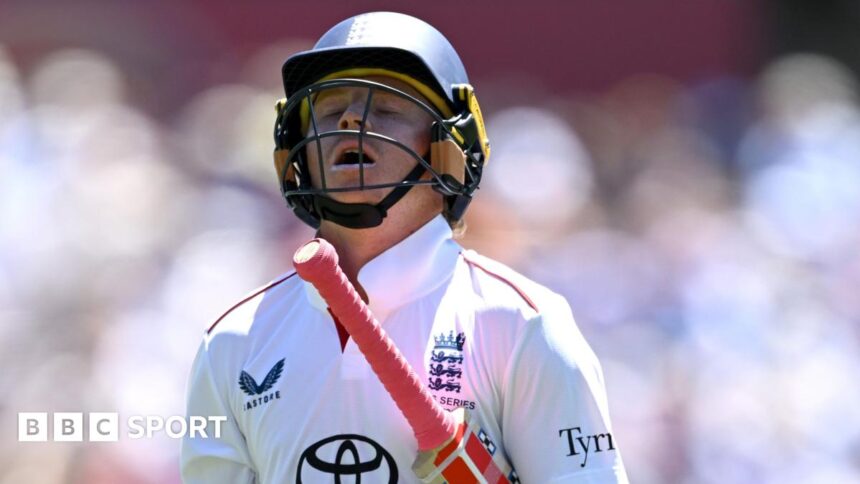
The Adelaide Oval, bathed in the soft glow of a pink-ball evening, was supposed to be the stage for an English fightback. Instead, it became the grim theatre where England’s Ashes hopes, already flickering, were plunged into near darkness. After a spirited bowling performance had restricted Australia to 371, England’s batters folded once more, their innings a familiar tale of false starts and frail technique. At 213-8, still 158 runs adrift, they face a monumental task to save this Third Test, and with it, the urn.
A Familiar Foe: The Ghost of Batting Frailties Past
England’s first innings in Adelaide was not a collapse of dramatic, tumbling wickets, but a slow, painful unraveling. It was a case study in self-inflicted wounds against a relentless Australian attack. The top order, once again, failed to lay a foundation. The dismissals were a catalogue of errors that have become hauntingly familiar on this tour: loose drives outside off stump, indecision in the corridor, and a crippling inability to weather the storm.
The most damning moment, the one that encapsulated England’s muddled mindset, was the dismissal of Ollie Pope. On 35 and looking relatively settled, Pope attempted an audacious flick off Cameron Green, a shot with minimal reward and maximum risk. The ball flew straight to mid-wicket, where Alex Inglis accepted the gift. The commentary said it all: ‘That’s a terrible shot!’. It was a microcosm of England’s tour—promise immediately undone by poor decision-making.
Only brief resistance from Harry Brook (45) and a stubborn, unbeaten 45 from Ben Stokes offered any respite. But the scorecard tells the definitive story:
- Top-order failure: No England batsman surpassed 45.
- Pressure surrendered: From 140-4 to 213-8, losing wickets in clusters.
- Scoreboard pressure: Australia’s total of 371 always loomed large, exploiting English anxiety.
Silver Linings in the Darkness: Archer’s Return and Carey’s Century
To focus solely on England’s batting woes would be to ignore the day’s two standout performances, which framed the context of the collapse. For England, the triumphant return of Jofra Archer was a monumental positive. After a long and agonising absence, Archer announced his comeback with a breathtaking spell of fast bowling, finishing with figures of 5-53. His pace, his lethal bouncer, and his ability to take crucial wickets—including David Warner and Travis Head—proved he remains a world-class operator. His five-for was a heroic effort that deserved far more from his teammates.
For Australia, the day belonged to Alex Carey. The wicket-keeper, often operating in the shadow of the star-studded top order, played a career-defining innings. His 106 was a masterclass in lower-order resilience, blending crisp drives with intelligent rotation of strike. Alongside Usman Khawaja’s dogged 82, Carey’s century ensured Australia posted a commanding first-innings total, one that always looked 80 runs above par on this surface.
The Mountain Ahead: Can England Salvage the Unsalvageable?
Realistically, England’s goal is no longer victory in Adelaide. It is pure survival. To avoid going 2-0 down with two Tests to play—a deficit from which no Ashes side has ever recovered—they must bat for approximately five sessions. The pitch is showing signs of variable bounce, and the Australian attack, led by a probing Pat Cummins (3-54), is smelling blood.
The equation is brutally simple. England’s only hope lies in a herculean rearguard action from Ben Stokes and the tail. They must channel the spirit of Headingley 2019, but this time in a defensive cause. Every run chipped off the deficit is precious, and every over survived is a minor victory. The new ball, due early on day three, will be the ultimate test. If Australia mops up the tail quickly, they will have the opportunity to enforce the follow-on and grind England into the dust.
Prediction: The weight of history and the potency of the Australian attack are overwhelming. Barring a miraculous, rain-affected draw or an all-time great innings from Stokes, Australia will win this Test within four days. England’s batters have shown no collective capacity for the discipline required, and the pressure of the follow-on, if enforced, will likely break them a second time.
A Crisis of Identity and the Road Ahead
This is more than a bad match; it is a systemic failure. England’s ‘Bazball’ philosophy, which brought thrilling success at home, is being exposed in the harshest conditions. The aggressive intent has curdled into reckless abandon. There is a stark difference between playing positive, attacking cricket and playing careless, low-percentage shots. England are currently guilty of the latter.
The questions now are profound and painful. Is this a technical failing against high-class pace bowling? A mental fragility in the face of Australian pressure? Or a flawed strategy being rigidly adhered to despite overwhelming evidence it needs adaptation? The answer is likely a combination of all three.
Key questions for England’s future:
- Selection reckoning: Can the current top order survive this tour?
- Philosophical adjustment: Does ‘Bazball’ require a more nuanced application overseas?
- Leadership test: How do Stokes and McCullum rally a visibly shattered team?
As the Adelaide lights shine down on a battered English side, the conclusion is inescapable. The Ashes are slipping away, not in a single moment of drama, but through a repeated, grinding cycle of batting failure. Jofra Archer’s brilliant return offered a glimpse of what could have been, but it has been tragically wasted. England now cling to the edge of the precipice. To avoid the fall, they must produce something not seen on this tour: a complete, collective, and mentally tough batting performance. Based on the evidence of the first two Tests and two days in Adelaide, few in the cricketing world are holding their breath. The urn is not just within Australia’s grasp; England are in grave danger of handing it over with a meekness that will echo for generations.
Source: Based on news from BBC Sport.