


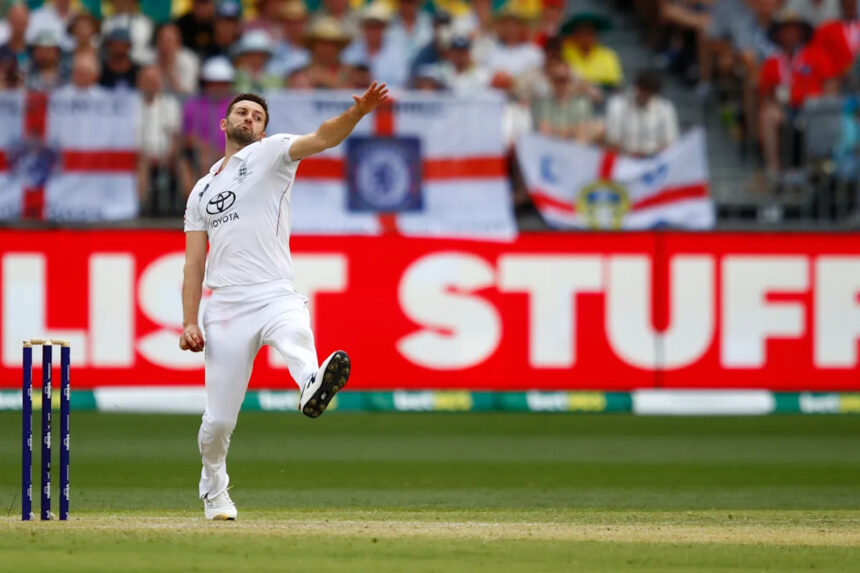
England’s Ashes Hopes Crumble as Mark Wood Ruled Out of Series with Knee Injury
In the unforgiving crucible of an Ashes tour in Australia, England’s campaign has been defined by a battle on two fronts: against a formidable Australian XI and against their own fragile physiques. The latter has now delivered a knockout blow. England’s fastest and most potent weapon, Mark Wood, has been officially ruled out of the remainder of the series with a recurrence of his left knee injury. This devastating news, confirmed by the ECB, transforms an already steep mountain into a near-vertical climb for a team trailing 2-0 and staring down the barrel of another humiliating Ashes surrender.
A Body Broken by Effort: The Unraveling of a Key Plan
Mark Wood’s role in England’s pre-Ashes strategy was simple, brutal, and absolutely critical. On Australia’s hard, fast, and often unresponsive pitches, raw pace is a priceless commodity. Wood, capable of consistently breaching 150 km/h (93 mph), was the designated disruptor. The plan was for him to charge in for short, explosive spells, unsettling Australia’s top order with sheer velocity, creating pressure and opportunities for his fellow bowlers.
That plan lies in tatters. The warning signs were flashing long before the squad boarded the plane. Wood’s career has been a heroic saga of managing a body that struggles to contain his own ferocity. His recent history is particularly telling:
- Major Surgery in March 2023: Underwent significant knee surgery, putting his Ashes participation in immediate doubt.
- Seven-Month Rehab Marathon: Underwent an exhaustive rehabilitation process, a testament to his dedication to be fit for this pinnacle series.
- Limited Impact in Perth: Managed just 11 wicketless overs in the first Test, visibly lacking his trademark rhythm and fire.
- Missed Brisbane Test: Was a forced absentee for the second Test, with the knee failing to recover sufficiently.
Wood’s own Instagram post painted a picture of crushing personal disappointment. “Gutted to be out… After extensive surgery and seven long, hard months of work and rehab to get back into the test arena, my knee just hasn’t held up,” he wrote. For a player whose value is inextricably linked to his physical capacity, this recurrence is a catastrophic outcome, not just for the series, but for his future in the longest format.
Strategic Vacuum: What England Loses Without Wood
The loss of Wood is not merely about replacing a bowler; it’s about replacing a unique tactical dimension. England’s attack, already missing the retired Stuart Broad and the injured Jofra Archer, now looks one-dimensional. James Anderson and Ollie Robinson are masters of control and seam movement, but they operate in a similar, albeit brilliant, corridor. Without Wood’s pace, Australia’s batters can settle into a rhythm, knowing there is no shock factor waiting in the wings.
This absence fundamentally alters the psychology of the contest. David Warner, Marnus Labuschagne, and Steve Smith are all exceptional players of fast bowling, but even the best prefer time on the ball. Wood’s skiddy, extreme pace denies them that time. His ability to bang the ball into the pitch and extract uncomfortable bounce was England’s best hope of creating catching opportunities for the slips and gullies behind the wicket. Now, that threat has vanished. The Australian batting line-up, which has yet to be truly tested by sustained short-pitched bowling this series, will breathe a collective sigh of relief.
Desperate Measures: Fisher Flies In as England Scramble
England’s response has been to call up 25-year-old Yorkshire seamer Matt Fisher as reinforcement. Fisher, whose solitary Test cap came against the West Indies in 2022, is a skilled bowler with a good record in county cricket. However, his selection underscores the desperate depth crisis England face in genuine fast bowling.
Fisher is not a like-for-like replacement. He is a talented seam bowler, but he does not possess Wood’s express pace. His inclusion is more about bolstering the stock of available bowlers rather than replicating a specific role. The reality is that England’s remaining pace options—Chris Woakes, the recalled Mark Wood’s Durham teammate Brydon Carse, and the uncapped Josh Tongue (already with the squad)—all represent variations on a theme of fast-medium. None can reliably deliver the X-factor that the situation desperately requires.
The burden now falls disproportionately on the veteran pairing of James Anderson and Stuart Broad’s replacement, Ollie Robinson. They must not only take wickets but also bowl significantly more overs than planned, increasing the risk of their own breakdowns. Captain Ben Stokes’s chronic knee issue further limits his bowling capacity, turning England’s resources from thin to anorexic.
Ashes Prognosis: Can England Salvage Pride from the Wreckage?
With three Tests remaining—in Melbourne, Sydney, and Hobart—England’s mission has abruptly shifted. Retaining the Ashes is now a mathematical fantasy requiring three consecutive wins against an Australian side brimming with confidence. The more realistic, yet still daunting, goal is to salvage some pride and avoid a second consecutive 5-0 whitewash on Australian soil.
The path to even a single victory is fraught. England’s batting remains chronically inconsistent, and now their bowling attack has lost its most potent weapon. To compete, they will need to execute flawlessly in every session. They must hope that Anderson and Robinson produce career-defining spells, that Joe Root and Stokes finally convert starts into massive scores, and that the Australian team suffers a dramatic, collective loss of form. The confluence of all these factors seems unlikely.
For Australia, Wood’s exit is the removal of the last major obstacle in their path. They can now focus on exploiting England’s psychological fragility and worn-out bowling resources. Pat Cummins will be licking his lips at the prospect of rotating his own fresh, varied attack against an English batting lineup that has shown little stomach for the fight.
Conclusion: A Personal and Collective Tragedy
The story of Mark Wood’s Ashes is a tragic one of a warrior whose body betrayed his spirit. His seven-month rehab, a lonely and grueling journey, was all geared towards this moment. For it to end after 11 overs is a cruel sporting injustice. For England, it is the definitive symbol of a tour that has been plagued by poor preparation, questionable selection, and now, catastrophic injury luck.
This injury may well mark a turning point, not just in the series, but in England’s Test cricket identity. It exposes a systemic failure to develop and protect fast bowlers capable of thriving in the most demanding conditions. As Wood heads home for another uncertain rehabilitation, England are left in Australia with a broken plan, a depleted attack, and the grim realization that the Ashes urn is already slipping through their fingers. The remaining Tests are no longer about the destination; they are a painful examination of the team’s character and resilience in the face of overwhelming adversity. The roar of the Wood engine has been silenced, and in its place, only the echoing silence of a dream extinguished.
Source: Based on news from Yahoo Sports.


