The Ultimate Snub: Why Bill Belichick’s Hall of Fame Delay is a Historic Oversight
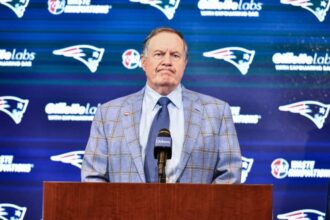
The Pro Football Hall of Fame’s selection process is designed to be deliberative, a sacred vetting for immortality. But in 2025, it produced a verdict so staggering it momentarily silenced the football world: Bill Belichick, the architect of the NFL’s most indomitable dynasty, was not elected. In his first year of eligibility, the man with six Super Bowl rings as a head coach and two more as the New York Giants defensive coordinator failed to receive the 80% vote required for a bronze bust. The snub isn’t just surprising; it’s a historical anomaly that demands scrutiny, laying bare the complex legacy of a coach whose football genius is both undeniable and, for some, uncomfortably intertwined with controversy.
A Résumé Beyond Compare, A Result Without Precedent
To contextualize this omission is to grapple with numbers that have long seemed to guarantee first-ballot induction. Bill Belichick’s 333 career wins stand second only to Don Shula’s 347, a record many believed Belichick would shatter. Shula, a two-time Super Bowl champion, was enshrined in 1997, his first year eligible. The precedent for coaches of such stature was clear. Beyond the sheer volume of wins, Belichick’s achievements form a pantheon of their own:
- Six Super Bowl championships as a head coach (New England Patriots), more than any other individual.
- Two additional Super Bowl rings as the defensive mastermind for the New York Giants, crafting the game plan that stifled the historic Buffalo Bills offense.
- 17 AFC East division titles in 19 years, a run of sustained dominance unseen in the salary-cap era.
- A record 31 playoff victories as a head coach.
The selection committee’s task was to choose three from a group of five finalists: Belichick, Patriots owner Robert Kraft, and senior players Ken Anderson, Roger Craig, and L.C. Greenwood. That Belichick did not emerge as the top vote-getter from this cluster suggests a deliberate pause, a collective deep breath from the gatekeepers of history. It indicates that for a segment of the 50-person panel, the totality of the Belichick epoch requires more time to process, separate, and perhaps, judge.
Dissecting the Delay: The “Spygate” and “Deflategate” Shadow
To attribute this snub solely to football reasons is naïve. The shadow of scandal, whether one views it as substantive or overblown, looms large over Belichick’s legacy. For voters wrestling with the “integrity and character” clause of Hall of Fame bylaws, Spygate and Deflategate remain indelible parts of the story. The perception of gaining competitive advantage outside the lines has, for some, tainted the purity of the Patriots’ accomplishments.
This creates a unique dichotomy. On one hand, Belichick is widely regarded as the greatest strategic mind in the sport’s history, a defensive savant whose weekly game plans were doctoral dissertations on opponent eradication. His work as Giants defensive coordinator under Bill Parcells is already Hall of Fame-worthy on its own. On the other hand, the controversies fostered a “cheater” narrative that his rivals and detractors eagerly perpetuated. The Hall of Fame vote, in this case, appears to be the first official league-sanctioned moment where that narrative has carried tangible consequence. It is a referendum not on his football IQ, which is unimpeachable, but on the clouded nature of his empire’s rise.
The Contributor Category Conundrum and Kraft’s Presence
Complicating the 2025 vote was the unusual structure of the “Coach/Contributor” committee. Grouping Belichick with Patriots owner Robert Kraft created an inherently awkward dynamic. Kraft, whose role in building the Patriots’ infrastructure and sustaining its success is profound, was also a first-time finalist. Did the presence of two foundational pieces of the same dynasty split a voter bloc? It’s a plausible theory. Some voters may have felt honoring Kraft first was a necessary nod to the ownership and stability that enabled Belichick’s coaching, creating a sequential rather than simultaneous induction.
Furthermore, the senior candidates—Ken Anderson, Roger Craig, L.C. Greenwood—represent compelling, long-overdue cases for legends whose eras have passed. A voter sentiment of “Belichick can wait, these men cannot” likely held sway. The system, as designed, forced a choice between correcting historical oversights for players and immediately anointing the most accomplished coach of the modern era. This year, the past won out.
What Happens Next? Predictions for the Path to Canton
So, where does this leave Belichick’s Hall of Fame future? The delay is almost certainly just that—a delay. Here is what to expect moving forward:
- Inevitable Enshrinement in 2026: The most likely scenario is a coronation next year. The shock of the snub will have settled, and the committee will have made its statement. Electing him next year becomes a story of “righting a wrong.”
- A Cleared Stage: With Robert Kraft likely inducted this year (as the highest vote-getter), that potential conflict vanishes. Belichick will be the undisputed headliner of his ballot group.
- The University of North Carolina Wild Card: Belichick’s current role as head coach of the UNC Tar Heels adds a fascinating layer. Should he find success in Chapel Hill, it reinforces his timeless coaching acumen. Failure is unlikely to diminish his NFL legacy but could soften the “unfinished business” narrative that followed him after his Patriots departure.
- A Legacy-Defining Speech: When the moment finally comes, his enshrinement speech will be the most anticipated in Hall of Fame history. Will he address the controversies? Will he be defiant or conciliatory? It will be his one, definitive chance to frame his own legacy for posterity.
Conclusion: A Complicated Genius, An Inevitable Immortal
The Pro Football Hall of Fame’s decision to delay Bill Belichick’s induction is a powerful reminder that history’s judgment is rarely simple, even in the face of overwhelming evidence. It underscores that legacy is a mosaic of achievement, perception, and controversy. This snub is not a denial of his football greatness; it is an acknowledgment of its complicated packaging.
Ultimately, the Hall of Fame’s doors are not closed to Belichick; they are merely being held ajar for one more year of reflection. The six Lombardi Trophies, the 333 wins, and the two decades of tactical tyranny are facts too monumental to be ignored forever. The pause, however historic, is just a pause. Bill Belichick, the former New York Giants defensive coordinator who became the NFL’s most victorious and vexing figure, will take his place in Canton. The only remaining question is not if, but how he will be remembered when he finally arrives—as the flawless strategist, or the flawed conqueror. The debate, much like his coaching career, is destined to endure long after the bronze bust is unveiled.
Source: Based on news from Yahoo Sports.