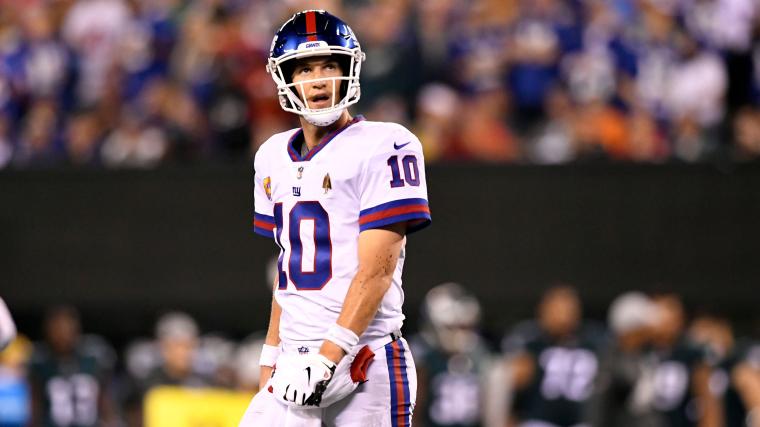
Eli Manning’s Hall of Fame Wait Sparks Fiery NFL Fan Debate
The Pro Football Hall of Fame selection process is rarely a quiet affair, but this week it has become a full-blown national conversation. After the shocking omission of legendary coach Bill Belichick as a first-ballot inductee, the Hall of Fame news cycle delivered another jolt: New York Giants icon Eli Manning will also have to wait at least another year for his bronze bust in Canton. The dual snubs have ignited a firestorm across the NFL landscape, with Manning’s case proving to be one of the most polarizing in modern football history.
For Giants faithful, the news is a profound disappointment. For Manning’s detractors, it’s validation. And for neutral observers, it’s a fascinating case study in how we define “greatness.” This wasn’t Manning’s first time at the dance; it was his second opportunity, meaning the selection committee has now twice decided his resume isn’t quite first-tier. As the dust settles, the reaction from NFL fans reveals a deep and enduring schism about the value of peak performance versus longevity, and the undeniable weight of two magical Super Bowl runs.
The Case For and Against: A Statistical Rorschach Test
To examine Eli Manning’s Hall of Fame candidacy is to look at a statistical Rorschach test. What you see often depends on what you value. His advocates and critics can look at the same career numbers and come away with completely opposing conclusions.
Supporters point to his ironman durability and volume stats, built over a 16-year career spent entirely with the Giants. He never missed a game due to injury, starting 210 consecutive games—the second-longest streak by a quarterback in NFL history. He retired in the top-10 all-time in passing yards (57,023) and passing touchdowns (366). He engineered 36 fourth-quarter comebacks and 41 game-winning drives. These are the hallmarks of a dependable, productive, and clutch franchise quarterback.
However, detractors quickly highlight the efficiency metrics. Manning’s career completion percentage (60.3%) and passer rating (84.1) are modest, especially when compared to contemporaries like Peyton Manning, Tom Brady, and Drew Brees. He led the league in interceptions three times, throwing 20 or more picks in four different seasons. For every brilliant playoff run, there were seasons of .500 or worse football (eight total). The argument against him often centers on a perceived lack of consistent, year-in, year-out elite performance.
This divide was on full display across social media in the wake of the news. One camp sees a compiler of good stats; the other sees a pillar of a franchise. The truth, as with most Hall of Fame debates, likely lies somewhere in the nuanced middle.
The Unbreakable Trump Card: Two Super Bowl MVPs Over the Patriots Dynasty
If Eli Manning’s regular-season resume is debatable, his postseason legacy is etched in granite. This is the core of his Hall of Fame argument and the source of his mythical status among Giants fans. In an era defined by the Patriots’ dynasty, Manning authored two of the greatest underdog stories in NFL history.
- Super Bowl XLII (2007): Manning toppled the 18-0, seemingly invincible New England Patriots. His iconic escape and pass to David Tyree’s helmet on the game-winning drive is one of the most replayed moments in sports history.
- Super Bowl XLVI (2011): Four years later, he did it again. Manning outdueled Tom Brady once more, with another pristine, game-winning fourth-quarter drive capped by a touchdown to Mario Manningham on a perfect throw along the sideline.
In both victories, Manning was named Super Bowl MVP. He is one of only six players to win the award multiple times. The significance of defeating the Brady-Belichick Patriots cannot be overstated. Those two victories alone reshaped the legacy of an entire generation of players and franchises. Fans arguing for his induction often boil it down to a simple, powerful question: “If the Hall of Fame is about impact on the game’s history, how can you keep out the man who twice stopped a dynasty on the biggest stage?”
This “Trump Card” argument forces voters to weigh the scale of those achievements against 16 years of regular-season play. For many, those two Lombardi Trophies tip the scale decisively in his favor.
Fan Reaction: A Nation Divided on “Hall of Fame” Meaning
The fan reaction to Manning’s delayed induction has been a spectacle of passionate debate. On platforms like X (formerly Twitter), Reddit, and sports talk radio, the lines are clearly drawn.
Giants fans and proponents are using words like “travesty” and “disgrace.” They frame the wait as a disrespect to a two-time champion who embodied the franchise. Many point out that other quarterbacks with similar or lesser accolades (like Troy Aikman, who also has two Super Bowl wins but fewer passing yards and touchdowns) are already enshrined. The sentiment is that the “New York factor” and his unassuming personality have somehow worked against him.
Skeptics and rival fans, particularly those in the NFC East, have responded with stats about his win-loss record and interception totals. Memes of his perplexed facial expressions circulate with captions questioning his elite status. The common refrain is, “He was very good, but was he ever truly great for a sustained period?” This group advocates for the Hall to be reserved for the unequivocal, year-after-year dominators.
Interestingly, the Belichick snub has intertwined with Manning’s narrative. Some fans have noted the irony that the two figures forever linked by those Super Bowl losses are now waiting together. Others argue that if the architect of the dynasty can’t get in on the first try, the quarterback who beat him twice can certainly wait a year or two more.
What’s Next? Predictions for Manning’s Canton Path
So, where does Eli Manning go from here? The consensus among most Hall of Fame watchers is not *if*, but *when*.
The precedent is on his side. The Hall of Fame has historically valued championship success for quarterbacks above all else. The fact that he is a two-time Super Bowl MVP for a flagship franchise in the country’s largest media market is a powerful combination. His longevity and volume statistics, while not elite, provide a solid foundational argument that the “big game” argument can rest upon.
The logjam at quarterback is a factor. With contemporaries like Philip Rivers and Ben Roethlisberger now eligible, and with Brady, Brees, and Peyton Manning already in, voters may be spacing out inductions. Manning’s wait could be a matter of managing a crowded field of worthy candidates from a prolific passing era.
Our prediction: Eli Manning will be inducted into the Pro Football Hall of Fame, likely within the next 2-4 years. The narrative is simply too strong to ignore forever. His enshrinement speech will undoubtedly center on teamwork, resilience, and those two unforgettable February nights. The debate will rage until the moment he puts on the gold jacket, and it will likely continue afterward. But in the end, the weight of his postseason legend will carry him to Canton.
Conclusion: The Ultimate Legacy of the Underdog Quarterback
The fervent reaction to Eli Manning’s Hall of Fame wait proves one thing above all: his career mattered. It sparked emotion, defined eras, and created legends. Whether you view him as a borderline compiler or a clutch-time legend, his impact on the NFL’s story is indelible.
His path to the Hall mirrors his playing career: met with skepticism, defined by moments of undeniable brilliance, and ultimately successful through persistent resilience. The delay isn’t a denial; it’s merely another chapter in the complex story of a quarterback who was never the flashiest or most statistically dominant, but who possessed an uncanny ability to rise when the lights were brightest.
For Giants fans, the wait is frustrating but temporary. For the rest of the football world, it fuels a debate that gets to the very heart of what we celebrate in the sport. Is the Hall of Fame for the statistically perfect, or for the historically significant? Eli Manning’s eventual induction will affirm that in football, perhaps more than any other sport, legendary moments can forge a legacy strong enough to earn a place among the gods of the game.
Source: Based on news from Yahoo Sports.