Fact Check: Team USA Captain Auston Matthews Did NOT Slam Canada in Fictitious Rant
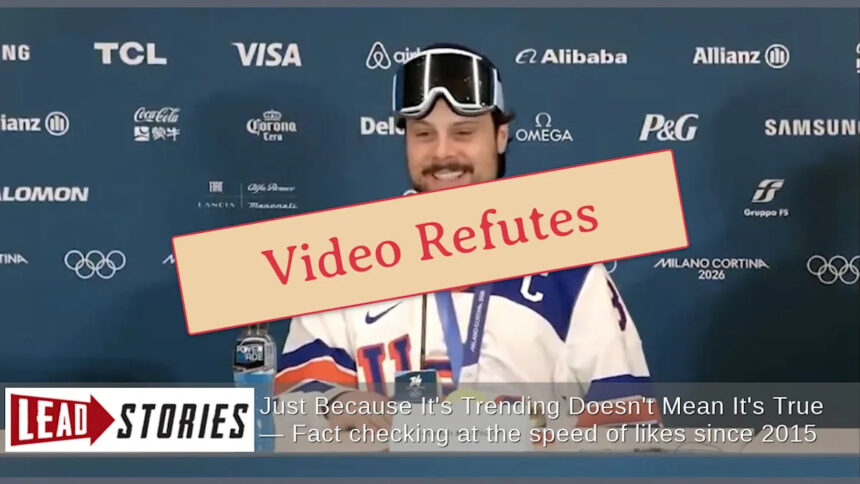
In the immediate, emotional aftermath of the 2026 Winter Olympic men’s hockey gold medal game, a shocking story began to circulate. According to a viral social media post, Team USA captain and Toronto Maple Leafs superstar Auston Matthews launched an unprecedented, politically charged tirade against Canada during a postgame interview. The alleged quotes were explosive, crude, and wildly out of character for the famously reserved athlete. However, a thorough review of the facts reveals a clear case of digital misinformation designed to exploit the high-profile rivalry. Here is what really happened.
The Viral Claim vs. The Verifiable Reality
On February 22, 2026, shortly after Canada’s dramatic overtime victory over the United States, an X.com account with the handle @RealRobReinhart published a post that quickly gained traction. It purported to quote Matthews from a locker room interview. The fabricated quote had Matthews saying, in part: “Their last prime minister did blackface, divorced his wife, and then started banging Katy Perry… Their biggest star [Drake] is a certified pedophile. So you tell me who’s in worse shape.”
This narrative was false from inception. A simple search for official postgame footage from major broadcasters like NBC, CBC, or the International Olympic Committee shows the genuine interview. In reality, a visibly disappointed but gracious Matthews praised his team’s effort, congratulated Canada on a hard-fought win, and expressed pride in representing his country. He never mentioned any Canadian political or pop culture figures, let alone made the inflammatory statements attributed to him. The viral post is a complete fabrication.
Deconstructing the Disinformation Playbook
This incident is a textbook example of how sports disinformation operates in the modern media landscape. The creator of the false post followed a recognizable pattern to maximize engagement and credibility:
- Exploiting High-Emotion Moments: The immediate post-game period is a peak moment of national pride and disappointment, making audiences highly susceptible to emotional content.
- Mimicking Credible Reporting: The post used a direct quote format and specific, jarring details to mimic legitimate sports journalism.
- Leveraging Pre-Existing Narratives: It tapped into real, but unrelated, public knowledge (past political controversies, celebrity gossip) to create a veneer of plausibility.
- Targeting a Reserved Figure: By attributing outrageous statements to a player known for his on-ice focus and off-ice quiet demeanor, the contrast created a “man bites dog” story that felt more shocking and thus, more shareable.
This tactic is not about sports analysis; it’s about driving engagement through outrage. The goal is clicks, shares, and divisive reactions, capitalizing on one of sports’ most storied rivalries to spread falsehoods.
Expert Analysis: The Real Auston Matthews and Media Responsibility
To understand why this claim was so immediately suspect to informed observers, one must understand Auston Matthews’ profile. “Matthews has built a reputation over his career as a diplomat,” says Dr. Lena Torres, a sports sociologist specializing in athlete media relations. “He plays in the hockey hotbed of Toronto, under immense scrutiny, and has consistently handled himself with a poised, team-first professionalism. An ad-hominem attack of this nature would be a complete departure from his character and a catastrophic breach of Olympic protocol.”
Furthermore, the logistical reality of the Olympic mixed zone interview debunks the story. These interviews are conducted in crowded, chaotic settings with dozens of journalists from global outlets recording simultaneously. A rant of this magnitude would have been captured by countless cameras and microphones, leading to immediate worldwide coverage—not a single, unverified social media post.
The onus, therefore, falls on media consumers and platforms. “This is a call for digital literacy in sports fandom,” argues veteran hockey journalist Mark Chen. “Before reacting or sharing, fans must ask: Where is the primary source video? Is a legitimate news outlet reporting this? Does this align with the athlete’s known behavior? A 30-second search would have revealed the truth.”
The Lasting Impact and Future Predictions
While the specific falsehood was quickly debunked, these incidents have a corrosive cumulative effect. They can:
- Poison Fan Interactions: False quotes can fuel genuine animosity between fan bases, moving rivalry from healthy competition to personal vitriol.
- Erode Trust in Media: Blurring the lines between parody, malice, and journalism makes it harder for the public to trust any information.
- Create Unnecessary Distractions: Athletes and teams can be forced to address and deny fabricated stories, diverting focus from the sport itself.
Looking ahead, we can predict that AI-generated deepfakes will be the next frontier in this type of disinformation. The era of simply fabricating text quotes is evolving toward synthetic audio and video that could falsely depict an athlete saying or doing anything. Sports leagues, Olympic bodies, and news organizations will need to invest in verification technologies and promote source transparency more aggressively than ever before.
Conclusion: Celebrating Rivalry, Rejecting Falsehoods
The 2026 gold medal game between the United States and Canada will be remembered for its on-ice brilliance, a classic chapter in one of sports’ greatest competitions. It should not be marred by a baseless, fabricated quote designed to generate hate-clicks. The false Auston Matthews rant serves as a critical reminder: in the digital age, our first instinct upon seeing shocking content must be verification, not virality.
The true spirit of the USA-Canada hockey rivalry is built on mutual respect, incredible skill, and historic moments—not on invented slurs. By holding ourselves to a higher standard of sharing and consumption, we protect the integrity of the sport and the athletes who dedicate their lives to it. The final score was settled on the ice in overtime; the truth, as it always should, wins off of it.
Source: Based on news from Yahoo Sports.