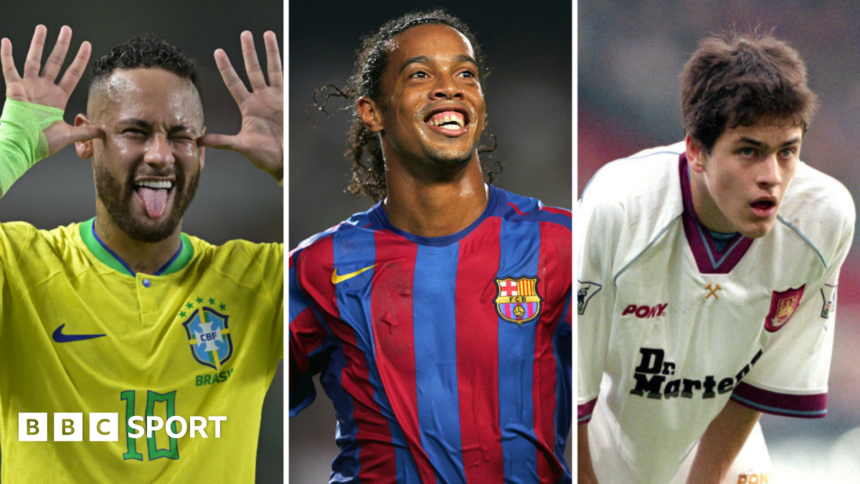
Football’s Great Entertainers: Ranking the Biggest Showboaters
In an era defined by xG, gegenpressing, and tactical systems, the soul of football’s pure, unadulterated joy often feels like a relic. But rewind the tape. Before viral clips were governed by algorithms, a different kind of magic ruled the weekend. It arrived every Saturday morning, set to pulsating early-noughties beats: the Soccer AM Showboat. This three-minute segment was a cathedral of celebration for the game’s great entertainers, a weekly testament to the audacity of skill for skill’s sake. It wasn’t just about goals; it was about the flick, the feint, the sheer bravado that left defenders humiliated and fans in a state of delirious wonder. It was here, amidst world-class sorcerers, that an unlikely cult hero was crowned – and the legacy of the showboater was etched into football culture.
The Showboat Era: Where Cult Heroes Met Global Icons
The beauty of the Showboat was its democratic curation. It spliced the sublime artistry of global superstars with the lower-league maverick turning a Tuesday night in Crewe into his personal stage. This created a unique pantheon of entertainers.
At its zenith were players like Ronaldinho, whose smile was as iconic as his elastico. He didn’t just perform tricks; he performed joy, making the impossible seem effortless at the Camp Nou. Alongside him was Jay-Jay Okocha, so good they named him twice, a whirlwind of step-overs and body shifts that defied physics. These were the standard-bearers, inspiring a generation to practice in car parks.
Yet, the Showboat’s true magic was its spotlight on the domestic wizard. The player whose league status belied his star quality. And in this realm, one name became synonymous with the feature itself: Lee Trundle. The Liverpool-born forward, dazzling for Swansea City and later Bristol City, became a weekly fixture. His repertoire – including the infamous ‘Trundle Flick’ – and outrageous goals in the Football League earned him the undisputed, fan-bestowed title of ‘Showboat King’.
“I’ve always enjoyed playing that way – expressing myself, trying different things,” Trundle explains. “Soccer AM opened it up to every other fan out there. You would have them all speaking about the Showboat. It was nice to be in with some world-class players.”
Ranking the Sultans of Skill: A Showboater Hall of Fame
Ranking showboaters is a subjective art, balancing pure skill, frequency, flair, and cultural impact. Here, we celebrate those who made the beautiful game a spectacle.
- The Crown Prince: Lee Trundle – The people’s champion. While not operating at the highest level, his cultural impact on British football is unmatched. He was the Showboat’s mascot and its most dedicated contributor, proving showboating was a state of mind, not just a product of elite stadiums.
- The Uncontested Genius: Ronaldinho – The benchmark. His showboating was never disrespectful; it was a natural extension of his game. From no-look passes to standing still with the ball glued to his foot, he was the ultimate footballing entertainer, winning Ballon d’Ors while flicking and flipping.
- The Street Magician: Jay-Jay Okocha – Pure, unadulterated sauce. Okocha’s tricks had a street-football edge, often executed under pressure. His famous roulette against Oliver Kahn and endless bag of skills at Bolton made him a Premier League icon for audacious flair.
- The Provocateur: Cristiano Ronaldo (Early Era) – Before the ruthless goal machine emerged, a young CR7 was a showboating phenomenon. His step-overs were a blistering, psychological weapon, a direct challenge to full-backs. It was showmanship as intimidation.
- The Enigmatic Artist: Kerlon – The ‘Seal Dribble’ specialist. The Brazilian briefly captured the Showboat’s imagination by running with the ball balanced on his forehead. He represents the pure, almost niche extremity of showboating—a one-trick wonder, but what a breathtaking trick it was.
- The Modern Maestro: Neymar Jr. – The heir to Ronaldinho’s throne and the most debated figure. His skills are undeniably spectacular and technically superior. Yet, in an age of social media scrutiny, his showboating is often criticized as provocative, highlighting how the art form’s reception has shifted.
The Modern Game: Is Showboating a Dying Art?
Today, the showboat faces strong headwinds. The game is faster, more physically demanding, and tactically rigid. Margin for error is minuscule. A failed flick in your own half can lead to a counter-attack goal and a week of punditry condemnation. The rise of social media virality has also changed the context. A trick is no longer a shared moment on a weekly TV show; it’s a clip dissected globally, often inviting accusations of disrespect as quickly as praise.
However, to declare it dead is premature. The art has evolved. Players like Phil Foden incorporate subtle body feints and silky touches within tight spaces—efficiency with flair. The playground spirit lives on in street-football inspired players, though it’s often tempered by tactical instruction. The difference is frequency and freedom. The modern entertainer must pick his moments, making the occasional show of skill even more potent.
The Future of Flair: Where Do We Go From Here?
The prediction for showboating is a tale of two paths. At the elite level, we will see less of the overt, prolonged trickery and more integrated, functional skill—the quick nutmeg to break a line, the disguised pass. It will be a means to an end, not the end itself.
Yet, the soul of the Showboat will find refuge. It will thrive in emerging football cultures and lower-league environments where expression is still encouraged. It will explode in viral futsal clips and influencer content. Most importantly, its future is guaranteed on every patch of grass where a kid watches an old Ronaldinho or Trundle clip and thinks, “I’m going to try that.” The instinct to express, to entertain, and to defy is hardwired into the sport’s DNA.
Conclusion: The Eternal Value of the Entertainer
While the Saturday morning Showboat segment may be a nostalgic memory, the essence of the showboater is immortal. Players like Lee Trundle, Ronaldinho, and Okocha did more than win points; they won hearts. They reminded us that football, at its core, is a game. It is supposed to be fun, breathtaking, and a little bit cheeky. In an increasingly homogenized and high-stakes sport, the courage to entertain remains a vital, rebellious force. The showboater, in all his glorious, frustrating, and magnificent forms, is the keeper of football’s playful flame. They are not just players; they are reminders of why we fell in love with the sport in the first place. And for that, the ‘Showboat King’ and his court will forever have a throne in the game’s history.
Source: Based on news from BBC Sport.