Nottingham Forest to Immortalise a Legend: City Ground Stand Renamed for John Robertson
The beating heart of Nottingham Forest, the City Ground, is set to undergo a change that transcends bricks and mortar. In a move that resonates with profound respect and enduring legacy, the club has announced it will rename a stand in honour of their late, great winger, John Robertson. The Scottish maestro, who passed away this week at 72, was the architect of the club’s finest hour, a player whose twinkling feet and unerring delivery cemented his status as an immortal figure in the annals of English and European football. This is not merely a tribute; it is the permanent etching of a legend into the very fabric of the club’s home.
The Architect of Immortality: Robertson’s Defining Moments
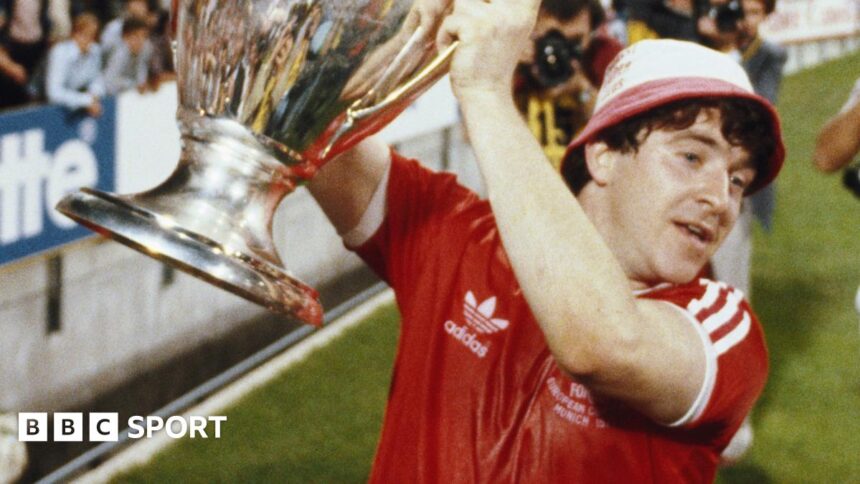
To understand the magnitude of this honour, one must journey back to the zenith of Brian Clough’s remarkable reign. John Robertson was the quiet, unassuming genius on the left wing, the man for the biggest occasion. His legacy is carved not in volume, but in the priceless quality of his contributions. In the 1979 European Cup final, it was his inch-perfect, curling cross that found the head of Trevor Francis to defeat Malmö. A year later, in Madrid, with the world watching, he transformed from provider to executioner. Picking up the ball on his favoured left side, he drifted inside, past a challenge, and with unshakable composure, slid a low shot past the Hamburg goalkeeper. That solitary goal ensured the European Cup, football’s grandest prize, remained in Nottingham.
This iconic moment was the glittering peak of a trophy-laden career at Forest. His partnership with Clough and Peter Taylor was symbiotic; they harnessed his unique talent, and he delivered their wildest dreams. Robertson’s medal collection is a testament to an era of unprecedented dominance:
- European Cup (1979, 1980)
- First Division Title (1977-78)
- Second Division Title (1976-77)
- UEFA Super Cup (1979)
- Football League Cup (1978, 1979)
- FA Charity Shield (1978)
Each piece of silverware bore his unmistakable imprint, a blend of cunning, precision, and cold-blooded effectiveness in the final third.
More Than a Footballer: The Emotional Core of a Dynasty
What sets John Robertson apart, and justifies a tribute as permanent as a stand renaming, was his embodiment of the Clough philosophy. He was not the stereotypical flying winger; he was a thinker, a playmaker from the flank. With a low centre of gravity and a magical left foot, he could manipulate a game’s tempo, holding possession before delivering a killer pass. In an age of physicality, his intelligence was his superpower. He was the creative heartbeat of a team built on fierce organisation and unwavering self-belief.
His connection to the fans was forged in these moments of alchemy. He was their great hero, a local icon who achieved global glory without ever losing his down-to-earth demeanour. For a city and a fanbase, he represented the ultimate proof that under Clough’s mercurial leadership, the impossible was achievable. The decision to immortalise him in the stadium’s structure is a direct channel for that generational love and respect. Future fans will point to the John Robertson Stand and hear the stories of Madrid, of Wembley, and of a man who, with one swing of his left boot, defined an epoch.
A Scottish Soul with a Nottingham Heart
While his club legacy is secure in Nottingham, Robertson’s national pride was equally fierce. He earned 28 caps for Scotland, often shining on the international stage. Reflecting on representing his country, he once said, “An unbelievable feeling to play for Scotland,” a sentiment that captures the passion he brought to every pitch he graced. This duality—Scottish grit combined with a Nottingham identity—made him a uniquely beloved figure. The stand renaming acknowledges this, celebrating a man who gave his absolute all to every shirt he wore, becoming a foundational pillar for both a club and a national team during a golden era.
The Legacy Cemented: What This Means for Forest’s Future
This decision by Nottingham Forest’s hierarchy is a masterstroke in heritage management. In an era where football can sometimes feel disconnected from its past, it physically roots the club’s glorious history to its modern home. It serves as a daily inspiration and a tangible benchmark for every player who pulls on the Garibaldi red. When a young winger looks up from the pitch, they will see the name of the man who delivered the club its greatest triumphs, setting a standard of technical excellence and big-game mentality.
Furthermore, it strengthens the sacred bond between the club and its community. It tells supporters that their heroes, their shared memories, are valued above all. It transforms the City Ground from a mere stadium into a living museum of triumph, with John Robertson’s name as its centrepiece. Predictably, this act will likely set a precedent. It honours the very core of Forest’s identity and may pave the way for other legends from the Clough era to be recognised in due course, ensuring the story is never forgotten.
Conclusion: A Permanent Home for a Football God
The renaming of a stand at the City Ground for John Robertson is the ultimate accolade. Statues are magnificent, but a stand is where the people reside. It is where generations have gathered and will gather to share in the collective joy and despair that football brings. To place Robertson’s name there is to seat him amongst the people forever. He is no longer just a memory in a highlight reel or a name in the record books; he is part of the stadium’s architecture, its atmosphere, its soul.
As fans file into the John Robertson Stand on matchdays, they will be taking their seats in a monument to precision, to quiet brilliance, and to the most glorious chapter in Nottingham Forest’s long history. The man who provided the cross and scored the goal that conquered Europe will now have his watchful presence eternally cast over the pitch he illuminated. It is a fitting, and profoundly moving, tribute to a true great hero.
Source: Based on news from BBC Sport.