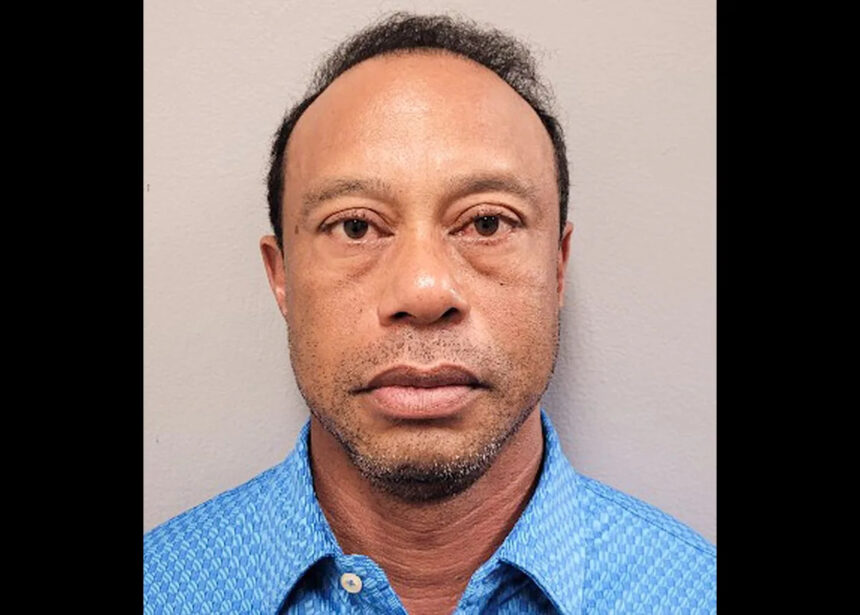
Forget the Masters. Forget Golf. Tiger Woods Needs Help
The speculation felt so familiar, a comfortable rhythm in the golf world’s annual cadence. As azaleas prepared to bloom in Georgia, the questions turned, as they often do, to Tiger Woods. Will he be ready? Can his body, a mosaic of surgical scars and fused vertebrae, withstand the punitive slopes of Augusta National? The narrative was set: another improbable comeback, another chapter in the legend. Today, that narrative isn’t just irrelevant; it’s a profound distraction from a stark and sobering reality. The only question that matters now is not about Tiger Woods, the golfer. It is about Eldrick Tont Woods, the man, who appears to be in desperate need of intervention and support that has nothing to do with a fairway.
The Distraction of the Comeback Narrative
For decades, the sports media ecosystem has operated with Tiger Woods as its central sun. His swings, his surgeries, his schedule—each morsel of information fuels endless cycles of analysis. This week was primed for that familiar feast. Coming off his latest withdrawal at the Genesis Invitational, the calculus was clinical: Did his abbreviated TGL appearance provide enough data points to attempt Augusta? The discourse was confined to the physical: the ankle, the back, the walk.
This focus, however, has become a dangerous enabler. It frames every public appearance through the narrow lens of athletic readiness, ignoring the broader, more alarming picture. When a competitor of Woods’ historic relentlessness withdraws from a tournament citing “influenza,” only to be seen hours later receiving a police citation in a parking lot, the story cannot be his golf game. The machinery of golf commentary, trained to analyze launch angles and club selection, is woefully unequipped to address what it is actually witnessing. We have been diagnosing the wrong ailment.
A Pattern Beyond the Physical Injuries
Tiger Woods’ physical pain is documented, real, and immense. But recent events point to a struggle that transcends orthopedic hospitals. The incident in Jupiter was a flashing red light, not for the PGA Tour, but for those who care about the individual. Consider the pattern:
- Repeated Vehicle Incidents: From the infamous 2021 rollover crash to last week’s parking lot citation, a troubling theme emerges around control and judgment behind the wheel.
- Public Appearances: Gaunt, fatigued, and visibly unwell at the Genesis Invitational before his withdrawal, his physical presentation has often sparked concern that extends beyond typical injury recovery.
- The Isolating Nature of Pain: Chronic pain is a lonely, debilitating battle. It is a known gateway to depression and dependency, a war fought in silence that can warp judgment and sever connections.
This is not about assigning blame or moral failing. It is about recognizing that the greatest athlete of his generation may be facing an opponent no amount of clubhead speed can conquer. The very traits that built his legend—superhuman focus, a tolerance for pain, a fortress-like privacy—are now potential liabilities, walls that keep help at bay.
Why the Masters Must Be a Non-Starter
Given this context, the idea of Tiger Woods at the Masters is not just unlikely; it is actively undesirable. Augusta National is the most physically demanding walk in championship golf. The prospect of him subjecting his body to that torment right now feels less like competition and more like self-flagellation. More critically, the circus that would follow him—the hushed speculation on every wince, the global spotlight on his every step—would be the worst possible environment for a person in apparent crisis.
The Masters, an institution of control and decorum, should not want this version of Tiger Woods. Not for the sanctity of their event, but for the well-being of the man himself. To welcome him as a competitor would be to validate the destructive fantasy that the only path to salvation runs down Magnolia Lane. It would enable the very denial that needs to be shattered. The most compassionate act the golf world could perform would be to unanimously, and quietly, agree that his tee time is the least important thing about him.
The Unseen Battle and the Path Forward
We have been trained to see Tiger Woods as a metaphor for resilience. Every return from surgery is a “comeback.” But what if this is the one comeback he cannot engineer alone with a new swing coach or a rigorous rehab protocol? The addiction to competition, to the adrenaline that once fueled dominance, can itself be a crutch when the body can no longer comply. The transition from defining oneself as the world’s greatest golfer to… what comes next? That is a psychological mountain far steeper than Augusta’s back nine.
The path forward is murky and private, but its first steps are clear:
- A Full Stop: An indefinite hiatus from all golf-related activities, public and private. The goal must be health, not preparation.
- Intervention from Inner Circle: Those true friends, his children, his few trusted confidantes must find the courage to step in. Enablers, in the form of yes-men or corporate obligations, must be removed.
- Professional Help: This likely requires specialized, intensive support addressing chronic pain management, potential psychological trauma from his accidents and surgeries, and the existential void left by fading athletic prowess.
This is not a story with a predictable ending. There may be no triumphant return. The true victory would be a peaceful, healthy life out of the spotlight, defined by something other than trophies.
Conclusion: A Legacy Redefined
Tiger Woods has given golf and sports fans moments of unparalleled glory. He owes us nothing more. Our role now is not as spectators awaiting his next shot, but as witnesses who must finally see what is in front of us. The obsessive speculation about his golf must cease. It is noise that drowns out the signal of a human being in trouble.
The legend of Tiger Woods will forever be etched in the record books. But the man, Eldrick, is writing a more important story right now. It is a story that will not be measured in major championships, but in peace, stability, and well-being. For his sake, and for the sake of the countless fans who genuinely care for him, we must hope he finds the strength to ask for help, and that those around him find the courage to offer it. Forget the Masters. Forget golf. It’s time to care about the person.
Source: Based on news from Yahoo Sports.