Olympic Ice Shatters: France Suspends Pierre Crinon After Fight with Canada’s Tom Wilson
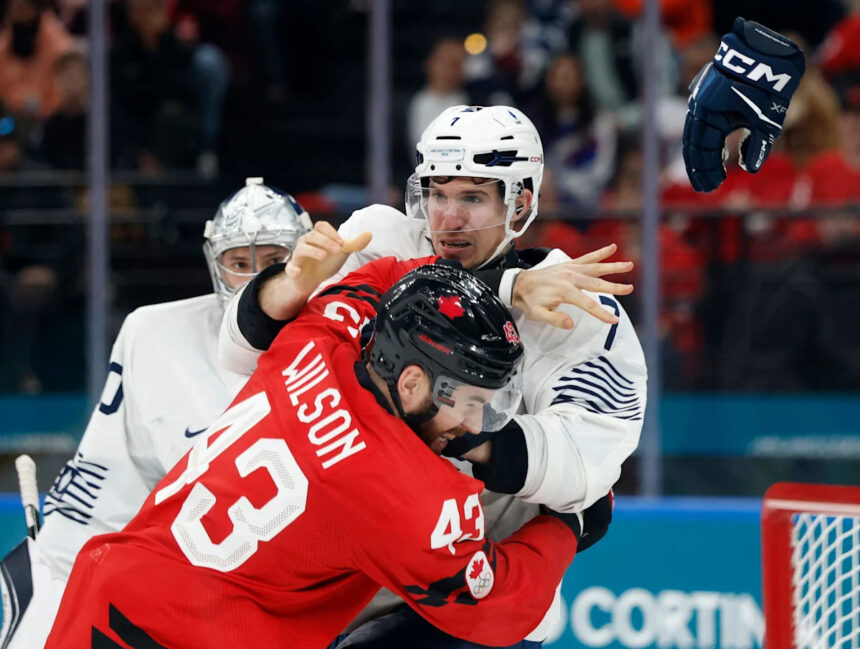
The pristine, global stage of the Olympic Winter Games is built on ideals of fair play and sportsmanship. Yet, when the sport is ice hockey, a game with deeply ingrained cultural variances, those ideals can collide with raw, competitive instinct. That collision erupted in Milano Cortina, resulting in a stunning disciplinary decision that has reverberated far beyond the rink. The French Ice Hockey Federation has suspended defenseman Pierre Crinon for the remainder of the 2026 Olympics following an on-ice fight with Canada’s notorious agitator, Tom Wilson, and subsequent actions deemed “provoking” to the crowd.
A Clash of Hockey Cultures on the Olympic Stage
To understand the gravity of France’s decision, one must first appreciate the divergent hockey philosophies at play. For Canada and the United States, a certain level of physical pushback, including fighting, has historical roots in the professional leagues. The referenced 4 Nations final, with its three fights in nine seconds, is a testament to that ingrained, if fading, code. For many European federations, including France, hockey is viewed strictly through a lens of skill, speed, and technical discipline. Fighting isn’t just penalized; it’s considered an unsporting aberration.
The incident itself was a textbook trigger. Following a questionable hit by Crinon on Canadian superstar Nathan MacKinnon, the ever-volatile Tom Wilson immediately sought retribution. A brief grapple ensued before officials intervened, but the damage was done. In the Olympic tournament, where fighting carries an automatic game misconduct, Crinon’s night was already over. However, his exit from the ice would prove more costly than the penalty itself.
The Provocation That Sealed the Suspension
As Crinon skated towards the locker room, the atmosphere in the arena—heavily favoring Canadian supporters—was charged. It was here that the French blueliner committed what his federation saw as an unforgivable second offense. Captured on fan video, Crinon was seen:
- Waving his arms to incite the already-jeering crowd.
- Cupping his hands to his ears in a classic “let me hear you” gesture, directly engaging with the hostile environment.
This post-fight conduct transformed a disciplinary infraction into a reputational crisis for the French team. The federation’s statement was unequivocal. Translated, it emphasized that “the values of Olympism and the representation of our country demand exemplary behavior on and off the ice. The actions of Mr. Crinon, following an already unacceptable altercation, crossed a line that we cannot tolerate.” This swift, self-imposed suspension is a stark message: representing France under the Olympic rings carries a burden of conduct that supersedes the game’s momentary passions.
Expert Analysis: A Calculated Move by France
From a strategic standpoint, France’s decision to suspend a key defenseman for the entire Games is severe, but analytically sound. The federation is prioritizing long-term development and reputation over short-term Olympic gains. By taking the harshest possible action themselves, they accomplish several goals:
- Control the Narrative: They preempt any potential harsher sanctions from the International Olympic Committee (IOC) or the IIHF, framing it as an internal matter of team standards.
- Protect Program Funding: In many European countries, Olympic sports rely heavily on government and federation support. A scandal perceived as “thuggish” could threaten crucial financial backing.
- Reinforce a Philosophy: For a nation building its hockey program, this is a definitive teachable moment for every junior player: this is not how we play.
Conversely, Tom Wilson’s role, while central to the spark, fits within the expected, if controversial, parameters of his hockey identity. Canadian hockey officials will likely handle it as a routine on-ice incident, with no further repercussion beyond the in-game penalty. The dichotomy is clear: one nation views it as a breach of their sporting soul, the other as an unfortunate part of a physical game.
Predictions and Lasting Repercussions
The fallout from this suspension will extend beyond Milano Cortina. For Pierre Crinon, this is a career-defining moment. His future with the national team is now in serious doubt, and his marketability in club hockey, particularly in European leagues that value decorum, may suffer. The French team, already an underdog, must now navigate the rest of the Olympic tournament shorthanded, a significant competitive handicap they have willingly accepted.
Looking ahead, this event will likely become a case study in Olympic hockey discipline. It sets a powerful precedent for how nations might police their own players to align with the IOC’s principles. We can expect federations with similar views to France to cite this ruling when setting team policies for future Games. It also highlights the growing tension between the NHL’s brand of hockey—where players like Wilson are both criticized and valued—and the International Olympic Committee’s vision for the sport on its stage.
Conclusion: More Than Just a Fight
The suspension of Pierre Crinon is not merely about a fight. It is a profound statement on identity, values, and the high-wire act of exporting a culturally complex sport to a worldwide audience. France has drawn a bright red line, declaring that their representation at the Olympics is about more than goals and saves; it is about embodying a specific standard of conduct. In the clash between hockey’s old-world code and the Olympic ideal, the French Federation has made its allegiance unequivocally clear. The message to their players and the world is that in the theater of the Olympics, how you play the game—and how you carry yourself when it boils over—matters just as much as the final score.
Source: Based on news from Yahoo Sports.